Bothwell Elementary 25-26

OUR CONTEXT
Welcome to all. It's good that we are all here.
(həṅq̓əmín̓əḿ, the downriver dialect of Halkomelem, is still spoken by Katzie peoples)
Bothwell Elementary is located on the traditional, unceded territories of the Coast Salish First Peoples, The Katzie, The Kwantlen, and the Semiahmoo First Nations . When we gather in community, we remember that acknowledging whose land we work, live, and play upon is an essential part of our commitment to reconciliation.

We are a community of just under 360 wonder-filled students, K-7, a staff of 49 caring adults, and hundreds of supportive family members. Nearly 60% of our students speak a language other than English at home. In addition to daily learning routines, we also enjoy time spent with buddy classes, having fun on Spirit Days, watching our leadership team lead Sports Day, making music in grade 7 band, field studies expanding our learning, creating musical performances, playing on various sports teams, and spending time outside learning from our environment.
We are grateful for the enduring support of our PAC. With their generous efforts, time, and fundraising for contributions towards increasing technology in the school, bussing on field studies, classroom materials, numerous hot lunch events, and Sports Day treats.
We treasure the natural beauty of our grounds, including Salh Tumuxw (our learning circle), located on the front lawn near the school gardens. We continue to work towards developing our outdoor learning area to create a learning space connected to the territories was live and learn on.

We are curious...
about the resiliency in our students when it comes to their development in their writing skills. Students shared with us that they wanted and needed more structured lessons to help them feel more confident in their writing.
Given many positive outcomes to learning, well-being, relationships with one another and with the land, we remain dedicated and continue our vision of providing more opportunities for the students at Bothwell.
OUR LEARNERS
Student Learning Plan Focus: Language Features, Structures, and Conventions
At Bothwell, our student learning plan is focused on supporting students to become proficient and knowledgeable users of language, in all its forms, so they can achieve their personal, social, and future career aspirations. This focus matters because students use language to communicate ideas, develop identity, build relationships, advocate for themselves and others, and participate meaningfully in their communities.
A specific area of focus is students’ growing understanding and application of language features, structures, and conventions. Across the school, students are developing increased accuracy, clarity, and purpose in their written communication. Through a range of learning experiences, students are demonstrating growth in organizing ideas, using conventions, refining written work, and communicating for different audiences and purposes.
Example 1: Developing narrative writing with structure and clarity
Curricular Competency:
- Students use writing and design processes to plan, develop, and create meaningful literary texts for a variety of purposes and audiences.
Student learning in action: In Grade 4, students are developing narrative writing skills by creating stories with characters, setting, and a clear sequence of events. Students are using the writing process, including planning and drafting, to organize their ideas. They are also beginning to use dialogue to support meaning and are separating ideas into paragraphs with increasing consistency. This learning shows students building control over story structure, paragraphing, and conventions that help their writing flow clearly for the reader.
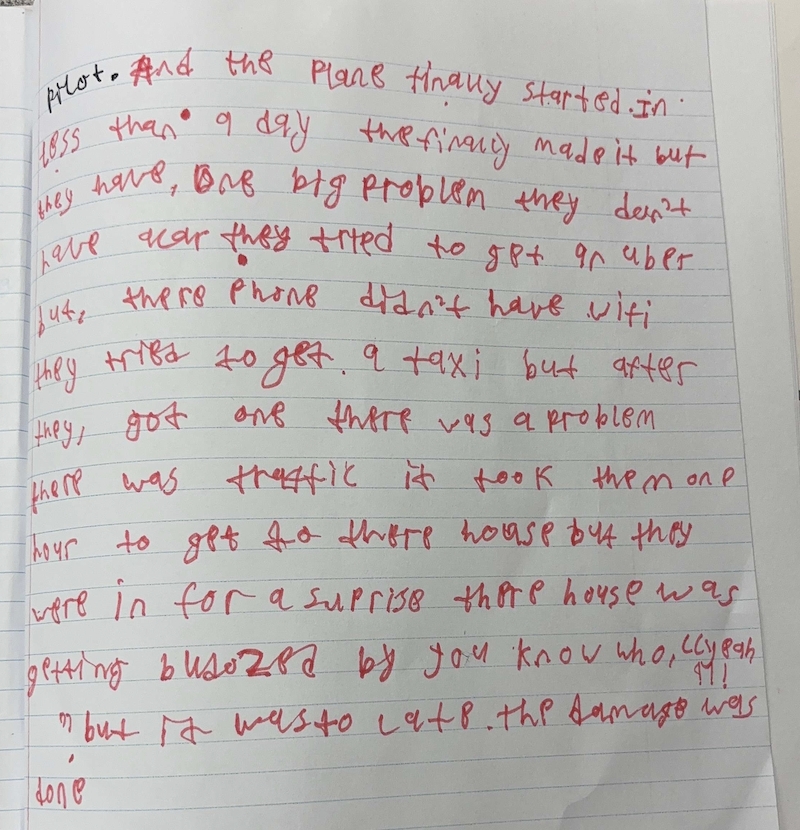
Students are developing narrative writing by planning and drafting stories with characters, setting, dialogue, and a clear sequence of events. These writing samples show students organizing their ideas into paragraphs and using language features and conventions to help their stories flow for the reader.
Example 2: Using literary devices and conventions to communicate ideas
Curricular Competency:
- Students use a variety of communication forms to express ideas and make meaning.
Student learning in action: In Grade 2, students are developing early writing skills through thank-you letters to the Earth inspired by the book Thank You, Earth. Students are using language to express appreciation, make connections to the natural world, and communicate personal ideas. They are also exploring literary elements and devices, including alliteration, while practicing foundational writing conventions such as neat printing, spacing between words, and punctuation at the end of sentences.
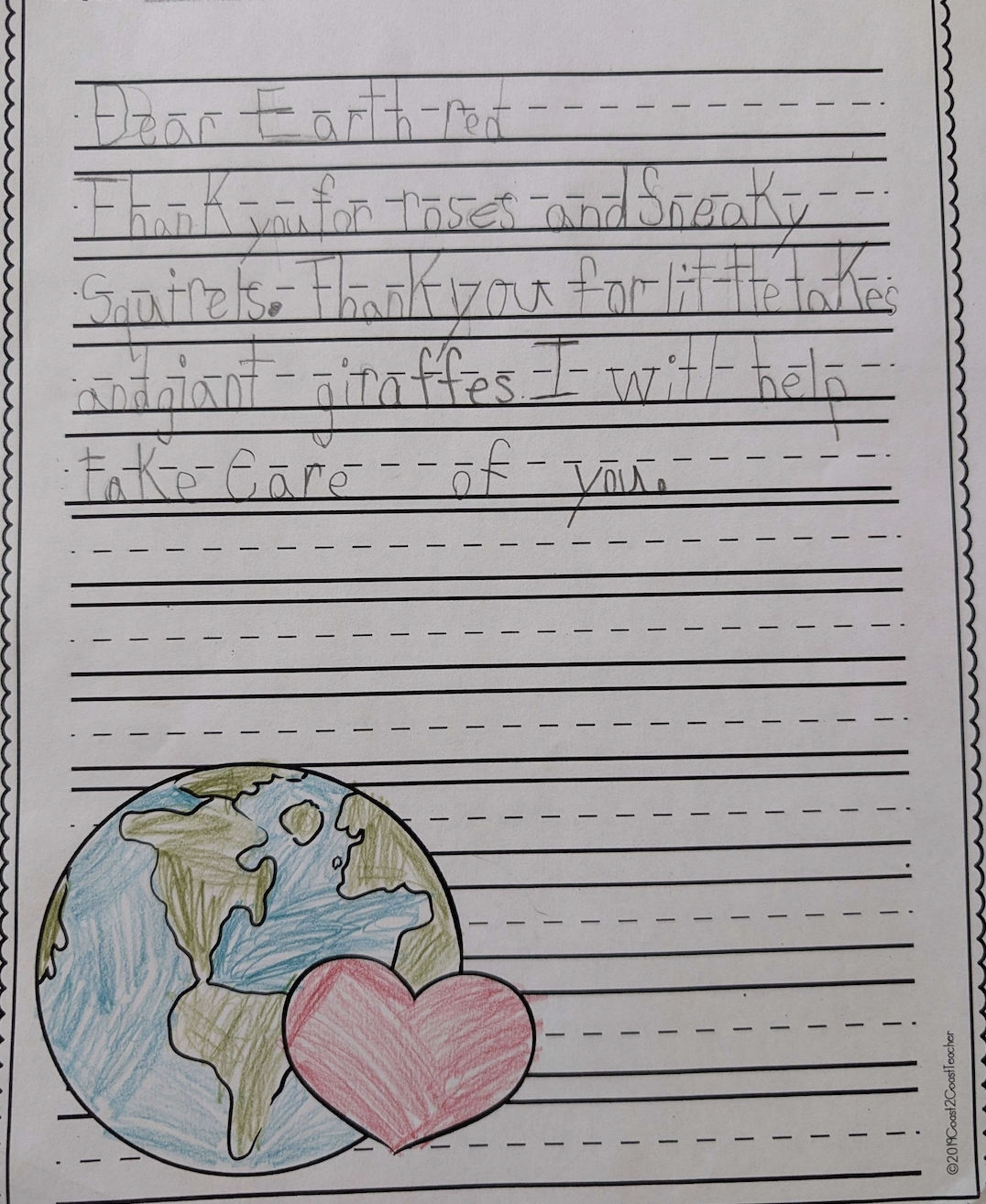
Inspired by Thank You, Earth, students used writing, art, and literary devices to express appreciation for the natural world. These samples show students practicing foundational writing conventions, including spacing, punctuation, and neat printing, while also using alliteration and visual representation to communicate their ideas.
Example 3: Refining writing for purpose, audience, and impact
Curricular Competencies:
- Students exchange ideas and viewpoints to build shared understanding and extend thinking.
- Students use writing and design processes to plan, develop, and create meaningful literary and informational texts for a variety of purposes and audiences.
- Students assess and refine texts to improve clarity, effectiveness, and impact according to purpose, audience, and message.
Student learning in action: In Grade 7, students are strengthening their ability to write for different audiences and purposes. Students are developing paragraph writing skills through structured essays, friendly letters, persuasive letters, note-taking, poetry, presentations, and debates. Through letter writing with peers and a formal letter to a public audience, students are learning to consider audience, message, clarity, and purpose. They are also developing proofreading and editing skills as they revise their work to improve accuracy, effectiveness, and impact.
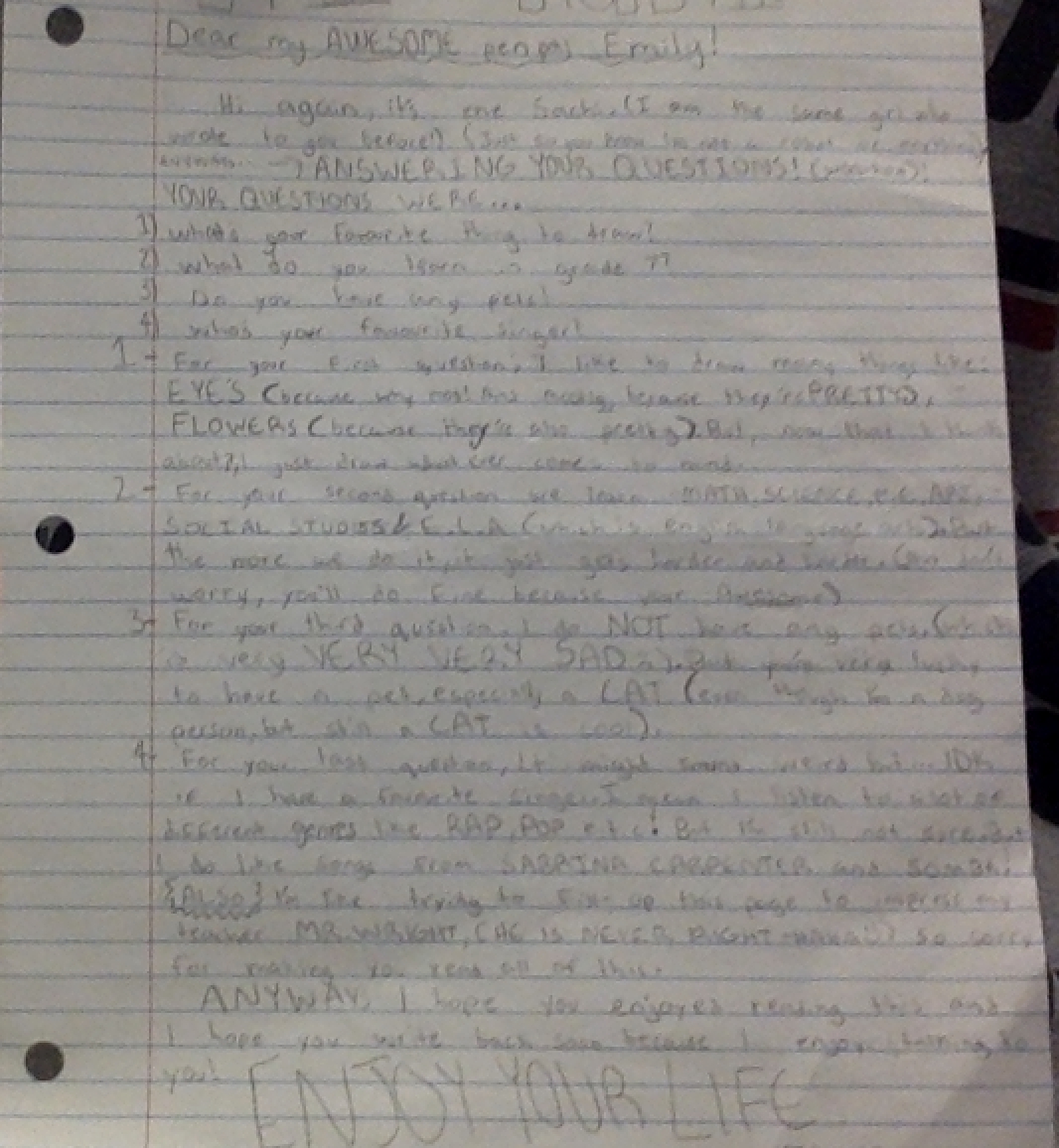
Students are strengthening their ability to write for a range of purposes and audiences through essays, letters, note-taking, poetry, presentations, and debates. These samples show students planning, drafting, proofreading, and refining their writing to improve clarity, effectiveness, and impact.
OUR FOCUS
At Bothwell, our focus is on supporting students to become proficient and knowledgeable users of language, in all its forms, with a specific emphasis on language features, structures, and conventions. This focus matters because students use language to express ideas, organize their thinking, communicate with clarity, and engage meaningfully with others. As students strengthen their understanding of how language works, they are better able to share their learning with confidence, purpose, and increasing independence.
Our student learning goals are for students to:
develop greater accuracy and control when using language features, structures, and conventions
organize ideas clearly for different purposes and audiences
use writing and design processes to plan, draft, revise, and refine their work
communicate meaning through a variety of forms, including written, oral, visual, and creative expression
reflect on and improve their communication so their message is clear, effective, and purposeful
This focus is connected to a broad cohort of learners across the school who are developing their written communication skills in different ways. Students are at varying points in their learning, and our goal is to support continued growth in how they use language to express their ideas, make meaning, and communicate with others.
Across the school, students are engaging in learning experiences that help them build confidence and skill as communicators. These experiences include opportunities to develop narrative writing, explore literary devices, write for authentic audiences, practice foundational conventions, exchange ideas with others, and revise their work for clarity and impact. Through these learning experiences, students are strengthening their ability to communicate in ways that are increasingly accurate, intentional, and connected to purpose and audience.
OUR NEXT STEPS
Having continued our focus on literacy and written communication, we are seeing students engage in a range of opportunities to use language with increasing accuracy, clarity, and purpose. This year’s focus on language features, structures, and conventions has provided a meaningful lens for understanding how students organize ideas, communicate meaning, and refine their writing for different audiences and purposes.
Evidence of student learning from classroom assessments, student work samples, student voice, and school-wide results indicates that this continues to be an important area of focus for our learners. While students are demonstrating strengths in expressing ideas, participating in writing experiences, and communicating for a variety of purposes, the overall data shows that many students continue to require support in developing greater accuracy, independence, and control as writers.
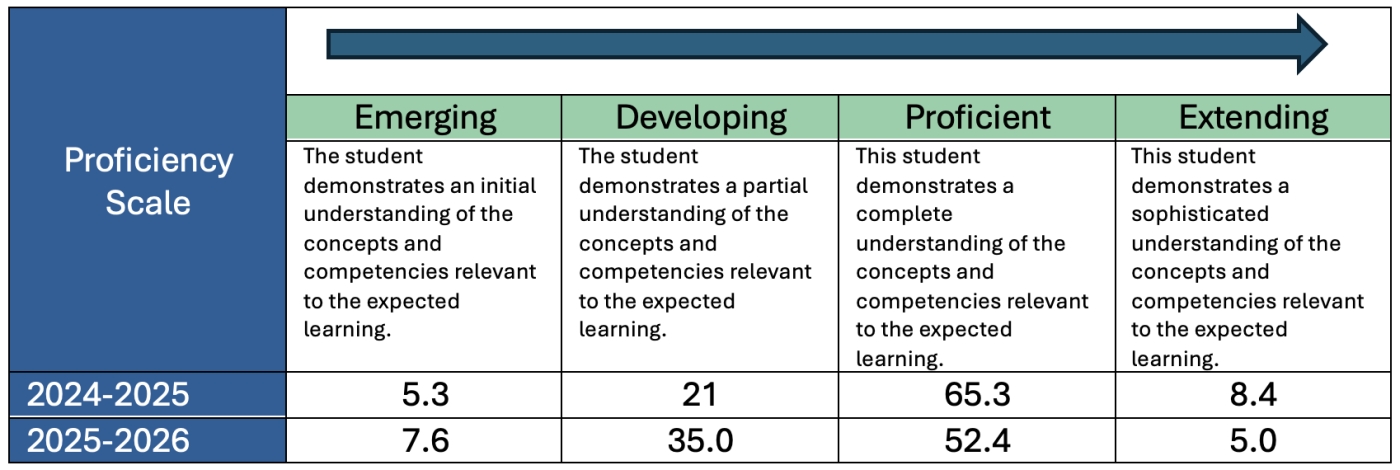
Across the school, students have engaged in learning experiences that support them in planning, drafting, revising, and sharing their thinking through a variety of forms. These experiences have helped students build foundational skills and develop an understanding of how language choices impact meaning. Moving forward, we recognize the need to continue strengthening students’ ability to apply these skills consistently across different writing contexts.
Students are continuing to develop in the following areas:
organizing ideas with increasing clarity and structure
using conventions such as spacing, punctuation, paragraphing, grammar, and spelling with growing accuracy
developing written work for different purposes and audiences
revising and refining communication to improve clarity, effectiveness, and impact
using writing as a way to express ideas, make connections, and communicate thinking
Moving forward, students will benefit from continued opportunities to develop greater independence and precision in their writing. In particular, students will need support to expand their ideas, strengthen transitions, use evidence and details to support their thinking, and apply language conventions more consistently across different writing contexts.
Our next steps will include:
continuing to support students in using the writing process to plan, draft, revise, edit, and publish
providing opportunities for students to write for authentic purposes and audiences
strengthening students’ ability to use language features, structures, and conventions to communicate clearly and effectively
supporting students in giving, receiving, and applying feedback to improve their writing
using ongoing student learning evidence and student voice to determine areas for continued growth
We will continue to use the Spiral of Inquiry to guide our planning, reflect on student learning, and evaluate the impact of our work. This reflective process will help us remain responsive to the strengths and needs of our learners while continuing to build strong literacy foundations, confidence, and student agency as communicators.
Surrey Schools
Formed in 1906, the Surrey School District currently has the largest student enrolment in British Columbia and is one of the few growing districts in the province. It is governed by a publicly elected board of seven trustees.
The district serves the cities of Surrey and White Rock and the rural area of Barnston Island.