Bonaccord Elementary 22-23

OUR CONTEXT
 Bonaccord Elementary is a great school located in the Guildford Area of Surrey, BC. It has an incredibly diverse population, with 46 different languages spoken. The team at Bonnacord is committed to fostering equity and inclusion for all through our focus on stewardship, teamwork, academics, respect, and safety (STARS).
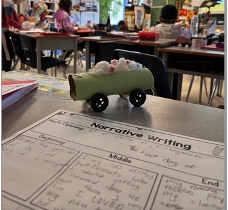
At Bonaccord, students actively engage in a wide range of curricular and extracurricular activities that help develop STARS skills and promote effective communication. Examples of these activities include the Reading Link Challenge, collaborative coding projects, building and testing gravity vehicles on a Gravity Track, participating in a diverse music program, and community service projects such as planting trees and marking storm drains with yellow fish symbols. In addition to their academic studies and community service projects, students actively participate in environmental studies. By engaging in activities such as tending to the school garden and exploring ecosystems in Green Timber Forest, students are provided with wonderful opportunities to observe, record, and discuss their observations and experiences. Through these experiences, students gain invaluable knowledge and understanding.
Intermediate students are encouraged to practice and showcase their creative leadership skills by taking on various responsibilities. These include sharing morning announcements, leading monthly assemblies, organizing and participating in fun-filled Spirit Days, and helping out around the school. In addition, our intermediate students have the opportunity to participate in a variety of athletic team activities. These activities foster a mind-body connection within an inclusive environment where everyone's skills are valued.
OUR LEARNERS
For several years, Bonaccord School has placed a strong emphasis on Social and Emotional Learning (SEL). As a result, there has been a noticeable improvement in students' application and understanding of self-regulation strategies. Additionally, students self-reported as having a positive sense of connection with both adults and fellow students in the Middle Years Development Index (MDI) and Grade 4 and 7 Learning surveys. Students also reported levels of optimism, empathy, self-esteem, and happiness that are comparable to those of other schools in the district. Moreover, their beliefs regarding a positive school climate and a sense of belonging at the school were rated slightly higher than the district norms.
Based on anecdotal evidence and the results from baseline assessments, it appears that Bonaccord students are still emerging in terms of learning with a significant number of English words that are commonly used in oral and written activities in the classroom. Therefore, the staff believe students would greatly benefit from strengthening their English literacy skills through the building of a robust English vocabulary. This will empower them to communicate and collaborate fluently in all social and academic environments. Therefore, recognizing the importance of targeted instruction in English vocabulary development, the Student Learning Committee agreed that the Student Learning Plan for the 2022/2023 school year will focus on assisting students in applying and expanding their word knowledge.
Staff members met to collaborate and plan instruction for the Fall term. They built specific word lists that all students in each grade should know by June 2023. Additionally, all staff members learned how to use the speech-to-text translation program on devices to bridge any language barriers. Lastly, they collaborated to identify useful resources, such as "Bringing Words to Life," "Vocabulary in a Snap," Heggerty Phonemic Awareness Program," "Words Their Way," "No Glamour Grammar," and "Closing the Vocabulary Gap." Lastly, oral story samples were collected from all primary students and baseline writing samples from all intermediate students.

The staff collaboratively adopted an approved vocabulary program with grade-level words lists to boost students' vocabulary. Additionally, students were challenged to learn and use a new word on a weekly basis. The word, its definition, and an example sentence were shared during daily announcements. The Leadership Team came up with a brilliant idea of creating a bulletin board near the library to showcase the "Word of the Week" and its definition, thereby providing an eye-catching visual aid for each new word. Furthermore, studies have shown that reading can help increase an individual's vocabulary, so the school began planning a "For the Love of Reading" event to reinforce this idea beyond the school community.
The Learner Support Team (LST) focused on using the Haggerty program, specifically focusing on prefixes, suffixes, and root words to help students break words apart and chunk them into manageable sound combinations. In addition, students used flashcards to associate English words with their first language, such as Arabic, Chinese, Farsi, Kurdish, and Spanish. Learning multiple languages simultaneously adds an additional layer of complexity, so it will take some time to observe what progress the students who benefit from LST support are making with vocabulary development and usage.
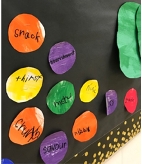
The Kindergarten classes focused on developing students' vocabulary by learning about bugs, with a specific emphasis on the butterfly life cycle. The teachers explicitly taught scientific terms, including insect body parts, insect names, and vocabulary related to the stages of a butterfly's life. In each class, a caterpillar was observed daily. As a group, the students noted the changes in the butterfly life cycle and used vocabulary to describe what they were seeing. Most classes had observation booklets that included a page with terminology, allowing students to easily access words to use in their writing. Classrooms also contained bug-themed books with pictures and words for students to connect with.

In one Kindergarten class, the students went on a bug hunt where they learned how to gently capture, observe, and identify insects by examining their body parts. Additionally, they utilized their oral language skills to discuss and explain their findings. Another Kindergarten teacher collaborated with the Teacher Librarian to set up butterfly-themed activities for the classes, allowing learning to extend into Library time. The kindergarten students displayed a high level of engagement and interest in their learning. They enthusiastically shared their understanding of these "big" words through both oral and visual means. Additionally, some of them were able to make personal connections. While others asked deeper, thought-provoking questions and statements that stemmed from their curiosity,
- What is the difference between a cocoon and a chrysalis?
- What are the red specks on the ground?
- How come one of them died?
- Butterflies drink nectar!
By emphasizing academic vocabulary within the plant unit, the Kindergarten students were able to express their thoughts and ideas using a wide range of vocabulary.
To enhance students' vocabulary knowledge and usage, students in Grade 1 and 2 were given a password each day that they had to recite to their teacher whenever they needed to leave the classroom. The teacher also wore the password around their neck. The password consisted of a word from the Dolch Sight Word list, including word family words.

During the morning calendar, students were introduced to the password by exploring its meaning. Then, the placement of letters and their corresponding sounds were explicitly taught. To help them remember the password, students participated in a pantomime activity where they pretend to take a photo of the password. To help students make connections between words through rhyme, if the password belonged to a word family, other onset letters were substituted. Lastly, students enhanced their understanding of the password by creating a few sentences containing the day's password and clapping each word in the sentence.
Throughout the year, the students displayed a noticeable level of engagement and would even remind the teacher if they forgot to ask for the password. What was even more remarkable was that the students became increasingly aware of these passwords. As an example, they would identify the passwords they had learned while reading books. Overall, the students' vocabulary and phonics knowledge increased, and with the support of a word wall, they consistently incorporated the newly learned words into their daily writing.
In Grades 3 and 4, teachers chose to provide targeted vocabulary instruction by highlighting one word per week. These words were often academically focused (such as "observe" and "visualize") or descriptive words that were considered "juicy," like "resilient." The routine included teaching the definition of the word, discussing synonyms and antonyms, having the students draw a picture to illustrate the meaning, and write an example sentence using the word. Teachers also utilized Adrienne Gear's triple scoop approach to encourage students to incorporate engaging vocabulary and teach them how to effectively use a thesaurus. Lastly, the Word Wall included unknown words in the novels being read, as well as curricular vocabulary such as mathematical, scientific, and Social Studies words.
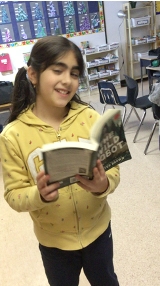 Throughout the school year, it was noticed that students began to take an interest in the weekly word. For example, they felt a sense of pride when they were able to recognize the word of the week during other activities, such as reading a story, and explain the meaning of sophisticated words they had discovered. The students began offering their own suggestions for the word of the week. Overall, they showed improvement in their sentence writing skills and demonstrated a willingness to take risks by brainstorming synonyms and antonyms.
In a Grade 4 classroom, spelling lists were carefully designed to highlight the importance of using prefixes and suffixes. For instance, students collaborated in teams to generate as many words as they could that share common affixes or prefixes.
Like students in other grades, Grade 5 students received subject-specific language instruction in Science, Numeracy, and Social Studies. With explicit vocabulary instruction around Word Walls, students learned to effectively communicate scientific and mathematical findings. Furthermore, they demonstrated the ability to use advanced vocabulary when discussing Canadian history, particularly in relation to discriminatory policies.
Students in Grade 5 were also provided with explicit instruction on vocabulary, giving them the opportunity to practice using newly learned words in a variety of sentences and encounter the words in multiple contexts. In addition, students utilized picture dictionaries as tools to assist them in associating visuals with vocabulary, thereby providing context clues to enhance their comprehension of words. Lastly, by utilizing the digital tool TouchChat, a student with special needs was able to effectively communicate with others. Moreover, their friends were able to navigate language more efficiently by observing how vocabulary is organized by theme, enhancing their ability to streamline communication.
 Grade 6 students initially took a vocabulary self-assessment and Grade 7 students took a forty-question vocabulary assessment. Throughout the school year, the teachers integrated the established vocabulary lists into various curricular activities, including Language Arts, Social Studies, Science,
  and Mathematics. In May, Grade 6 and 7 students were reassessed to determine whether there were any improvements in their vocabulary knowledge. Overall, the data collected showed a notable improvement. Additionally, the classroom teachers observed that students were successfully integrating the Word of the Week and "juicy words" that were explicitly taught during writer's workshops into their everyday writing. During the 40 Book Challenge, students experienced fewer struggles with rich vocabulary as they utilized the vocabulary dictionaries they had created to enhance their discussions during literature circles.
OUR FOCUS
 In order to further enhance student engagement and expand their vocabulary, a Grade 3 teacher chose to read the story "The Word Collector" by Peter H. Reynolds and created corresponding activities specifically designed to foster vocabulary development. The students created their own library of words using index cards with great enthusiasm. Each card included the word, its definition, synonyms, antonyms, and a sentence that demonstrated its usage. Overtime, students began to incorporate their library of words into their everyday writing. To assist with this process, the classroom teacher created a separate word wall specifically for these terms.
The same Grade 3 teacher built a Feelings Word Wall to help students understand and communicate their emotions. During group meetings, students were given time throughout the school year to share their feelings. As the school year progressed, the teacher introduced more complex vocabulary, such as trepidation, uncertainty, glee, enamored, and elated, during these group meetings and added them to the Feelings Word Wall. Over the course of the school year, students began using these terms to describe their own and others' feelings. They also incorporated more complex language skills when engaging in personal or fictional writing activities.
 In addition, the opportunity of having a live visit from a Surrey Book of the Year nominee who talked about their writing method that included explicitly teaching impactful words, followed by the students in a Grade 5 class creating their own stories using the same process, resulted in a significant improvement in both the quality and quantity of the students’ fictional writing. For example, students used
  language that was more captivating to the reader. In addition, Collaborative Storytelling provided students with opportunities to collaborate and build stories together, allowing them to combine their vocabularies and expand the scope of their writing. This approach also fostered peer-to-peer learning and mentoring. Using poetry writing as a means of self-expression enabled students to accurately describe their unique qualities in a meaningful and specific manner. This exercise encouraged students to delve deeper and select more uncommon words.
OUR NEXT STEPS
 By prioritizing rich vocabulary development and explicitly teaching and reinforcing subject-specific vocabulary, students have demonstrated improvements in applying and expanding their word knowledge. This improved learning outcome provides strong evidence for the need to continue prioritizing this goal. However, over the course of the school year, students and staff expressed the value of participating in workshops that focused on the power of
 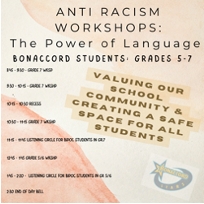 words related to identity and using Zones of Regulation language strategies. Therefore, in response to the voices of the school community, the Student Learning Plan for 2023/2024 school year will continue to focus on supporting students in applying and expanding their word knowledge but also include a student learning goal to support student in creating stories that foster shared understanding and enhance critical thinking.
Surrey Schools
Formed in 1906, the Surrey School District currently has the largest student enrolment in British Columbia and is one of the few growing districts in the province. It is governed by a publicly elected board of seven trustees.
The district serves the cities of Surrey and White Rock and the rural area of Barnston Island.