Beaver Creek Elementary 25-26

OUR CONTEXT
Beaver Creek Elementary is situated on the unceded and shared traditional lands of the Katzie, Kwantlen, Semiahmoo, and other Coast Salish Peoples, who have cared for and stewarded these territories since time immemorial.
Located in Surrey’s Panorama/Sullivan area near Scott Road, Beaver Creek is a vibrant and diverse elementary school community. We are dedicated to fostering strong partnerships with families and creating meaningful learning opportunities that support students’ academic, social, and emotional development. Our goal is to help every learner build the skills and confidence needed to achieve their personal best.
Students at Beaver Creek are encouraged to discover and pursue their interests through a wide range of curricular and extracurricular experiences. We value the unique strengths, experiences, and needs of each learner and recognize the importance of understanding their individual stories. By building strong relationships and providing responsive support, we help students grow, overcome challenges, and thrive.
Guided by the First Peoples Principles of Learning, we recognize that learning is a lifelong process requiring time, patience, reflection, and exploration of identity. These principles help shape a school culture where all learners feel valued, supported, and empowered.
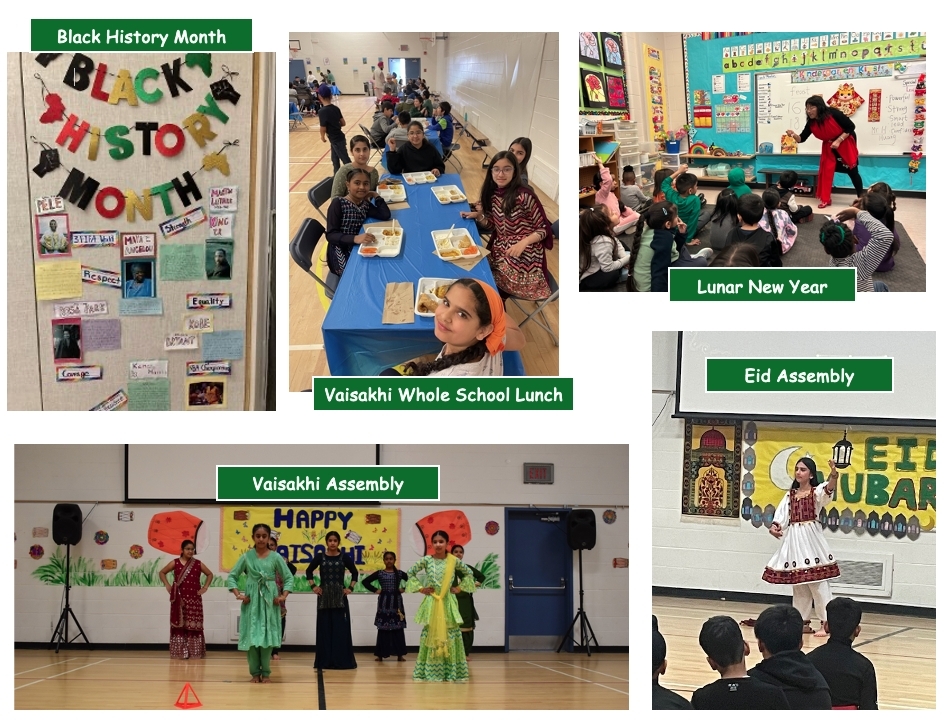
At Beaver Creek, we value opportunities to come together in celebration. Throughout the year, we engage in events and learning experiences that reflect and honour the diverse cultures, identities, and traditions represented in our community.
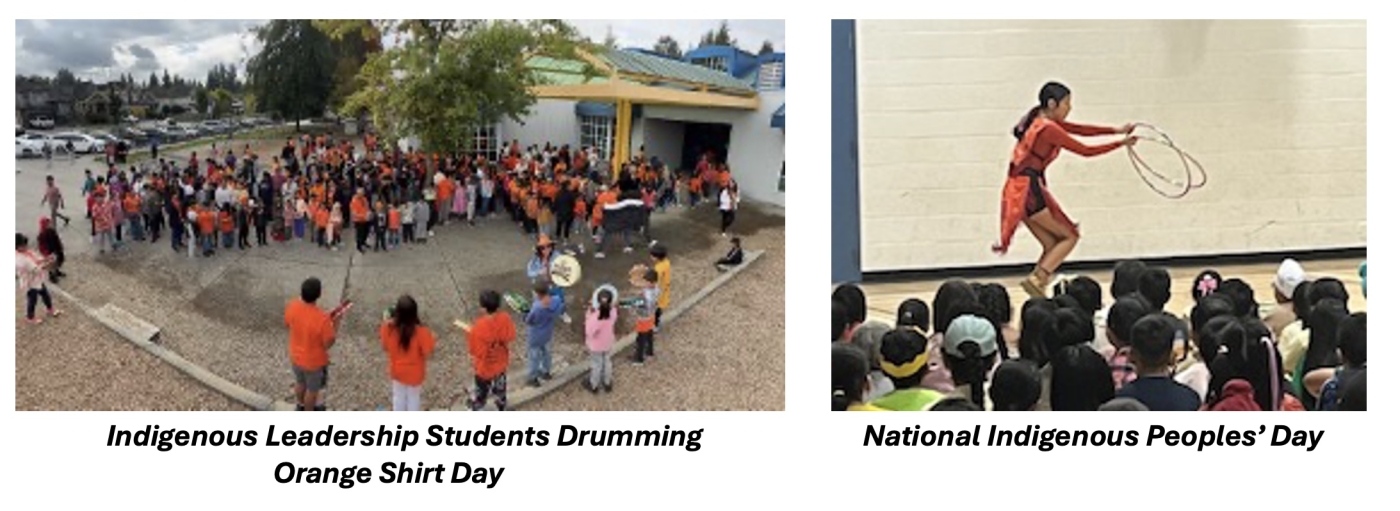
As a school community, we are actively engaging in our journey of Truth and Reconciliation while continuing to work toward decolonizing teaching and learning.
OUR LEARNERS
At Beaver Creek Elementary, our approach to literacy is driven by the needs of our learners. This year, our school community includes 431 students, with 247 students identified as English Language Learners, representing a range of language proficiencies. These learners make up 57% of our student population. In addition, more than 88% of our students speak a language other than English as their primary language at home.
Given the linguistic diversity of our school, we recognize the importance of providing a rich language environment where students can strengthen their communication skills, expand their vocabulary, and develop confidence as readers and writers. We believe that strong literacy skills are foundational to academic success and lifelong learning.
As educators, we promote a culture of reading throughout the school and encourage students to engage with texts every day. We support learners in selecting books that reflect their interests, experiences, and curiosities, helping them develop both enjoyment and independence as readers. Through classroom reading experiences, students are encouraged to make meaningful connections to themselves, their peers, and the wider world, fostering deeper understanding and engagement with learning.
"Learning is embedded in memory, history and story" ~ First Peoples Principles of Learning
Our Journey
Reading continues to be a key area of focus at Beaver Creek Elementary and remains an important component of our Student Learning Plan. Our commitment to literacy is informed by ongoing classroom observations, student learning data, and our belief that strong reading skills are essential for success across all areas of learning.
For many years, Beaver Creek has prioritized literacy development. We are fortunate to be supported by the Surrey School District through a dedicated team of Learning Support teachers who work alongside classroom teachers to support students at all grade levels. In addition, our Early Literacy teacher provides targeted support to primary students as they develop foundational language and reading skills.
The Library Learning Commons serves as the heart of our school community. Centrally located and welcoming to all learners, it provides students with access to a wide range of resources and opportunities to engage with literature and inquiry. Across the school, students participate in daily reading experiences that help build fluency, comprehension, and a love of reading. Through the collective efforts of our staff, we strive to create a culture of literacy where all students are supported in becoming confident readers, effective communicators, and lifelong learners.
Core Communication Competency: Acquiring and Presenting Information
Students communicate by receiving and presenting information. They inquire into topics of interest and topics related to their studies. They acquire information from a variety of sources, including people, print materials, and media; this may involve listening, viewing, or reading, and requires an understanding of how to interpret information.
(BC Curriculum, Communicating Competency)
Our Learners
While reading is a school-wide focus, we have been looking closely at a single grade cohort of students and tracking their progress since 2021/22. These learners are helping us better understand the impact of many different reading initiatives and activities happening school-wide.
At Beaver Creek, students are discovering that language and storytelling can inspire imagination, creativity, and enjoyment.
Students at Beaver Creek are enthusiastic about reading, and our Library serves as a central gathering place within the school community. All learners have consistent opportunities to access and borrow a wide range of reading materials that reflect diverse interests and levels.
Reading is encouraged beyond the classroom, with students supported to continue their literacy development at home. We celebrate reading throughout the school and work in partnership with families to strengthen its role as a meaningful part of everyday life.
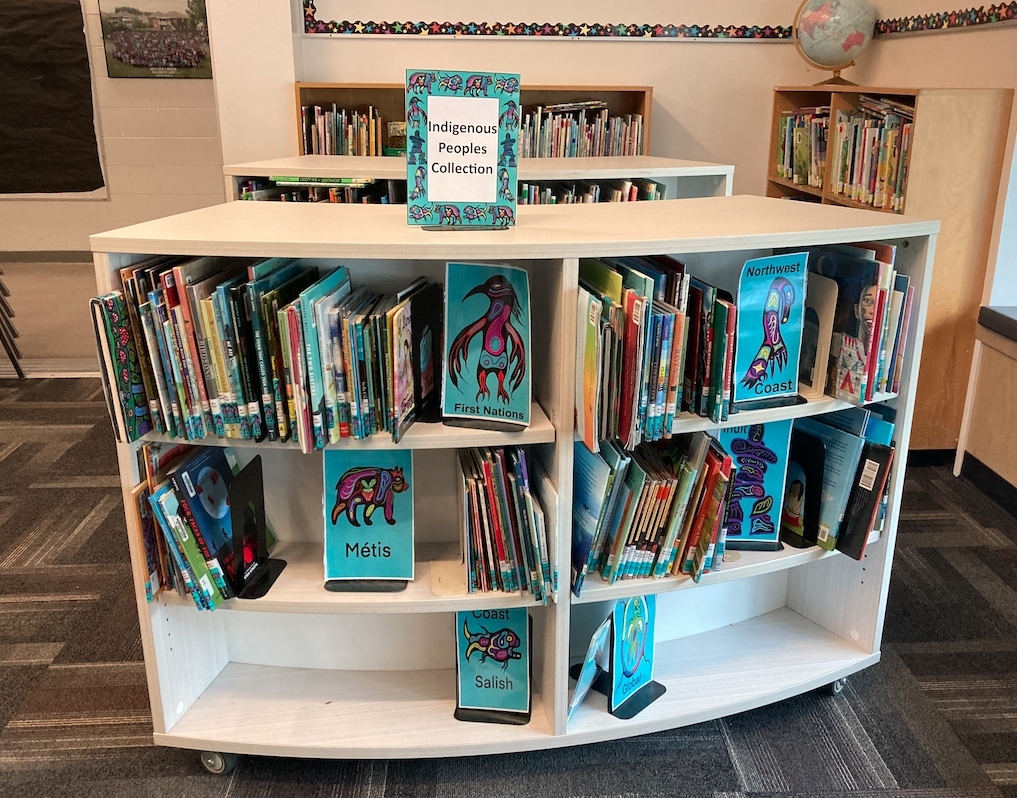 Our Indigenous section of books in our school library
At Beaver Creek, students are supported in drawing on a wide range of sources, along with their own prior knowledge and experiences, to develop a deeper understanding and make meaningful connections in their learning.
Reading instruction at Beaver Creek includes explicit teaching and opportunities for students to practise asking questions, finding information, identifying main ideas and key details, using text features such as diagrams and tables, and organizing information.
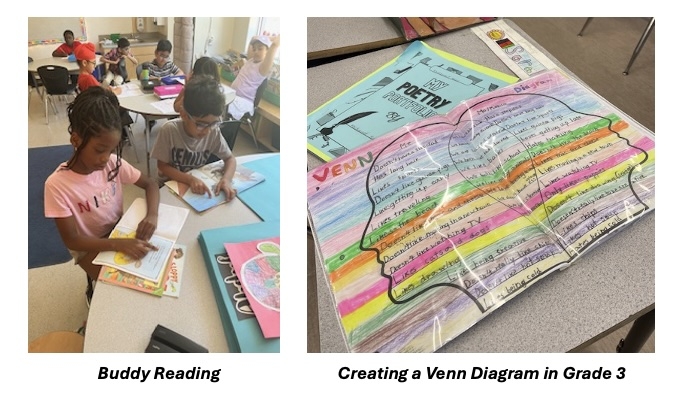
At Beaver Creek, our students are learning reading and comprehension strategies
Examples of these strategies include:
- using contextual clues and phonics
- making predictions
- making connections
- visualizing
- summarizing ideas and information
- making inferences
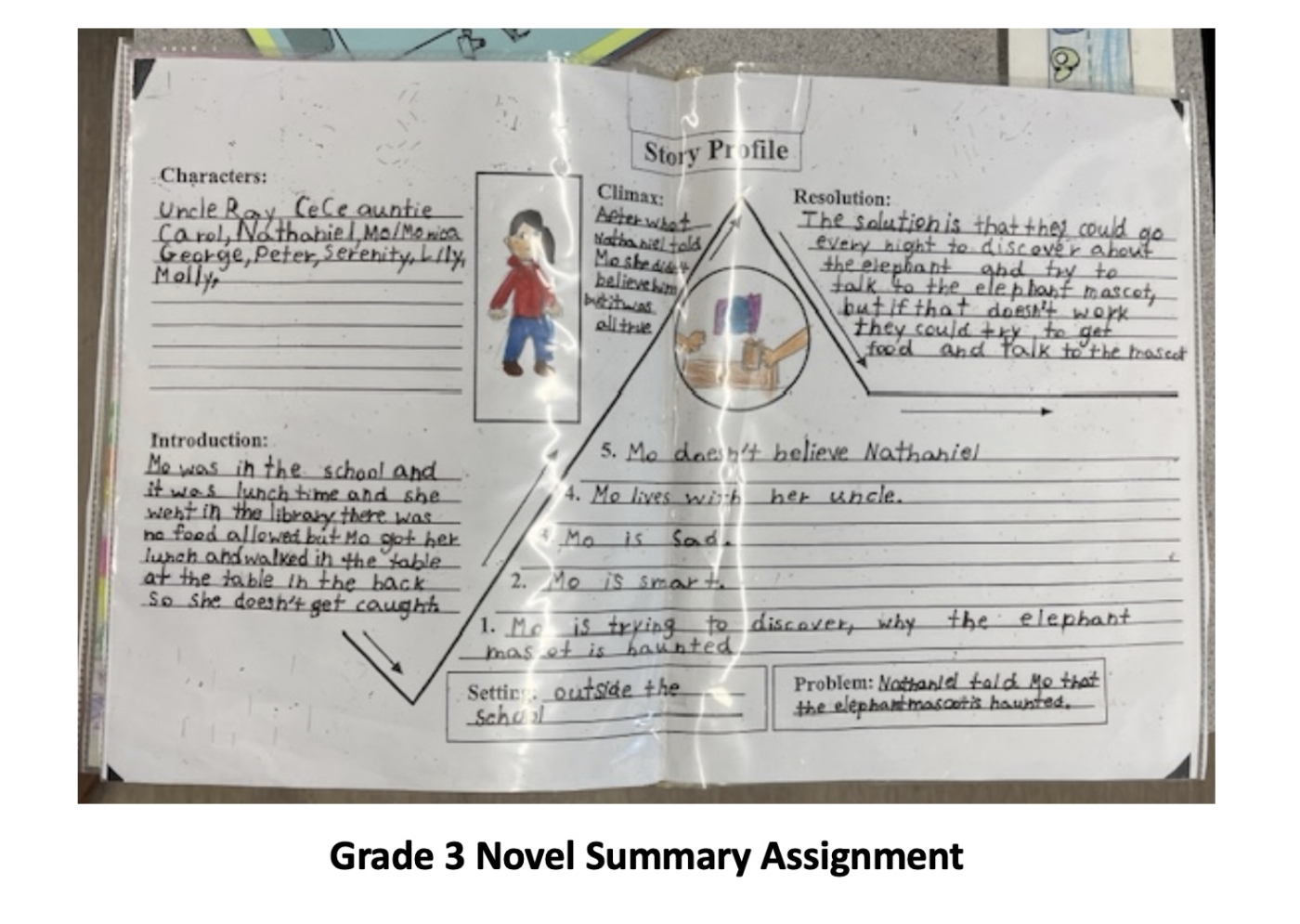
What else do we know about our learners?
- They are connected to each other.
- They see themselves in a positive light.
- They try their best.
"I love school, I love learning, I love my teacher, I like learning with my friends." - Grade 3 Student
"I learn a lot when I am at school and I feel happy and get support from my friends and teachers." - Grade 6 Student
The students here are inspired to learn and come to school every day, expecting to be the best versions of themselves.
OUR FOCUS
Reading
Students engage with reading across all areas of the curriculum, enriching their learning and everyday lives. Reading takes many forms throughout the day, and experiencing it in different ways helps deepen and strengthen understanding.
At Beaver Creek Elementary, our goals are:
- to foster a love of reading where it is valued and practiced at home and at school
- to support students in decoding and making meaning of text
- to continue to develop reading and comprehension skills
Our Cohorts
Original Cohort
The cohort of students we have followed over the past five years represents a diverse group with a wide range of backgrounds and abilities. A shared experience among them is that their early reading development began during the COVID-19 pandemic. We have tracked their growth from Grade 2 in 2021/22. The cohort in 2025/26 is in Grade 6. Building on learning from previous years, this group has continued to engage in a broad range of reading experiences, and a closer look at their progress has provided valuable and encouraging insights.
Second Cohort
At the end of the 2023/24 school year, the next step identified for 2024/25 was to begin tracking a second cohort of students. Last year we started monitoring our Grade 2 students and this year they are in Grade 3. Like the older cohort, this group is diverse, with varied backgrounds and abilities. Unlike the Grade 6 cohort, these students began elementary school after the height of the COVID-19 disruptions, though they experienced the pandemic in early childhood. We look forward to closely following their reading development and comparing growth between the two cohorts.
Reading Progress
Original Cohort
English Language Arts - Curricular Competencies – “Read fluently at grade level.”
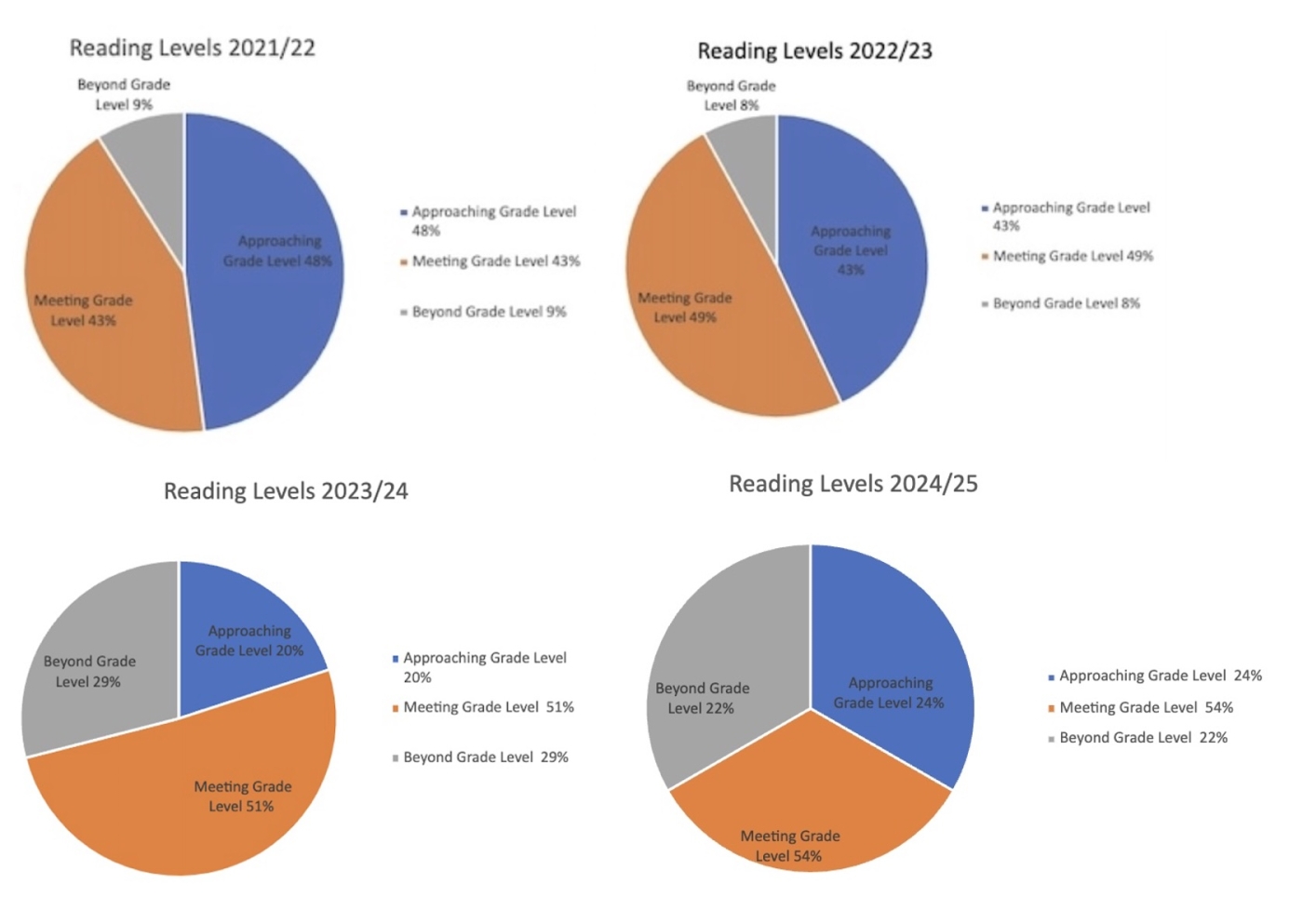 Our data from the original cohort, collected each spring from 2022 to 2025, showed the following:
- 2021/2022 - 52% of students meeting or exceeding grade-level reading expectations
- 2022/2023 - 57% of students meeting or exceeding grade-level reading expectations
- 2023/2024 - 80% of students meeting or exceeding grade-level reading expectations
- 2024/2025 - 76% of students meeting or exceeding grade-level reading expectations
As we began the 2025/26 school year, we were encouraged by the reading information we had collected from school-wide reading assessments over the previous four years. The number of students in our original cohort reading at, or above, grade level had risen from 52% in the Spring of 2022 to 76% in the Spring of 2025. While we had a small dip in our reading scores, we continue to see strong evidence of learning and growth overall. Given this progress, we decided to continue with the same overall programs and interventions. However, we have also brought in new resources and programs that we felt would benefit our students.
Recently added resources
- Responding to readers
- Ufli
- Decodables
- Science of Reading
Question: What makes you a good reader?
"Learning how to sound out tricky words makes me a good reader." ~ Grade 3 student
"I spend at least an hour a day reading chapters books, and I think this has made me a good reader" ~ Grade 6 student
Question: What can you do to get better at reading?
"Looking at the pictures helps you understand what you are reading and what the story is about" ~ Grade 3 student
"Picking books that are at my reading level helps me to be a better reader" ~ Grade 6 student
Reading Rocket Popsicle Parties
One of the ways that we continue to celebrate a love of reading is through our Reading Rockets Celebrations. We host regular "Reading Rocket Popsicle Parties" for all the students who have committed to reading for 20 minutes for forty nights.
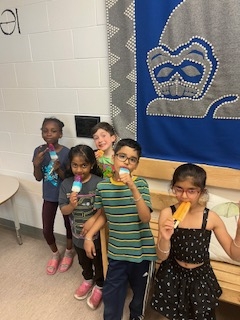
Reading can look different throughout the day, and when we experience it in different ways, we have opportunities to strengthen and deepen our understanding.
What does reading mean to us here at Beaver Creek?
“We get to listen to stories from all over the world with our friends” - Grade 3 Student
"Everything we learn helps us to develop skills." - BC Curriculum: Big Ideas - Career Education
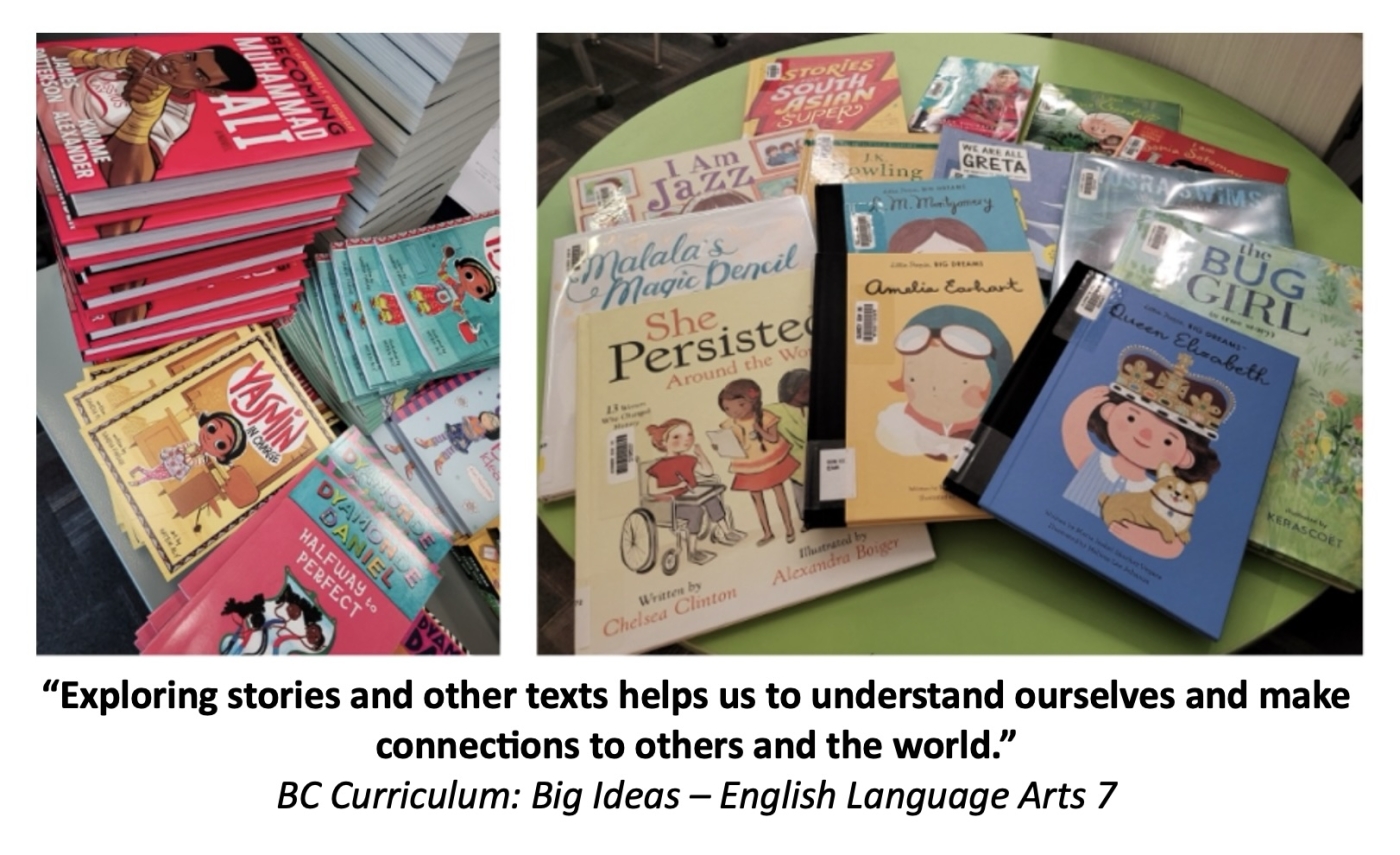
We commit to bringing in a wide variety of novels and picture books that reflect our diverse community and showcase characters and stories from around the world.
OUR NEXT STEPS
Where are we now?
We are in Year 5 of our reading focus goal, and we are committed to continuing this work. We have seen steady progress.
Original Cohort
To better understand the impact of our efforts, we have continued to collect data from our original grade 2 cohort (now in grade 6). In June of 2026, we assessed this cohort and found that their progress over the past five years had remained steady, but we are watching a recent dip.
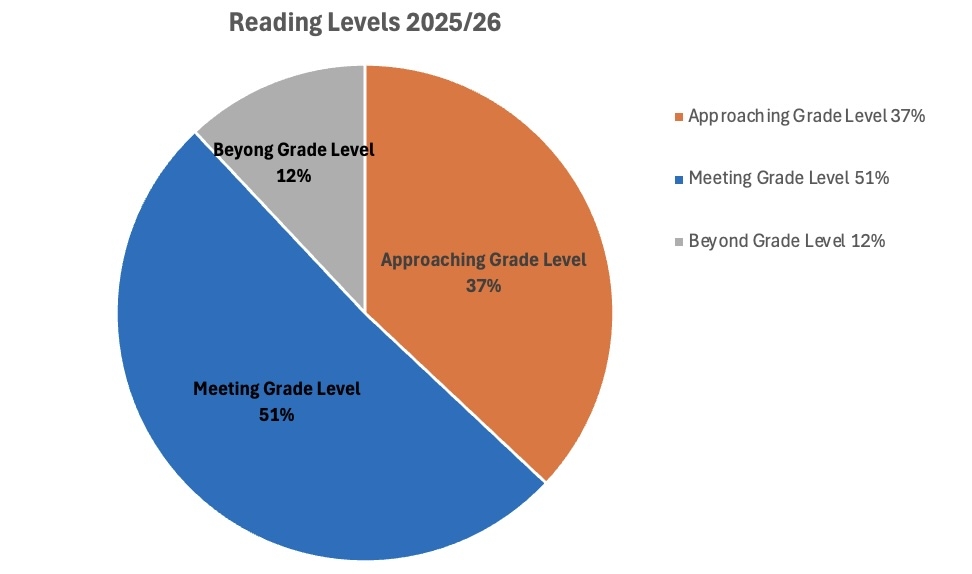
- 2025/2026 - 63 % of students meeting or exceeding grade-level reading expectations
In 2022, 52% of our cohort were reading at or above grade level. This rose to 57% in 2023, to 80% in 2024 and remained steady at 76% in 2025. This year, that number decreased to 64%. We are interested in this dip, and will continue to monitor the progress of our grade 6 cohort as they move to their final year of elementary school. However, we are encouraged that the results are still positive overall. We know that over these five years the makeup of the original cohort has changed, as many students have moved in and out of our school.
Second Cohort
Last year we began to track the progress of a second cohort in grade 2 during the 2024/25 school year. This year that group was in grade 3 and we were pleased to see an increase of the number of students meeting or exceeding grade-level reading expectations.
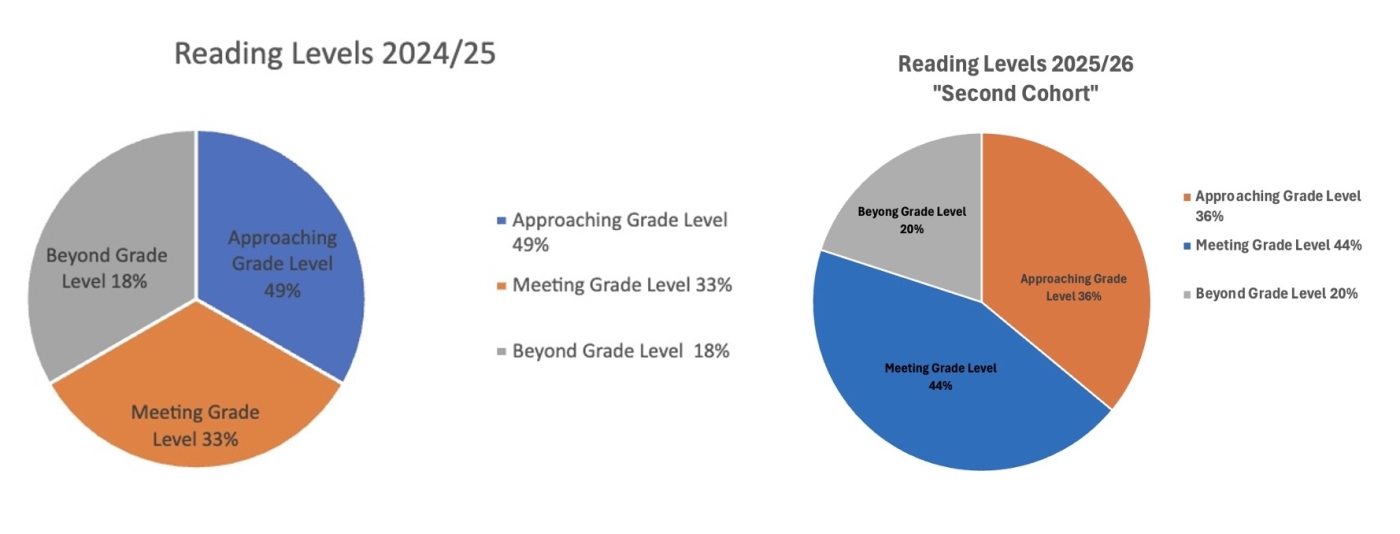
- 2024/2025 - 51% of students meeting or exceeding grade-level reading expectations.
- 2025/2026 - 64% of students meeting or exceeding grade-level reading expectations.
We will continue to track this cohort of students and compare it to our original cohort to assess the impact of our efforts to improve reading at Beaver Creek.
A Student Story
Vaughn is a grade 5 student at our school. He is an outgoing, friendly student who loves basketball. He has been at Beaver Creek since Kindergarten and he has an older brother who is graduating from Tamanawis Secondary this year and also attended Beaver Creek. Vaughn has recently begun working with our Indigenous Child Care Worker and our Indigenous Leadership group and he has really enjoyed participating in cultural activities like drumming and Bannock and Books, which is an event for our Indigenous families that promotes and celebrates reading. Vaughn shared some of his experiences at Beaver Creek.
Next Steps
Being a Good Reader
Being a strong reader goes beyond decoding words on a page. It involves understanding information, communicating ideas with others, and expressing thoughts and connections through speaking and writing. As our cohort approaches the end of elementary school, their thinking about reading continues to develop and evolve.

What does it mean to be a good reader? What does good reading look like? Sound like? Our students guide our next steps at Beaver Creek, the successes we have seen, and the areas that could use further development.
Question: What can you do to get better at reading?
To explore this question, we will continue to concentrate on informed and flexible assessment practices.
Question: What kind of assessment strategy, guideline or criteria can we create to provide direct evidence of our students' reading?
In 2022/23, a group of teachers collaboratively created new tools that meet the specific needs of our learners and their grade levels.
I Can Statements (Proficient Readers Can) - Grade 3/4
- I can use phonics, word structure, and context clues to read the words.
- I can make logical predictions.
- I can reread and skim text for details.
- I can describe the main characters, settings, and events from the story.
- I can retell the events in the correct order.
- I can answer questions from the text accurately.
- I can make connections to myself and others when reading a story.
- I can draw pictures with supporting details after reading the story.
- I can ask relevant questions based on what I am reading.
- I can give my opinion and support it with reasons from the text.
- I can locate the main idea and details from the text.
- I can read the text features (e.g., headings, illustrations, diagrams, charts, table of contents, glossary, index, etc.).
- I can find the intended meaning of the text.
Sample Rubrics - Grade 3/4


These rich and collaboratively created assessment tools will continue to evolve. They offer opportunities for further collaboration and give us all a clear picture of where we are going next with our work around literacy and reading in the years to come. We will continue to use these tools in the 2026/2027 school year.
We would also like to continue supporting students in becoming better, more confident readers. We are committed to continuing to implement reading assessments and evidence-informed reading instruction to help improve these results.
Next Year:
- We will continue to support and implement reading strategies and collect data for our two cohorts.
- We will continue to deepen our professional learning to support students in improving their reading.
- We will explore new resources and assessment practices
- We may begin exploring a writing goal, as this has been identified as an area for growth by our teachers
Surrey Schools
Formed in 1906, the Surrey School District currently has the largest student enrolment in British Columbia and is one of the few growing districts in the province. It is governed by a publicly elected board of seven trustees.
The district serves the cities of Surrey and White Rock and the rural area of Barnston Island.