Bayridge Elementary 25-26

OUR CONTEXT
OUR LEARNERS
Our Learners are developing their ability to decode words and improve their reading comprehension skills.
Decoding is the foundation of reading comprehension. Before a student can understand a text, they need to be able to read the words accurately. For our early elementary (K–3) students and new English Language learners , there is a strong focus on decoding (phonics) as it is essential for later comprehension. As students progress into intermediate grades, instruction increasingly emphasizes comprehension strategies, but decoding still remains important—especially for new or complex texts.
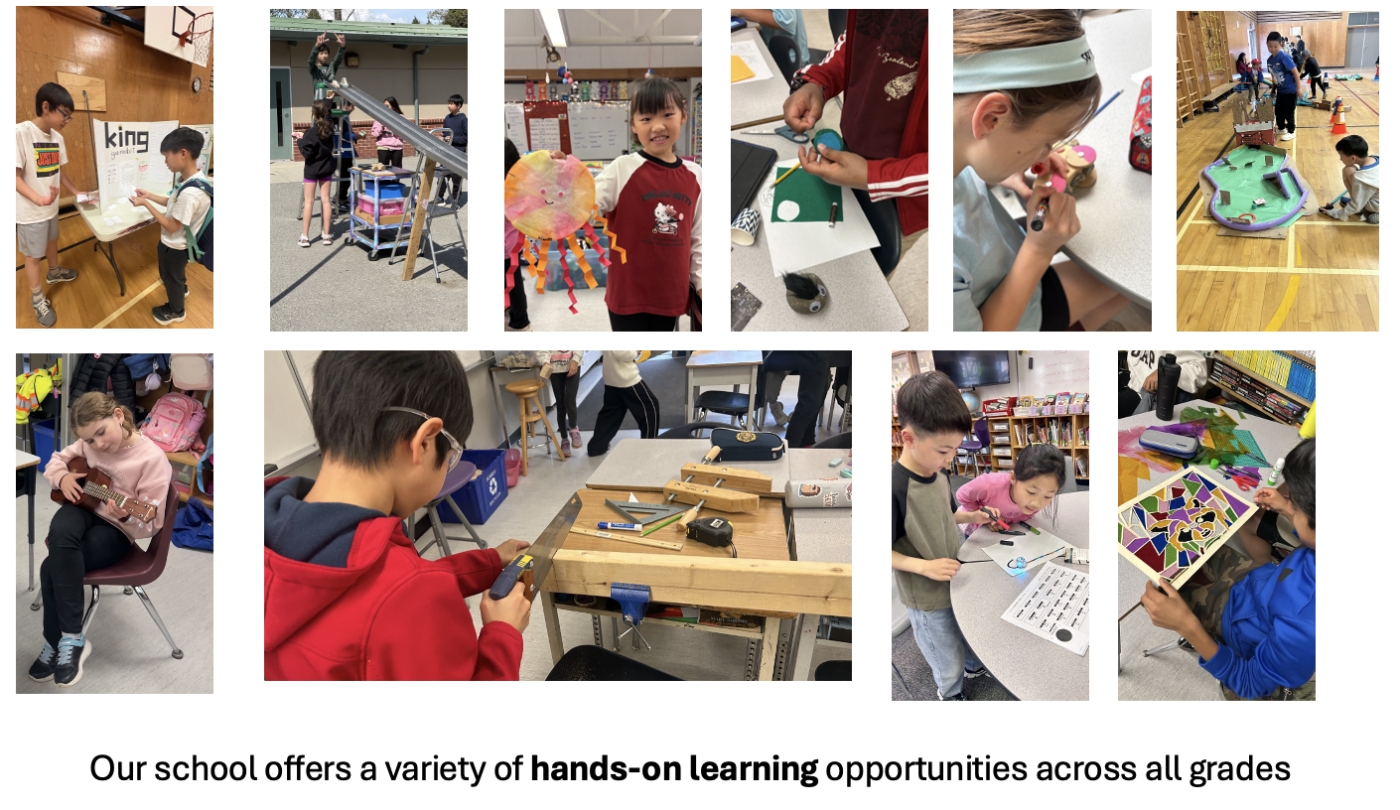
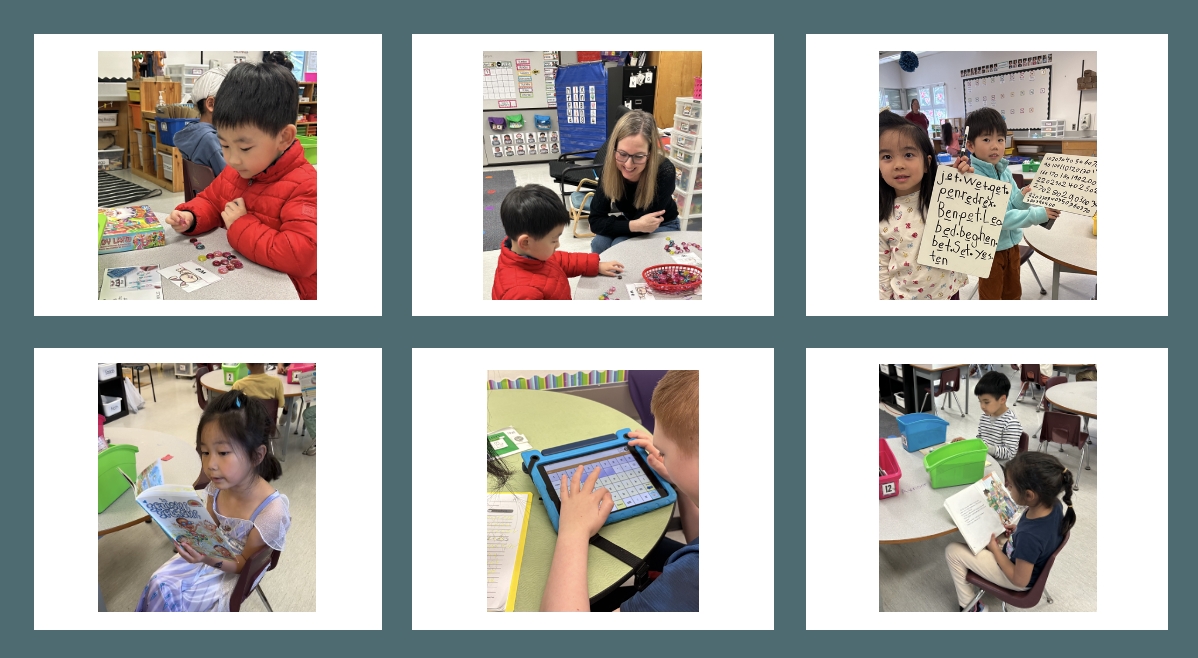
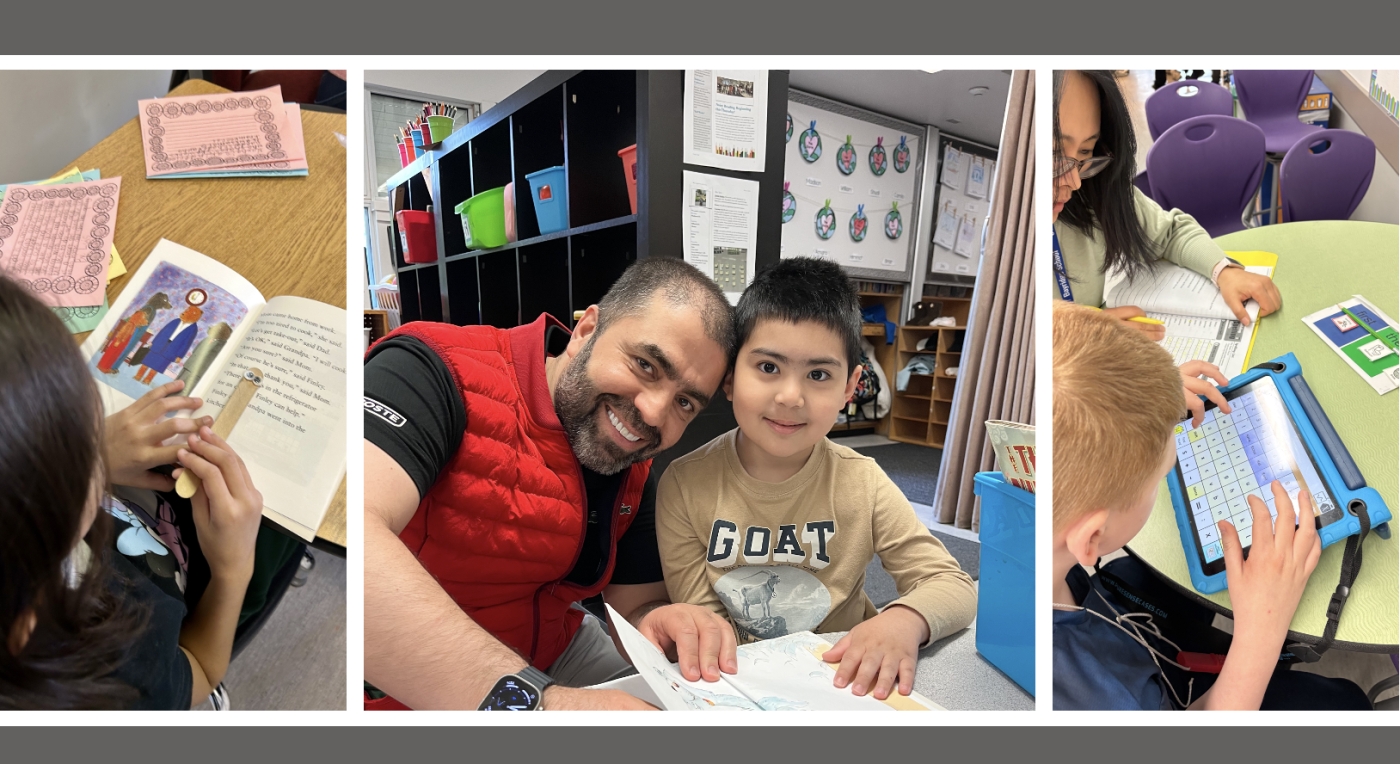
Our Learners are engaged in a variety of rich literacy activities in every classroom. They are exploring new decodable books, technology apps, hands on activities and literacy programs.
 This year, one of our students told his teacher that the “favourite part of his day is Literacy Centres!” It’s easy to see why—students are actively engaged in a variety of hands-on, interactive activities that make learning both fun and meaningful. Through these centres, they explore letters, sounds, and words in creative ways that help strengthen their understanding of letter–word relationships. By collaborating with peers and participating in purposeful play, students are building essential literacy skills while fostering a love of reading and learning.
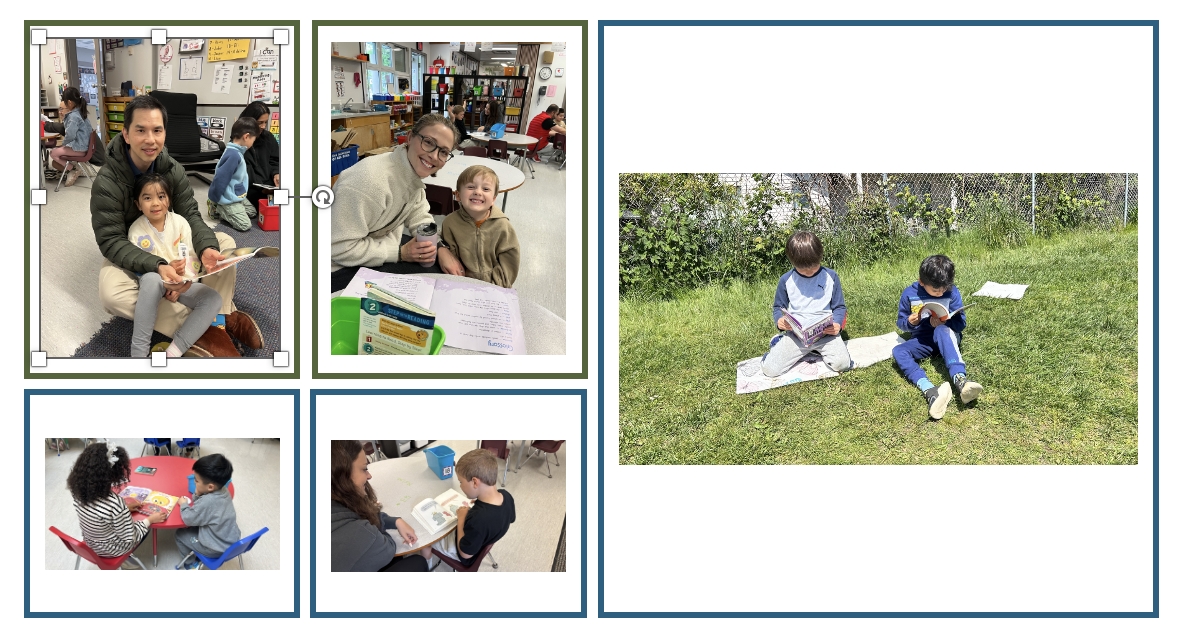
Our Learners have the opportunity to share books with friends, families and big buddies
Sharing books together teaches students to:
- Think while reading
- Understand vocabulary in context
- Engage deeply with ideas
- Make connections and meaning
All of these are essential skills for becoming strong, independent readers.
Choral Reading:
When a group reads a text aloud together it supports both reading fluency and reading comprehension. Check out our early Primary Class reading together below:
- When students become more fluent, they spend less effort decoding words.
- This allows them to focus more on meaning and ideas in the text.
- Hearing fluent reading helps students understand how sentences are organized.
- Students hear unfamiliar words used correctly in context.
- Promotes a sense of community and collaboration
- Gains practice with expression, pacing, and meaning—all at once
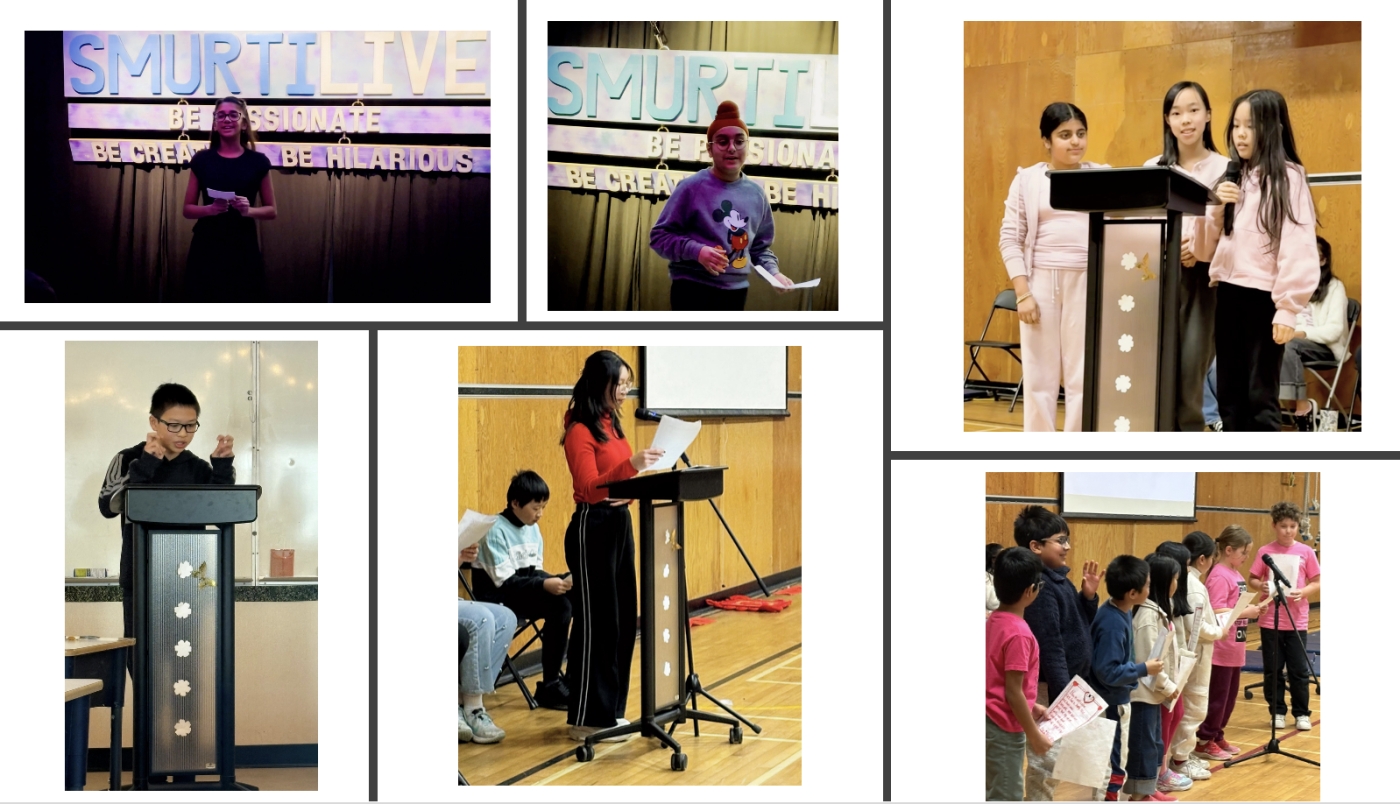
Public Speaking:
Our learners are provided with opportunities to practice public speaking. Oral public speaking can support both reading fluency and comprehension, especially when it’s structured and connected to literacy instruction. It reinforces fluency through expressive reading and strengthens comprehension by requiring deeper understanding and communication of ideas.
Connection to First Peoples Principles of Learning:
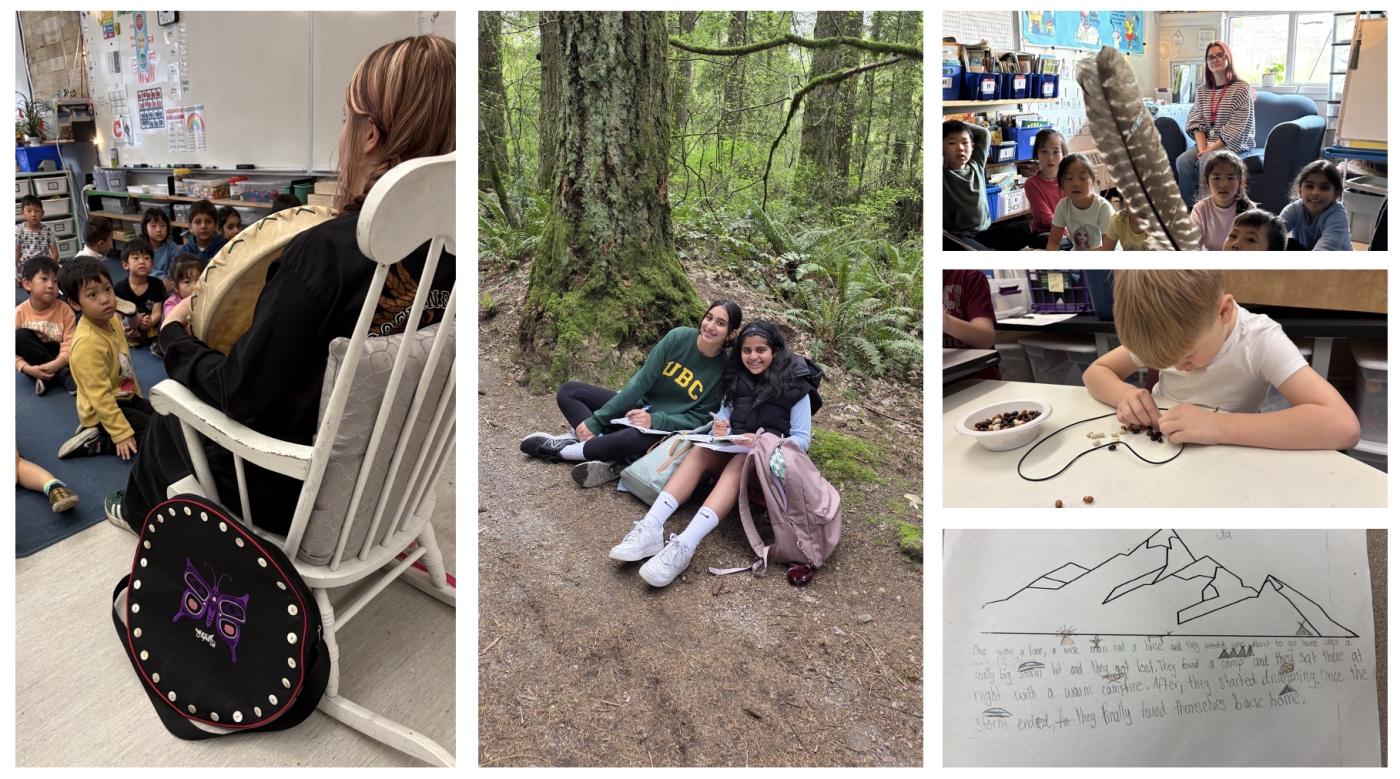
Our students are continuing to build the skills to make meaning from stories, connect ideas, and express their thinking through writing. As students move from decoding to comprehension and communication, they develop their voice, identity, and ability to contribute as confident learners.
“Learning is embedded in memory, history, and story.”
— First Peoples Principles of Learning (FNESC)
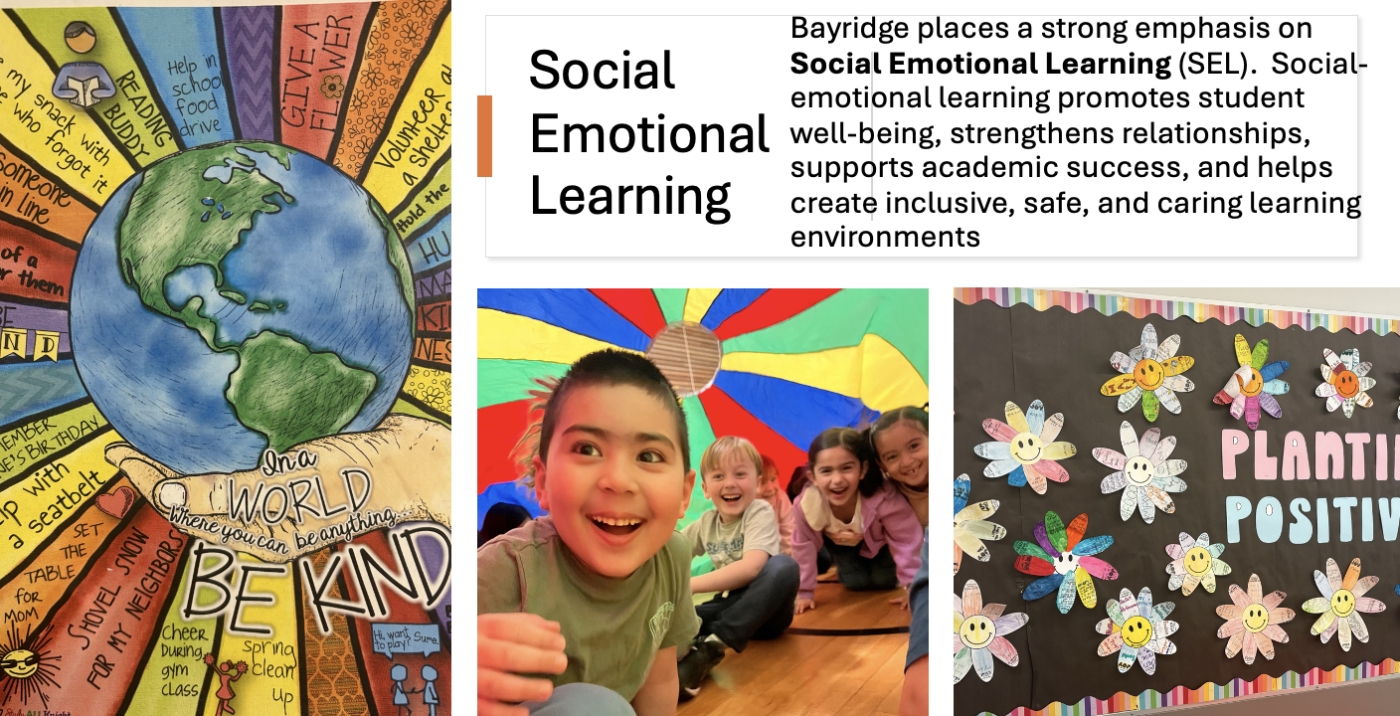
Social Emotional Learning
Our focus on building foundational reading skills supports students’ social-emotional development by increasing confidence, strengthening identity, and enabling students to express their thinking. As students become more fluent readers, they engage more fully in learning, develop empathy through story, and build the communication skills necessary to connect with others and contribute to their learning community.
“When students see themselves as capable readers and writers, they develop the confidence to express their ideas and connect with others.”
Reading Resources:
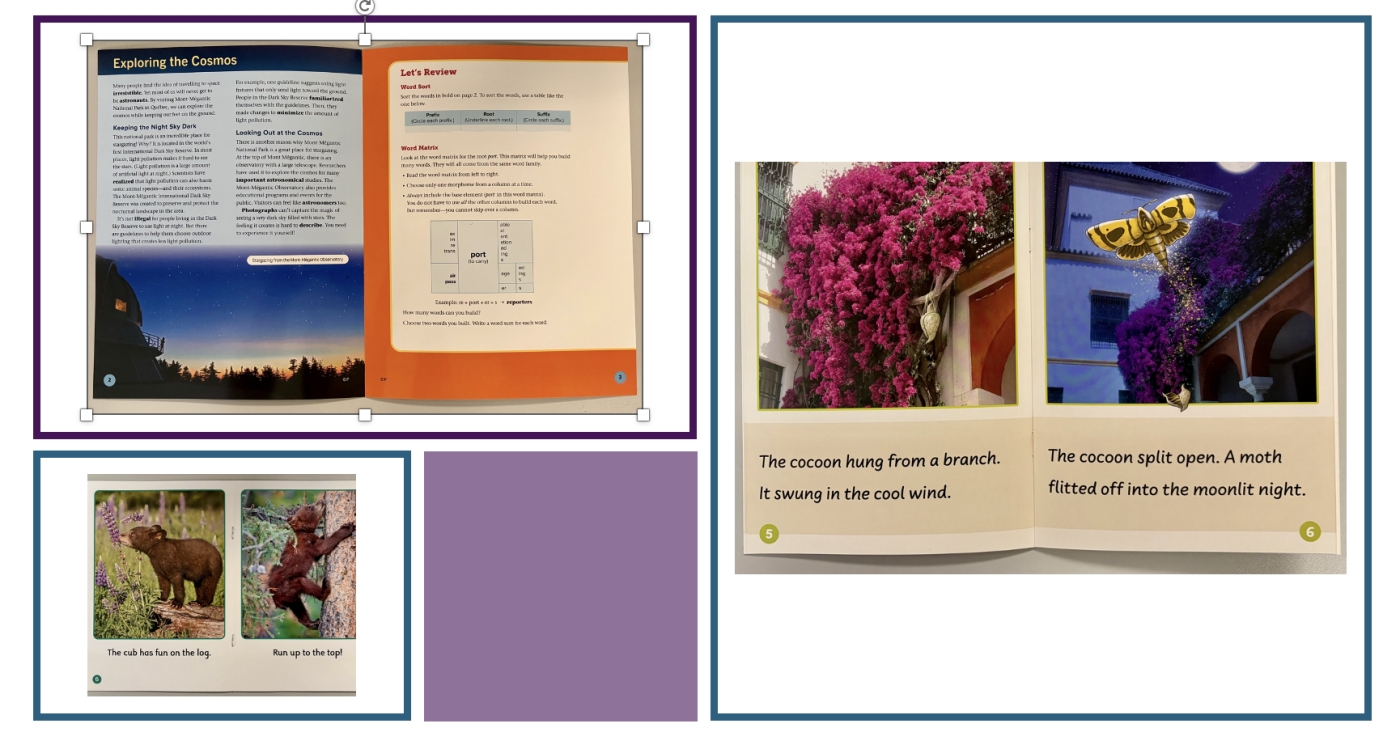
Our learners have access to new decodable books and morphology-based texts. These resources play a powerful role in building reading comprehension because they strengthen the foundational skills students need to understand what they read.
Decodable books:
Decodable books are texts specifically designed to align with the phonics skills students are learning. They use controlled vocabulary and spelling patterns so that learners can apply their knowledge of letter–sound relationships to read words accurately and independently.
Morphology:
Morphology is the study of word structure, including prefixes, suffixes, and root words. It focuses on how these meaningful parts combine to form words and how understanding them helps readers determine the meaning of unfamiliar words.
Decodable books build the bridge to fluent reading, while morphology strengthens vocabulary and meaning-making—together, they create the strong foundation necessary for deep reading comprehension.
OUR FOCUS
Our School learning goal is to improve student decoding and reading comprehension skills
Our focus is to strengthen foundational reading skills through phonemic awareness and phonics, enabling students to become confident, fluent readers who can make meaning from text.
"Decoding is the foundation of reading. Without it, comprehension cannot occur."
Our teachers identified a need to strengthen students’ reading comprehension skills, prompting a shift in focus toward the implementation of phonemic awareness programs and targeted resources.
This year, teachers have noticed a significant improvement in students’ decoding and reading skills. Take a look at our results below:
We specifically examined results from an early primary cohort to inform our understanding and guide next steps.
COHORT A:
Early Primary Results:
• Our results showed a strong, consistent growth from the beginning to the end of the year
. 
Overall results indicated an increase in both decoding and fluency:
- Decoding: 64 → 129 (+103%)
- Fluency: 71 → 119 (+66%)
• Some students showed significant acceleration in whole-word reading, showing transfer from phonemic awareness to automatic word recognition
• There is high growth for previously at-risk students
• Improved decoding is translating into fluent reading, which supports comprehension. Strong fluency gains indicate that our students are reading efficiently, supporting better comprehension.
• Most students show positive upward trajectories
COHORT B:
Primary Intensive Learning Support results:
The following baseline assessment identifies student literacy skills early to guide targetedinstruction and intervention.

September Results:
Students started off the year with strong upper and lower case letter recognition
Sound knowledge is developing across both upper and lower case letters
Early decoding skills (CVC - Consonant/Vowel/Consonant and letter blends) are emerging
Continued focus is needed on word reading development
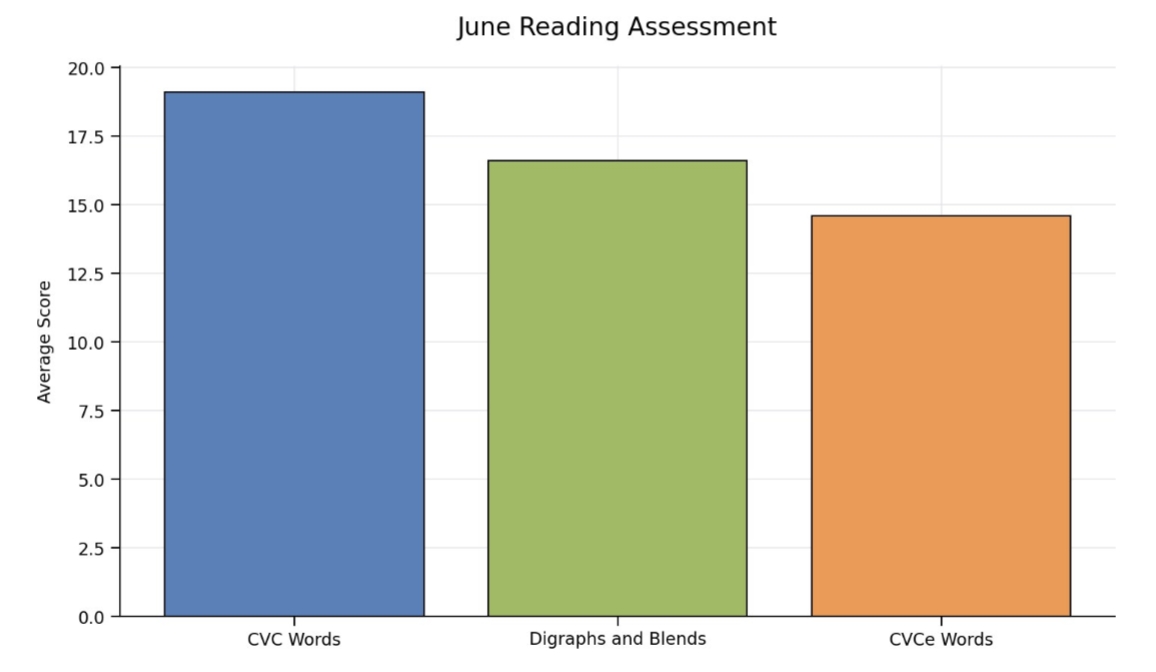
June Results:
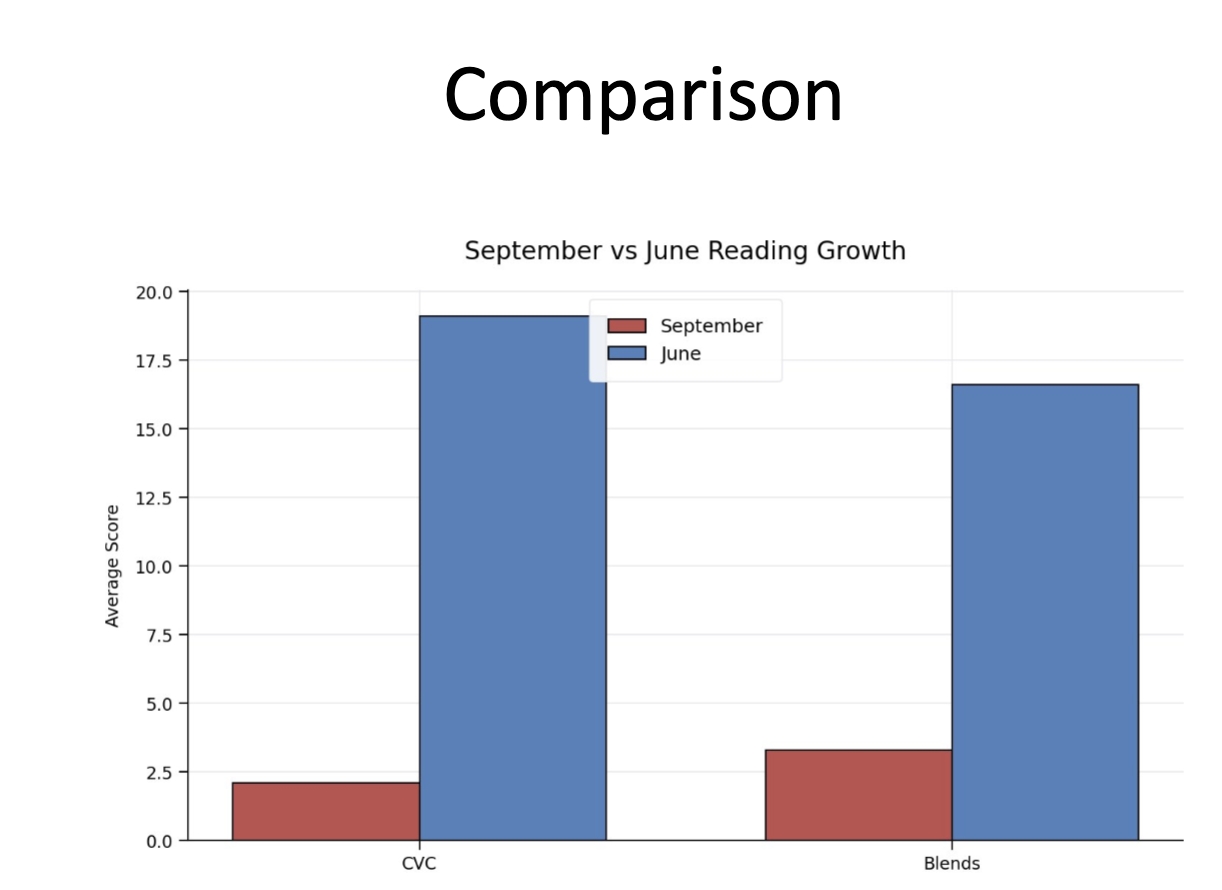
September-June Growth:
| CVC → CVC Words | 2.1 | 19.1 | +810% |
| Blends → Digraphs & Blends | 3.3 | 16.6 | +403% |
| CVCe Words | — | 14.6 | New skill development |
With intensive targeted instruction, students demonstrated significant growth across all early reading skill areas, with CVC decoding increasing by over 800% and blends/digraphs increasing by over 400%. By June, students were also developing proficiency in more advanced phonics patterns such as CVCe (long vowel) words, indicating strong progression in decoding skills.
Our Learning Support Team has indicated that students are making very good progress in increasing their phonological awareness and are applying learned phonics principles to decoding words.
Teaching children to decode gives them the key to unlock every word they encounter.”
Additional Areas of growth:
With increased emphasis on phonemic awareness instruction and literacy activities, teachers are also observing a clear correlation between improvements in students’ reading and writing skills. The following writing sample highlights one's student's significant growth from fall to spring:
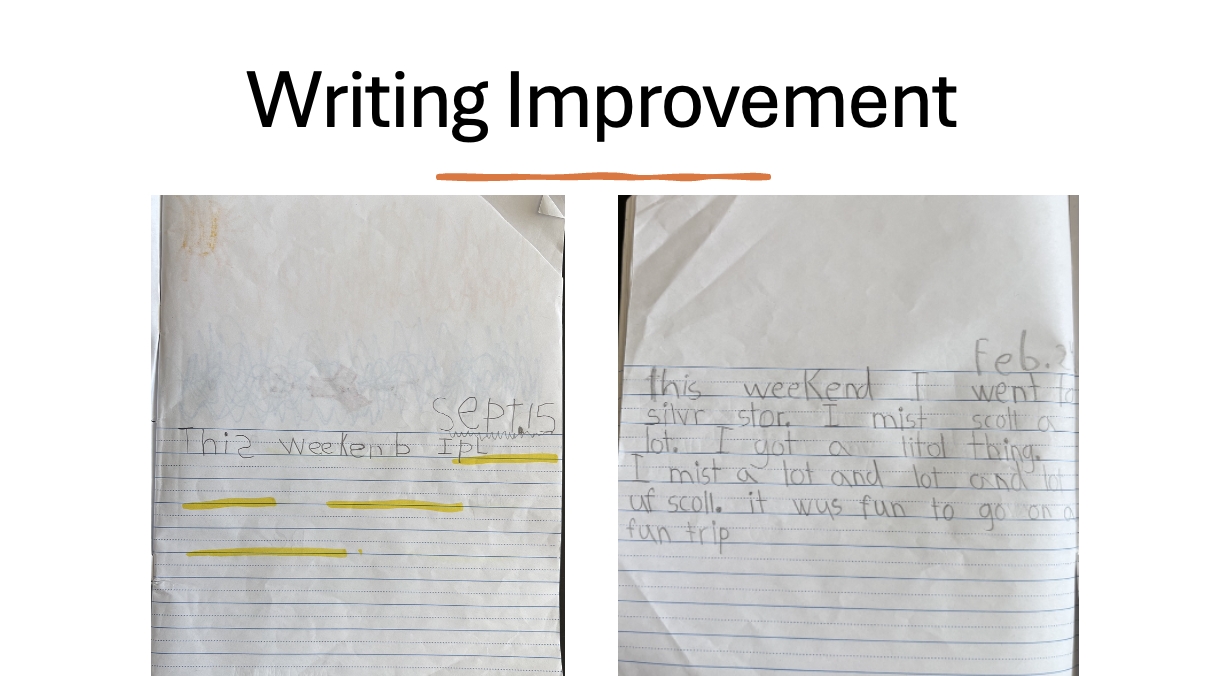
This aligns with Surrey School's focus on Literacy.
Reading and writing are interconnected. As students become stronger readers, they develop the language, structure, and understanding needed to communicate their thinking effectively in writing.
OUR NEXT STEPS
While most students show strong progress in foundational reading skills, our data indicates that comprehension skills, particularly retelling, are developing at a slower rate and will be an important area for continued instructional focus.
Our Next Steps will be to continue to:
- use data to refine instruction, target interventions, and monitor students needing additional comprehension support.
- sustain structured phonics/decoding instruction
- focus on increasing explicit comprehension instruction with a focus on
- Retelling
- Oral language development
- Vocabulary
- target small groups for students with lower oral reading fluency and retelling
- increase our use of research driven literacy resources
- Moving forward, we are going to continue to expand this work beyond our cohorts
Surrey Schools
Formed in 1906, the Surrey School District currently has the largest student enrolment in British Columbia and is one of the few growing districts in the province. It is governed by a publicly elected board of seven trustees.
The district serves the cities of Surrey and White Rock and the rural area of Barnston Island.