A.J. McLellan Elementary

OUR CONTEXT
A.J. McLellan Elementary is, at its heart, a community
 Our school is a welcoming and friendly place where students feel free to be creative and open with their ideas.
A.J. Dragons of all ages strive to ROAR –
be Responsible
Own our choices
Always do our best
be Respectful.
Every member of our AJ community strives to contribute positively to our school culture. Students of all ages work towards making A.J. a positive place to be. Our primary students love helping to keep our grounds clean, intermediate students help to support and supervise younger peers at lunch time and our Grade 7s assist with leadership jobs throughout the school and are responsible for our morning announcements. Extracurricular opportunities are available to all ages. Whether their passion is athletics, drama, music, or service, there is a place for every student to explore their interests and grow their passions.

September 2021 brought the first full attendance school year since COVID-19. In this return to typical learning environments, there has been an increase in student anxiety at A.J. McLellan. Students need additional support in school readiness skills, particularly in early Primary. All students respond to warm, welcoming, inclusive environments where their needs are met and their skills strengthened. Students at A.J. McLellan are learning about fixed mindset versus growth mindset - just because something is that way now, doesn't mean it's that way forever. They are using this knowledge to increase perseverance and begin to see themselves as learners who are capable of many wonderful things. Social and Emotional Learning (SEL) strategies, including soft starts, belly breathing, class meetings, compliment circles and many others, have increased in use through the school to support students where they are at currently and provide opportunities for students to grow in SEL skills. All of these strategies help increase student capacity in communication of needs, wants, hopes, and dreams.
As a community, we are committed to noticing the strengths of ourselves and others, naming these attributes, and growing these while strengthening others.

OUR LEARNERS
A focus on strong communication skills is at the heart of A.J. McLellan. The ability to communicate effectively is key to our learners’ success as they move through their schooling and into their adult lives. Our learners communicate in many ways: through their actions, writing, speaking, presenting, and creating. Communication skills in ways that let our learners communicate effectively and think critically about our world and their lives are important to students.
Embedding the Core Competencies into the learning plans and activities has been embraced by A.J. McLellan. Communication is a focus in the school. We are passionate about discovering and developing each student’s individual talents and interests. We teach competencies so that students become skillful when collaborating, problem solving, sharing ideas and expressing their individuality.
In September 2021, the A.J. McLellan staff met to discuss our learners and how we could better meet their needs as we entered into a new school year. Common themes quickly became apparent. Staff were concerned about the social and emotional health of our students as we moved into the first school year following Covid.
We know that when adults are supporting the social and emotional well-being of our students, these students are better able to attend to their academic learning. As a school, we are focusing on developing and enhancing the social and emotional health of our school community as a whole using communication skills to foster this social and emotional health.
Evidence of our learners many gifts, attributes and competencies are highlighted below.
Our learners recognize and appreciate the role of story, narrative, and oral tradition in expressing First Peoples perspectives, values, beliefs, and points of view
With the support and guidance of our Aboriginal Enhancement worker, a grade 7 class participated in a Talking Circle where they had the opportunity to share with their peers:
- something that they take pride it
- a way that they honour themselves
- something that brings them joy
They were guided through the circle with care and attention to the Seven Sacred Teachings of: respect, love, courage, honesty, wisdom, humility and truth. This was a very meaningful experience for the students as they learned to see each other in a different context.

"The topics in the circles pushed me to think a little deeper and harder about what I said. Other people's responses to the topics also sparked ideas for what I will share. I could relate to a lot of the things people were saying but instead of trying to explain my thoughts I just nodded as it was not the point of the circles. I learned more about people in the classroom. Not only my peers but the teachers in the room as well. I think sharing that experience has taught me so much about aboriginal peoples and my class. I am really lucky to have had a this opportunity and lesson." ~ Grade 7 Student
"I appreciated the inclusiveness of the circle because it felt as if everyone had a chance to freely talk and share, and it helped me to better understand my classmates.
My overall feelings after the circle were calm and peaceful; in those moments, I felt as if I really was part of this community, and the honour of being entrusted with someone's personal thoughts, no matter how shallow or deep, felt good." ~ Grade 7 Student
" How I felt about participating was good, and I felt accepted. This is because if we were sharing, everyone was listening. Also, if you were sharing something deep it wasn't just you it was others, too.
What I appreciated in the circle was how everyone was listening to you if you were talking and not whispering to others. I also appreciated how I could say something and people weren't going to talk about what you said outside of the circle.
My takeaways or overall feelings about the circle was that I wish we could do it again, or every week. This is because I felt very welcome. I also felt relaxed and calm afterwards when we were putting the classroom back together." ~ Grade 7 Student
Our learners understand that stories help us learn about ourselves, our families, and our communities. They engage actively as learners, viewers, and readers to develop understanding of self, identity, and community.
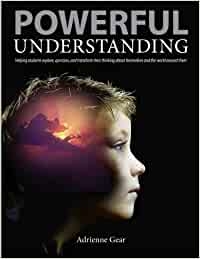
In order for our students to understand the world around us, we need to start from within. A positive personal and cultural identity is the awareness, understanding, and appreciation of all matters that contribute to a healthy self. Through incorporating "Powerful Understanding" lessons by Adrienne Gear into the classroom students have the opportunity to explore a more positive self-identity and greater global awareness.
"Learning requires exploration of one's identity." - First Peoples' Principals of Learning


Our learners build connections and relationships with peers through cooperative play
Our relationships within the school are fundamental to who we are as learners and as educators. Everyday students engage in cooperative projects, imaginative play and outdoor activities that employ communication, connection, and teamwork. In our primary classrooms, students develop fundamental problem-solving skills, learn how to collaborate, and build friendships using imaginative play during Center Time. In the classrooms students are negotiating how best to build a tower, bonding over the Lego house that they have built together, laughing together as they build an imaginary farm.


Our learners have confidence and a sense of belonging knowing they are welcomed and accepted in our school.
Many of our grade 5, 6, and 7 students participate in our Diversity Club. This group of passionate students work to lift up others around them, specifically those people who identify as a non-dominant culture, LGBTQ+, or a different skin tone. They tackle hard subjects like Pride Month and Black History Month through informative and beautiful displays for the school community to learn from and enjoy. The students came up with the themes and had complete control over the creation of their displays. Student reflections on their project demonstrate what some of our students are taking away from the experience:
“I like how we had opportunities to share our opinions with others” ~ Breanna L.
“Everyone is heard in our group” ~ Lucy B.

On this particular bulletin board, viewers are invited to take a sticky note, write something kind on it, and add the sticky note to the board. They are also invited to take a sticky note if they need a pick-me-up. Many of these sticky notes were soon placed in various places throughout the school in an effort to spread the positivity beyond just the bulletin board. Months later, many individuals have chosen to leave the notes in place.


Our learners know they can communicate self expression in many forms
Students are learning to identify emotions and personal belief systems. They know that they can express these opinions, beliefs, and emotions in a variety of ways and through creating many different types of texts. Students in grade 6 made multimedia canvas art, using the materials to evoke emotion and communicate a message to others. They wrote artist statements to explain their thinking and further their communication.

My art is about positivity. I want my art to come across as “Life is always better when you are positive”. If you look at things negatively everything you do wouldn’t be as exciting, joyful or happy as it would if you looked at things positively. Just like the saying, “Look on the bright side,” this saying is telling and signing to you, to look on the bright side, because life is a lot better if you do! The materials I used were materials that looked fun and made me happy. Such as pink, purple, yellow and white paint, gold lined cardstock, buttons, flower and pink sequins, mesh ribbon, white patterned ribbon, sticky gems, texture paste, mod podge and black sharpie to write a quote: “People with great passion can make the impossible happen.” - Ella, Grade 6
OUR FOCUS
Our learners at A.J. McLellan Elementary engage in a variety of learning encompassing communicating, reading, writing, and social emotional learning each day.
A focus on strong communication and social emotional development is at the heart of what we do at A.J. McLellan because we understand the ability to speak, write, express, and think in a way that lets our students communicate effectively and think critically about our world and their lives is key to our student’s success as they move through their schooling and on into their adult life.
Social and emotional learning (SEL) is about members of the school community acquiring and applying the knowledge, attitudes, and skills necessary to:
- understand and manage emotions
- set and achieve positive goals
- feel and show empathy for others
- establish and maintain positive relationships, and
- make responsible decisions.
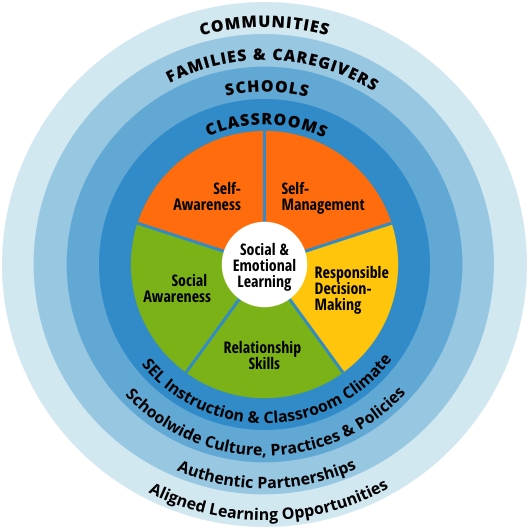
Developing strong social and emotional capacities allows students to be ready and able to learn. These components are integral to the Core Competencies, including communication, and are woven throughout the curricular areas.
At A.J. McLellan, we are working towards establishing an environment where all students feel a sense of belonging and safety through the development of:
- Safe and caring communities
- Positive personal identities
- Explicit SEL skills
- Communication skills
Learning Goals:
- We will use language and texts to express and explore our personal, communal, and cultural identities
- We can interact appropriately and respectfully to understand each other by working together. This can be done in partners, groups, debates, literature circles or other ways. We demonstrate empathy as we listen, agree or disagree, and build on each other’s ideas
Students across all grade have learning opportunities aimed at increasing the communication and social and emotional literacy success rates.
Cohort
Our learning cohort focus in 2021/2022 has been our grade seven group of learners. This diverse group of learners has experienced a wide range of educational experiences in the past three years. They have experienced online learning, a Blended Learning program where some students learned online in the mornings and came to the school in the afternoons, and learning in person with restrictions in place to keep them safe. They are eager to be with one another and to participate in all school activities that come their way. They are hungry for these experiences and ecstatic to have these opportunities. They are learning how to interact with each other and treat each other with respect in all areas of their interactions - face to face and online. Navigating social media, digital citizenship, and personal identity is complicated and skills based. It is not inherent how to navigate complex social and personal domains - our students are learning these skills.
Positive Personal Identity
AJ. McLellan learners are establishing a positive personal identity by exploring what makes them each unique individuals. They are able to use personal impromptu reflections to both celebrate their own identities and demonstrate an understanding that every person has qualities to be celebrated. In this Grade 7 class, students have spent the year exploring their identities as outlined in Adrienne Gear's Powerful Understanding. As they explore their traits through the use of picture books, class discussions, and activities, they begin to gain an understanding of all the unique qualities that make them who they are.
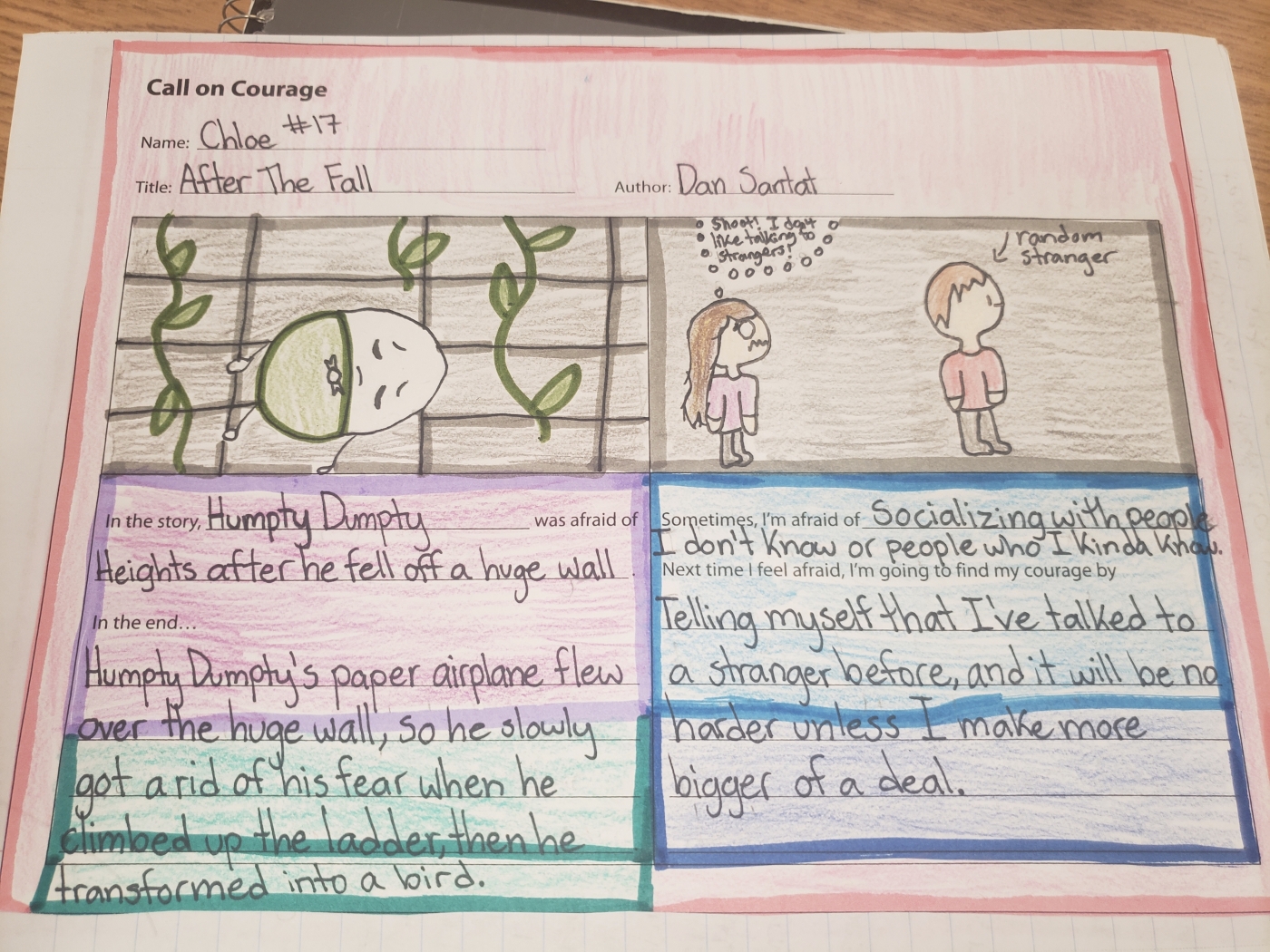
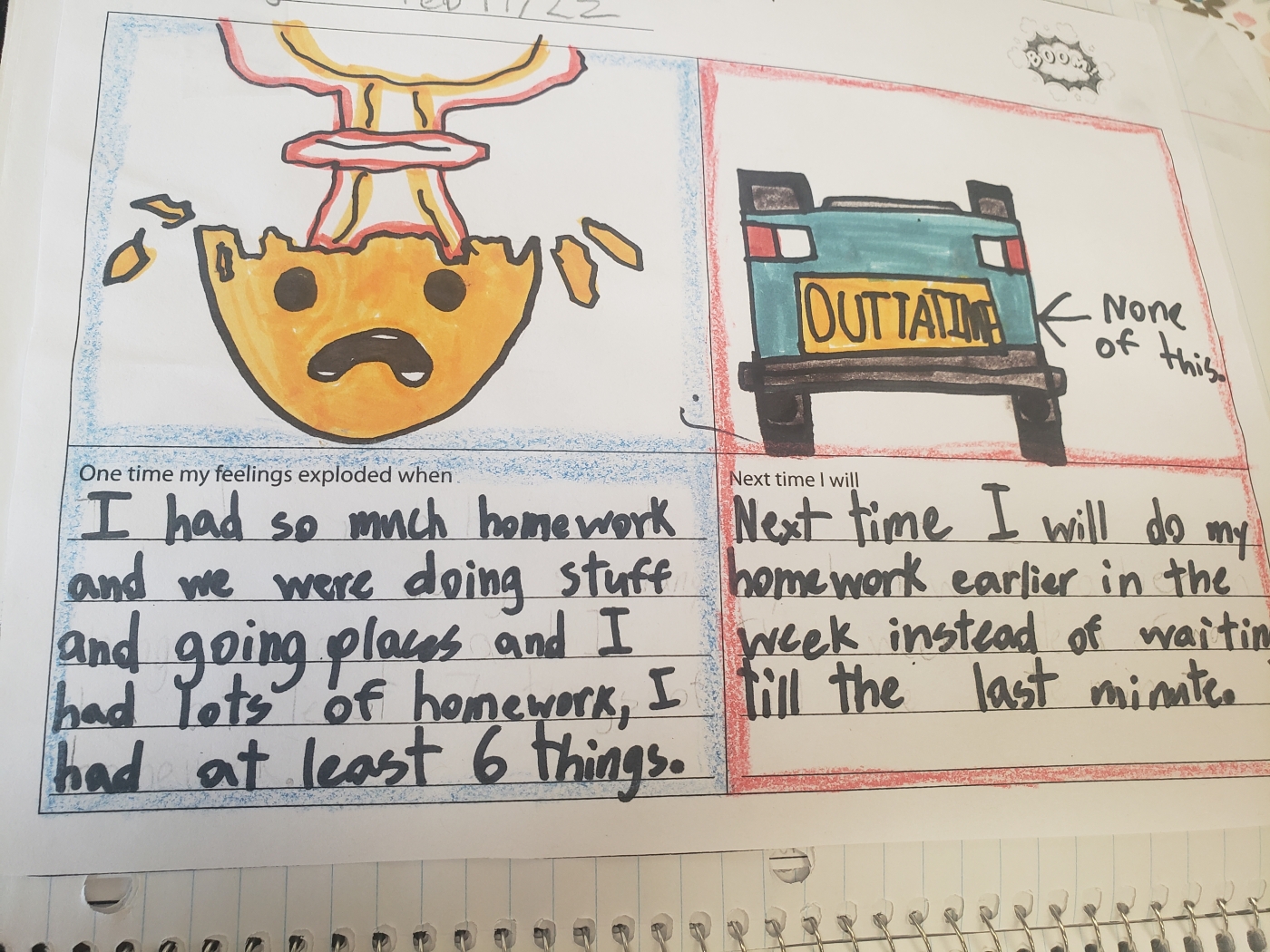
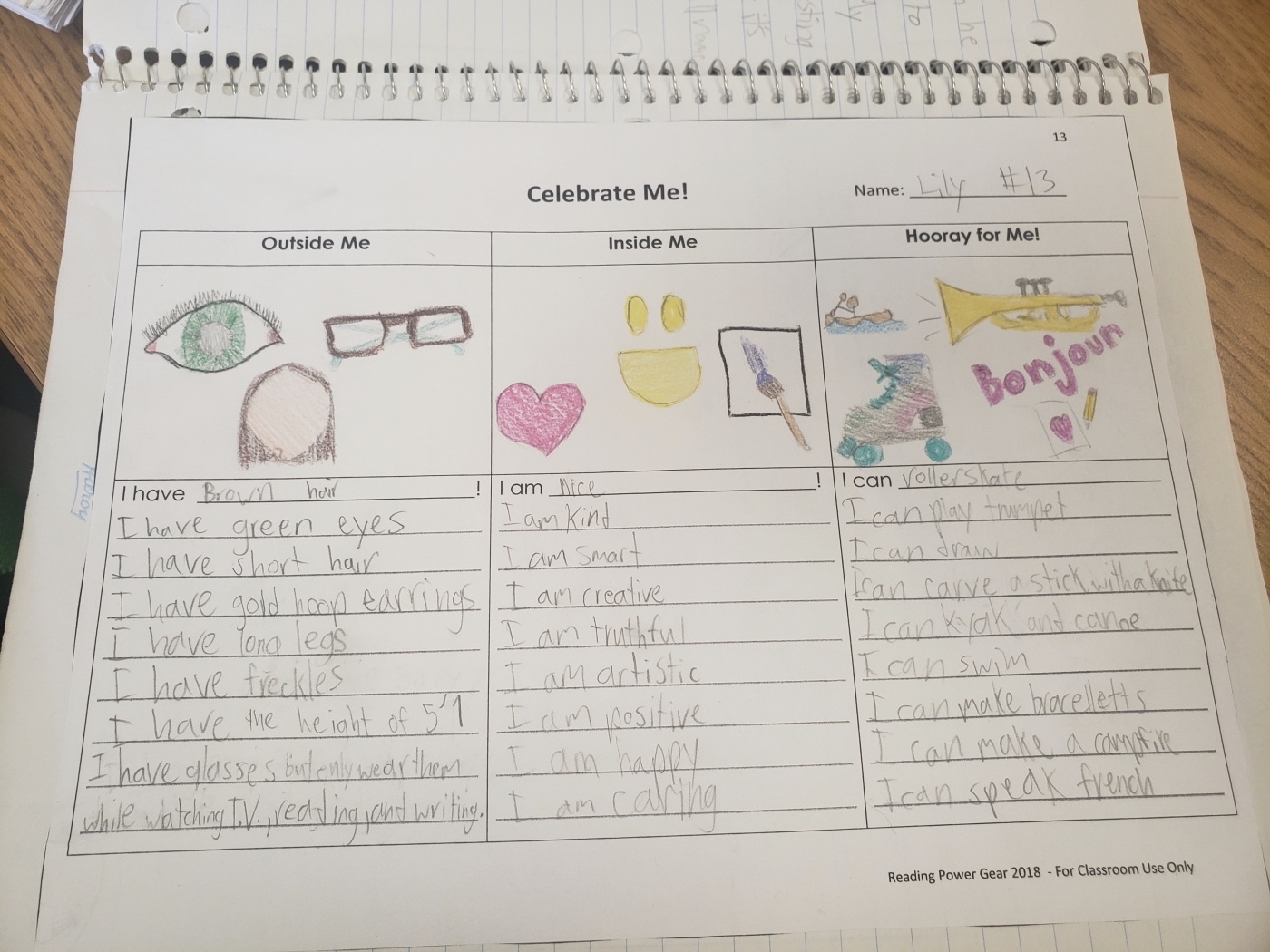
"My name connects to my identity because I love soccer and you play soccer on a field and my name means 'field' so I think my name connects to my identity by what I like to do. Another thing is that my middle name is the same as Amira's so it shows that Amira is a part of my identity because we have grown up together." ~ Taran B.
"Your identity will tell you what's best for letting your feelings out (and not in a bad way). In conclusion, feelings show who you are, even the negative feelings" ~ Chloe M.
"In order to manage your feelings, you need to stop letting the emotions control you. Calming yourself own when you feel angry or too giddy can help stop you from doing irrational things. Breathing exercises, communicating with friends and family, seeking professional help, and just taking a moment to pause and relax can all help in putting a leash around your feelings and emotions." ~ Rishabh G.
Relationship Skills
Our students are learning how to use oral language to maintain positive relationships by demonstrate appreciation, celebrating successes, airing concerns and problem solving through regular meetings with their classroom communities. Communication skills and formats are vital to this learning.
Here students are participating in their weekly Circle Meeting. In particular, this is the ‘thank-you’ circle where students acknowledge and express gratitude to peers who have had a positive effect on them throughout the preceding week.
OUR NEXT STEPS
We will use language and texts to express and explore our personal, communal, and cultural identities
Through the lens of Adrienne Gear's Power Understanding, students showed growth in literacy skills.
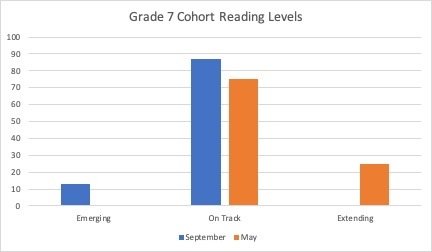
Our grade seven cohort began September 2021 with 13% of students demonstrating emerging literacy skills and 87% demonstrating on track literacy skills for their age. As of May 2022, no students were emerging. 75% of students were on track in their literacy skills and 25% were now demonstrating literacy skills that exceed grade level expectations.
As a diverse group of learners, we will continue to prioritize literacy skills including oral language, written, and reading to increase our ability to communicate. We will practice understanding how the use of language contributes to our identity, environment, and community. We believe in providing students with learning opportunities relating to their interests and abilities. In our classrooms and other learning environments we will provide holistic literacy opportunities such as:
- Supporting the Big Idea 'Exploring stories and other texts helps us understand ourselves and make connections to others and to the world', students will continue to explore their identities using Adrienne Gear's Power Understanding as a lens with which to use to uncover.
The book states:
In these challenging times, teaching children to think critically and reflectively AND be compassionate, responsible and caring citizens at the same time is a tall order. Powerful Understanding explores effective ways to build social emotional skills and help students make connections, question what they read, and reflect on their learning as they develop into stronger readers and learners. Strategic and critical thinking strategies revolve around core anchor books that help integrate thinking into everything you teachfrom social responsibility, to immigration, to life cycles. This highly readable book includes a wealth of classroom examples and extensive hands-on activities designed to help students to think more deeply, learn more widely, and develop a more powerful understanding of what it means to be a responsible and compassionate person.
We plan to expand the use of these strategies to other grade groups in the school. We will provide support and resources so learners are able to have rich instruction combining Social and Emotional Learning and Literacy.
We will also continue using the following literacy methods that foster communication skills, student connection and Social and Emotional awareness:
- SEL shared reading books
- Word Mapping
- Story Workshop'
- Daily Literacy routines
- Readers' Theatre
- Literacy centres
- An exploration of the science of reading
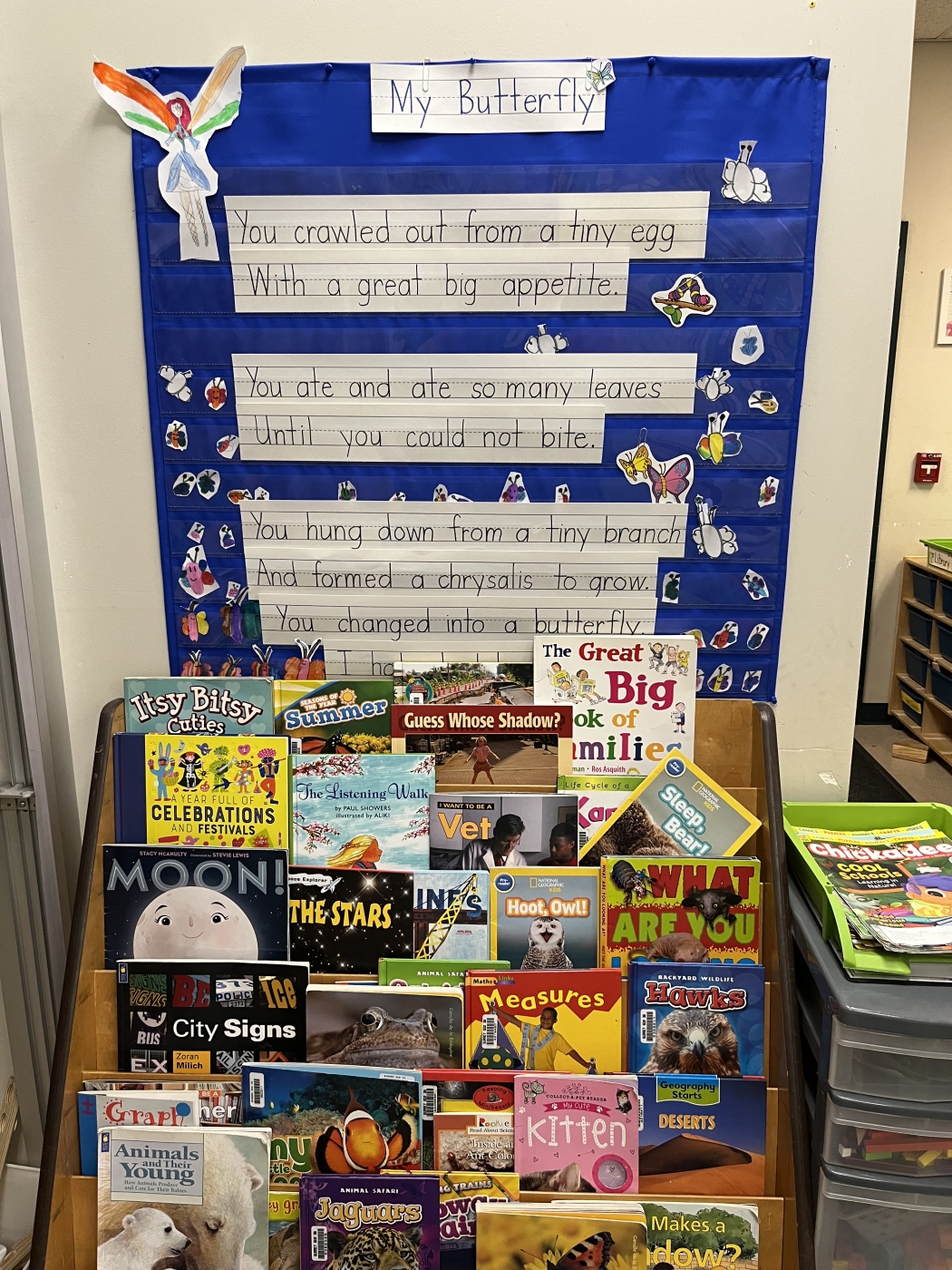
2. Loose parts and story workshop provide a safe, secure, interactive and creative environment for all our learners (primary and intermediate) to develop literacy and social skills. It provides students with an authentic experience to imagine, play, write, edit, revise, publish and share their stories. Story workshop also provides opportunities for students to experience instruction to model and focus on vocabulary, literacy elements, oral language, writing skills and focus on a variety of different literacy skills through mini lessons to support a balanced literacy program. We are excited to continue to embark on our Story Workshop journey as we continue to invite all members of our classroom communities to build creative and meaningful stories- real and imagined through the use of open-ended rich materials.
How to:
- Provide in-service and professional development for staff and explore mini lesson possibilities to foster a balanced literacy program
- Continue to support early literacy interventions to help build and develop strong literacy foundations for our students
- Continue to integrate First Peoples in our story workshop lessons
- Continue to grow our shared materials on our story workshop cart to provide a variety of engaging opportunities for our learners
- Continue to focus on integrating and weaving social emotional learning into literacy based activities
- Continue to look at ways to collaborate and team teach (LST support, Library Collaboration, grade groupings)
- Provide opportunities for students to share their stories during assemblies
- Provide opportunities for parents to view documentation through in school visits and digital portfolios
- Showcase story workshop on gallery walls to share learning with school community
- Continue to source rich storybooks to support story workshop sessions
- Look into and further integrate the use of technology and apps for documentation (Book Creator, shadow puppet, etc)
- Ask Helping Teachers in to model using Loose Parts to demonstrate deep understanding of self and curricular content areas in Social Studies and Science in intermediate grades.
We can interact appropriately and respectfully to understand each other by working together. This can be done in partners, groups, debates, or literature circles. We demonstrate empathy as we listen, agree or disagree, and build on each other’s ideas
Our learners have great capacity and increasing resiliency. Through the focus of literacy, our learners demonstrated growth in perseverance, relationship skills, and social awareness. These important Social Emotional Learning skills are embedded in the BC Curriculum through the Core Competencies and weave themselves through each curricular area. Growth in the area of Social Emotional learning helps our learners grow in the areas of reading, writing, and communicating. Our focus on reading, writing, and communicating through a lens of Social Emotional Learning is positively impacting our learners.
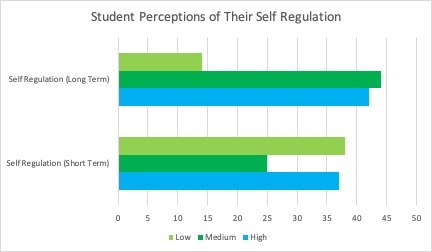
Long-term self regulation requires adapting present behaviour to achieve a goal in the future e.g., "If something isn't going according to my plan, I change my actions to try and reach my goal."
Short-term self regulation is about impulse control. It requires adapting behaviour or emotions to meet an immediate goal. e.g., "I can calm myself down when I am excited or upset."
As of the fall of 2021, Intermediate students at A.J. McLellan score slightly higher than district averages in the Medium range of long-term self regulation. In short-term self regulation, students score significantly higher in the low range.
We will be collecting this data again this coming fall and expect to see growth in these areas due to the focused learning that has taken place in the 2021/2022 school year.
Below are examples of ways teachers foster Social Emotional Learning in their classrooms, and how they will continue to keep SEL at the core of their instruction.
1. Self Awareness
- Mind-Body Connection
- Zones of Regulation
- Mindset
- Self Perception
2. Social Awareness
- Sharing circles: Being mindful of one’s place in the group, connecting with others
- Gratitude circle
- Compliment circle
- Social Justice/Reformation
- Equity and Diversity through Literacy
- Perspective taking
- Diversity Club
3. Responsible Decision Making
- Restorative Justice
- Problem solving strategies
4. Relationship Skills
- School Wide Events
- Classroom Collaboration
- Trusted Adults
- Gratitude expression
- Building Healthy Relationships
5. Self Management
- Soft Start: morning circle, mindful strategies, gradual entry activities
- Brain Break: brain gym
- Zones of Regulation
- Goal Setting
- Sustaining Healthy Boundaries
- Creating calm spaces for students

Surrey Schools
Formed in 1906, the Surrey School District currently has the largest student enrolment in British Columbia and is one of the few growing districts in the province. It is governed by a publicly elected board of seven trustees.
The district serves the cities of Surrey and White Rock and the rural area of Barnston Island.