A.H.P. Matthew Elementary 25-26

OUR CONTEXT
We acknowledge with gratitude that AHP Matthew Elementary is located on the unceded, traditional, and ancestral lands of the Coast Salish Peoples, specifically the Katzie, Kwantlen, and Semiahmoo First Nations. We honour the longstanding history, culture, and contributions of Indigenous Peoples in this region and remain committed to walking the path of reconciliation through education and action.
Our dedicated staff is committed to creating a welcoming, inclusive environment that meets the unique needs of every student. At the beginning of each school year, classroom teachers prioritize social-emotional learning, establishing routines and practices that foster respectful, supportive communities of learners. These foundations are carried through the year, promoting a strong sense of belonging and student voice.
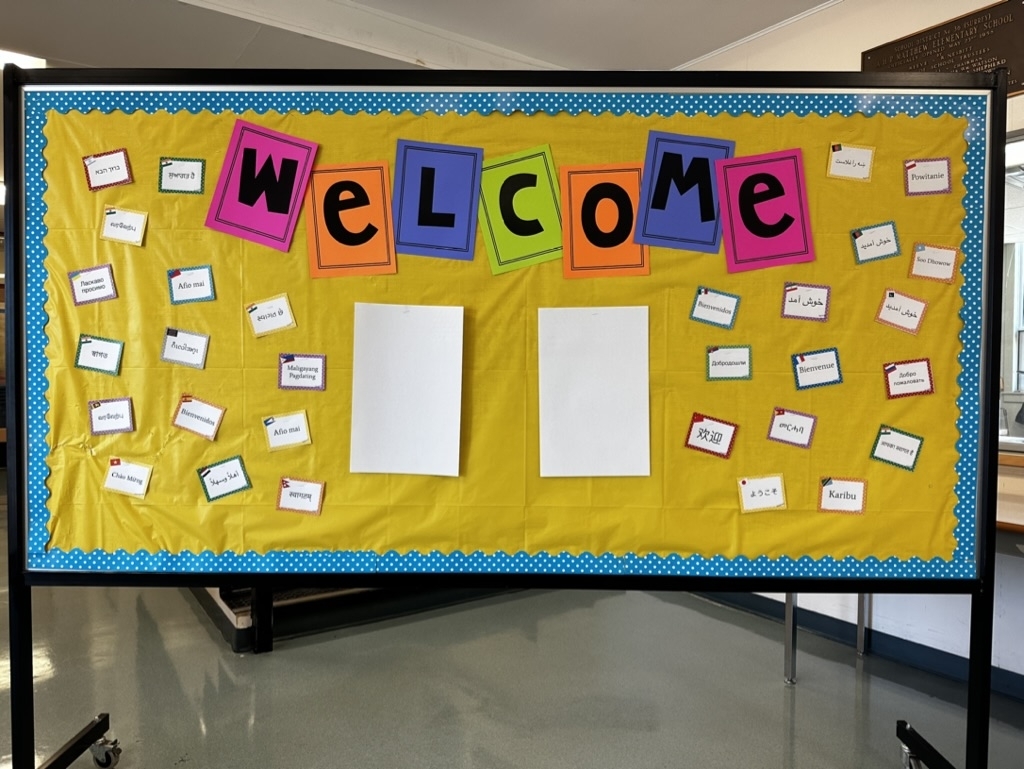
Cultural celebrations are an important part of school life at AHP Matthew. We take pride in recognizing and honouring the many cultures represented in our school community. These events are made possible through the strong partnership between our staff, our Parent Advisory Committee (PAC), and our broader parent community. The PAC plays a vital role in organizing and supporting these events and in fundraising efforts that help keep our technology current and, most recently, support the building of a new playground.
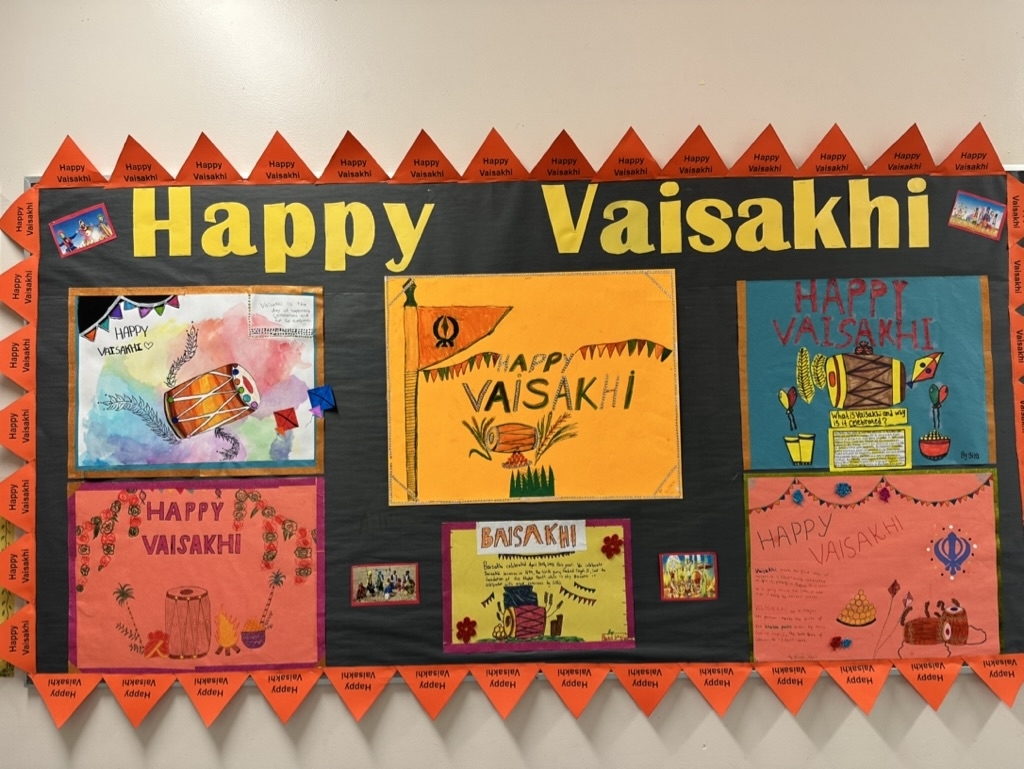
Vaisakhi Celebrations
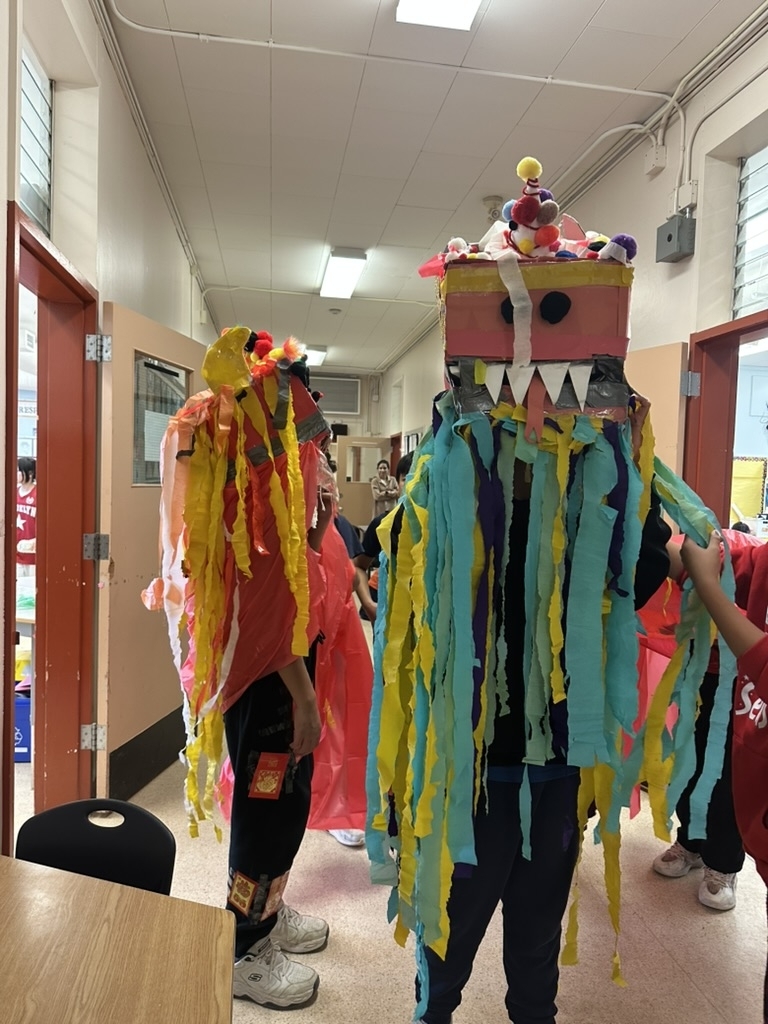
Lunar New Year Celebrations
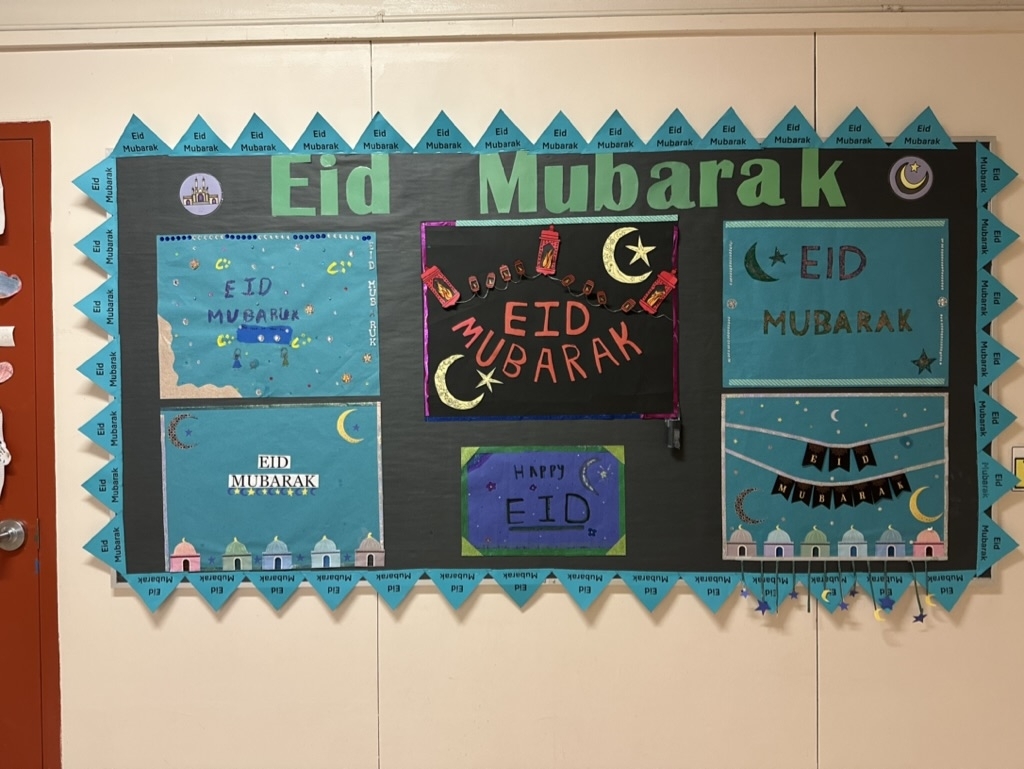
Eid Celebration
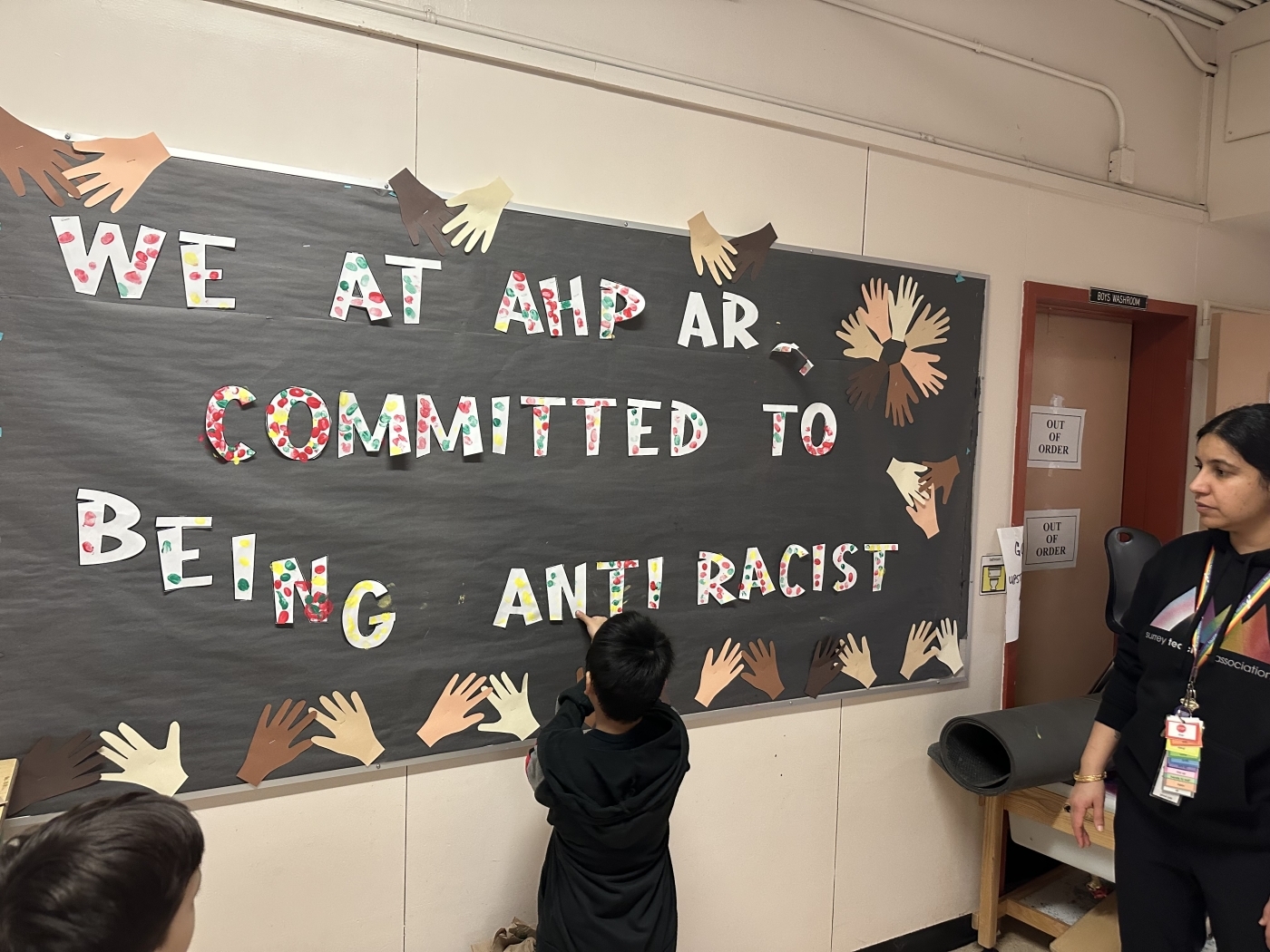
Black History Month
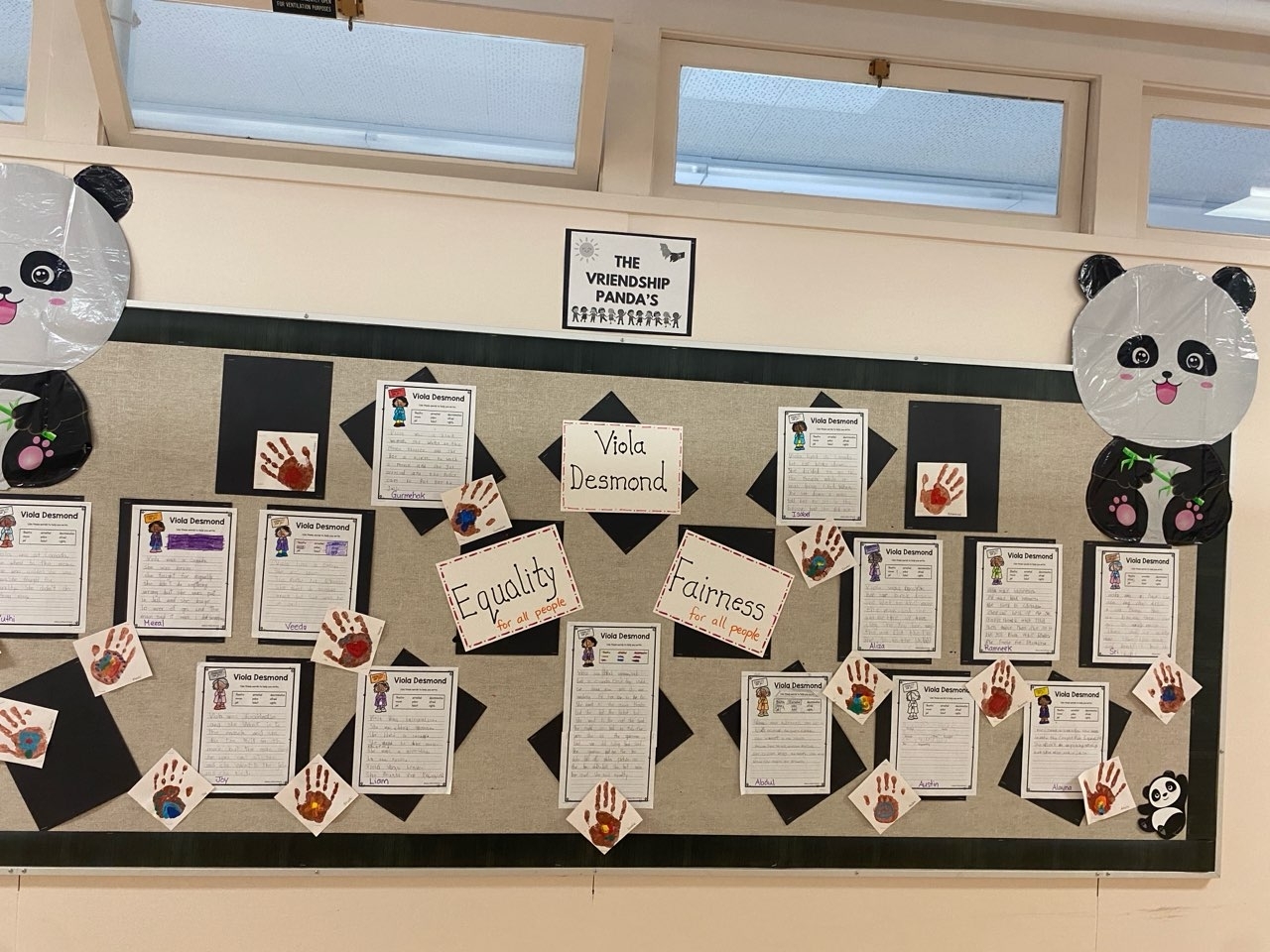
Black History Month Research and Gallery Walk
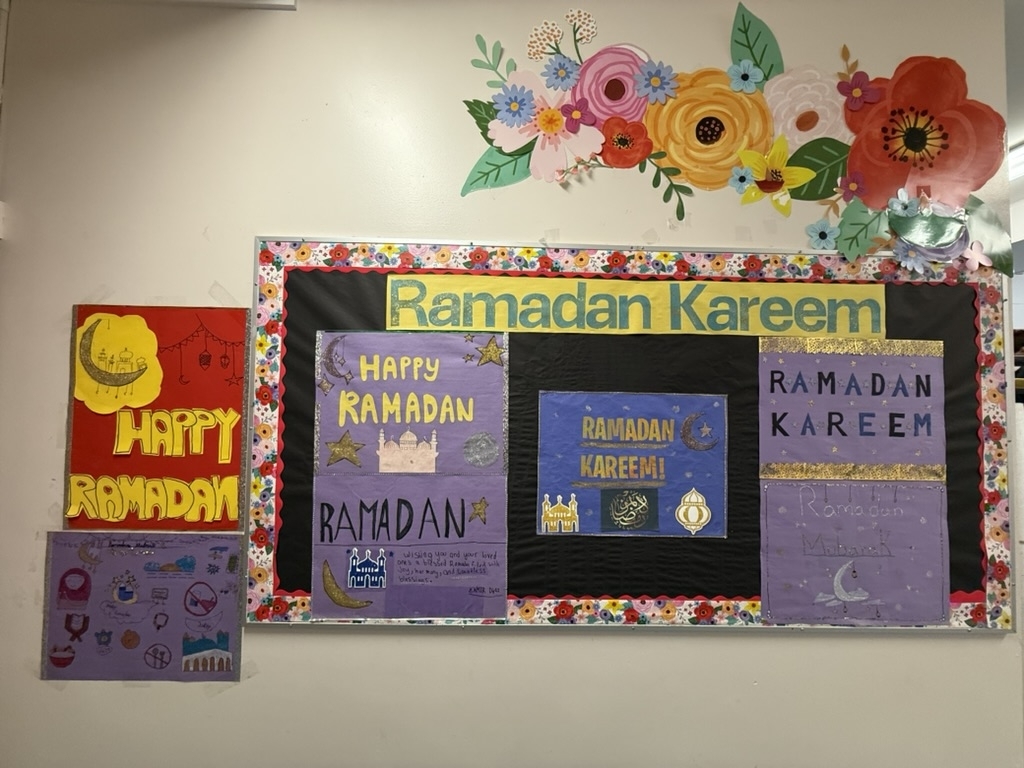
Ramadan Celebration
Student leadership is a cornerstone of our school culture. Student leaders contribute meaningfully by organizing spirit days, hosting assemblies, and serving the school as lunch monitors, library helpers, and members of our recycling team. Their voices and actions help shape our inclusive school community.
In addition, we recognize and respond to the broader needs of our students and families. Our support staff work collaboratively with community partners to provide weekly food hampers for families experiencing financial hardship. We also help connect families with essential services, including dental care, vision care, and access to primary healthcare.
At AHP Matthew Elementary, we strive every day to create a school environment where all students are respected, supported, and empowered to learn and thrive.
OUR LEARNERS
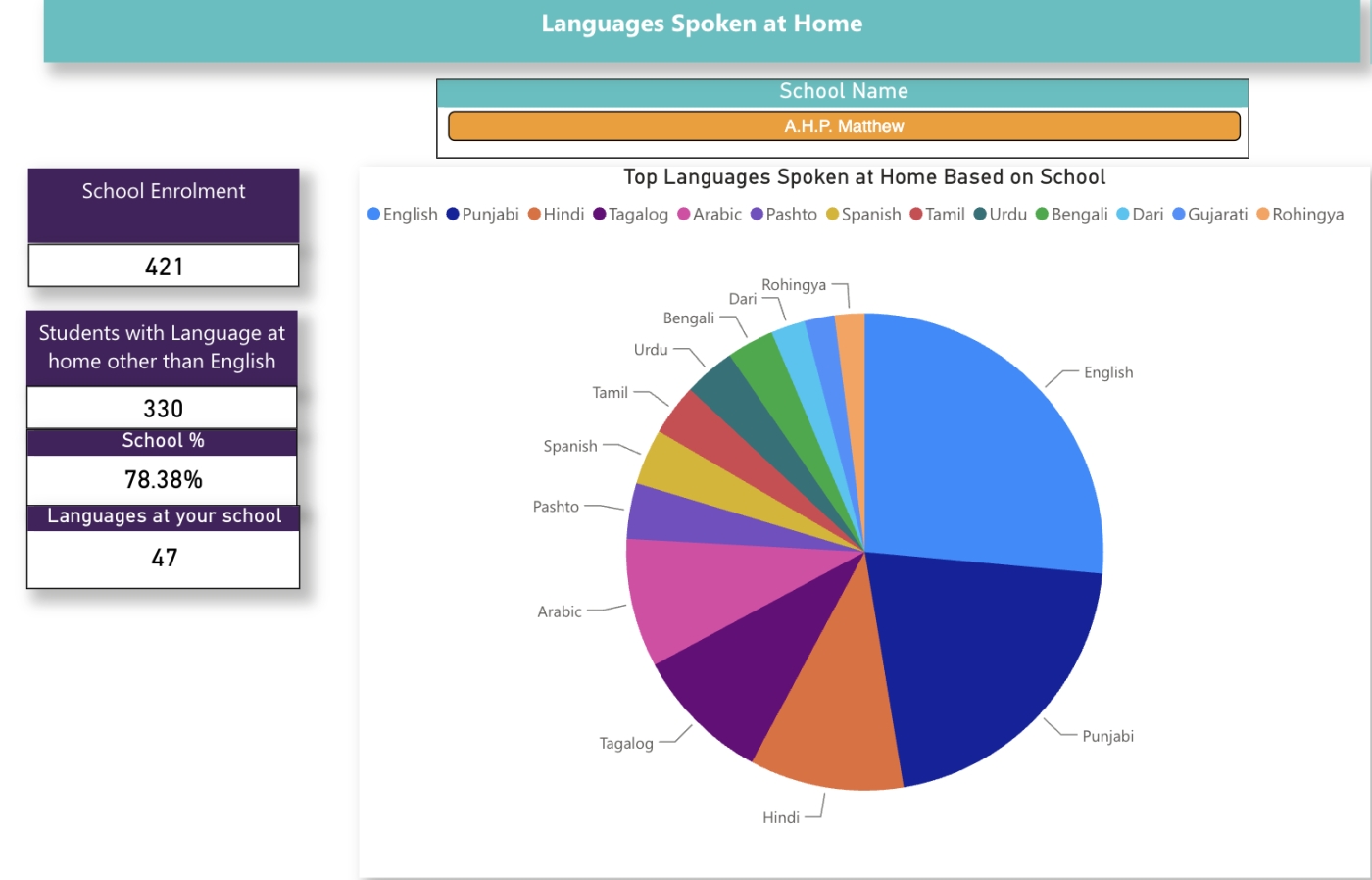
At AHP Matthew Elementary, our students are diverse, capable, and full of potential. They come to school with a wide range of cultural backgrounds, life experiences, and learning profiles. Over 75% of our students speak a language other than English at home, and many are new to Canada. This diversity enriches our community and also requires a responsive, inclusive approach to teaching and learning.
Academically, our learners demonstrate a wide range of strengths and areas for growth.
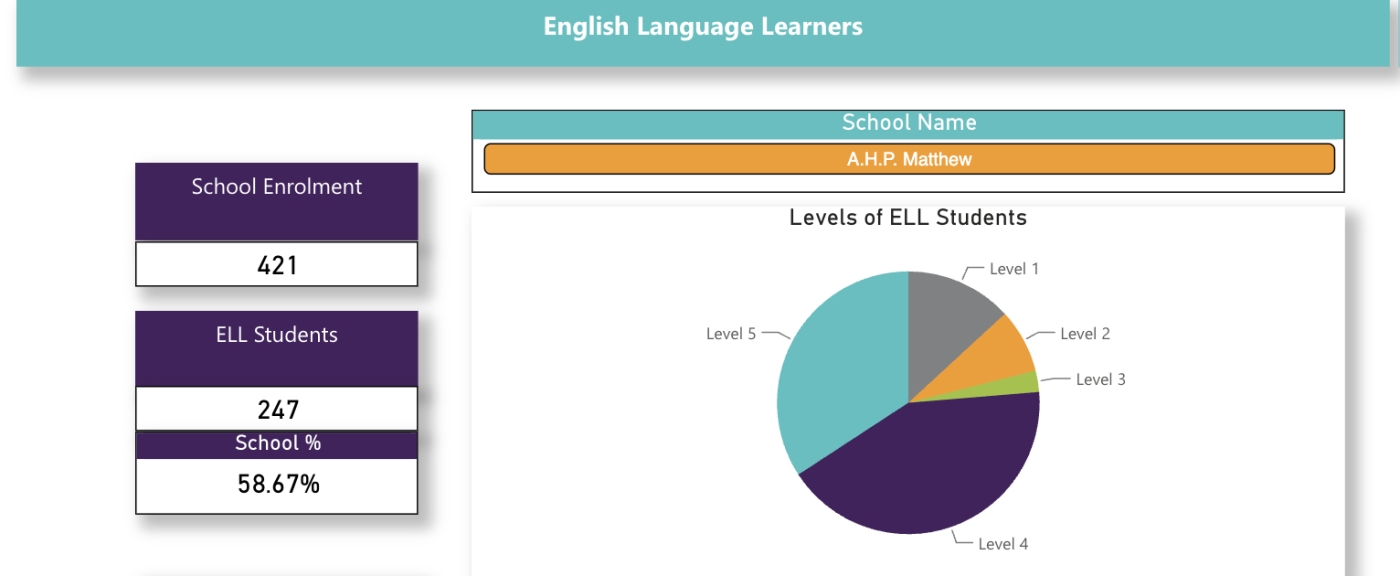
Our learner profile continues to evolve, with English Language Learners (ELL) representing almost 59% of our student population (247 of 421 students). Of these learners, a huge number of our ELL Level 1 and 2 students are in Kindergarten through Grade 2. As we reviewed our student data and considered where we could have the greatest impact on student success, it became clear that early literacy is a critical area of focus.
While our school focused on numeracy in previous years, our current student profile highlights the need to strengthen foundational literacy skills, particularly for our youngest learners and those acquiring English as an additional language. Strong oral language development, phonological awareness, phonics knowledge, and decoding skills provide the foundation for all future learning.
Reading fluency and comprehension are critical to students' academic achievement and self-esteem. Fluent readers can engage with a variety of texts, understand their content, and think critically about what they read. However, before achieving reading proficiency, students must develop strong decoding skills. Decoding involves translating written words into sounds and is essential for word recognition and reading fluency. As students become proficient in decoding, they read more accurately and fluently, allowing them to focus their cognitive energy on understanding and making meaning from text.
Given the significant number of students developing English language proficiency alongside foundational reading skills, we believe that investing in early literacy will have the greatest long-term impact on student achievement. By focusing on phonics, decoding, reading fluency, and confidence in reading, we aim to ensure that all learners develop the skills necessary to access the curriculum, experience success as readers, and engage fully in their learning.
Our learners are building foundational phonics skills
Foundational phonics is essential for learning to read because it teaches students the relationship between letters and sounds. This skill allows our learners to decode words, which means they can sound out and recognize written words accurately. Mastering phonics helps our learners read fluently and understand what they read, forming the basis for all future reading and learning. By using a variety of reading programs, we are facilitating the explicit and systematic teaching of foundational skills needed for our learners to become proficient readers. Our students are developing their understanding of letter-sound relationships, phonological awareness, and decoding strategies to support accurate word recognition and early reading success.
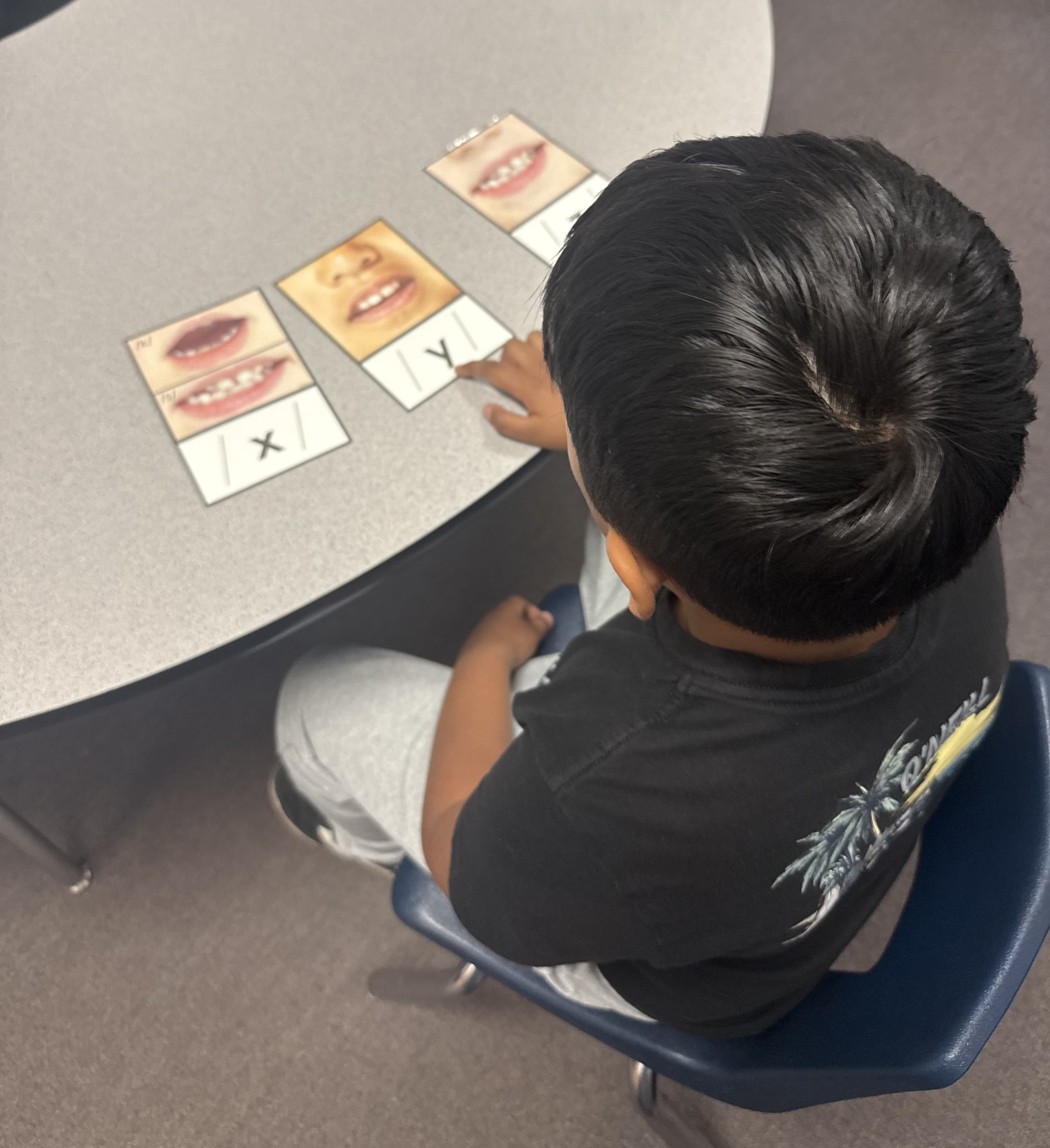
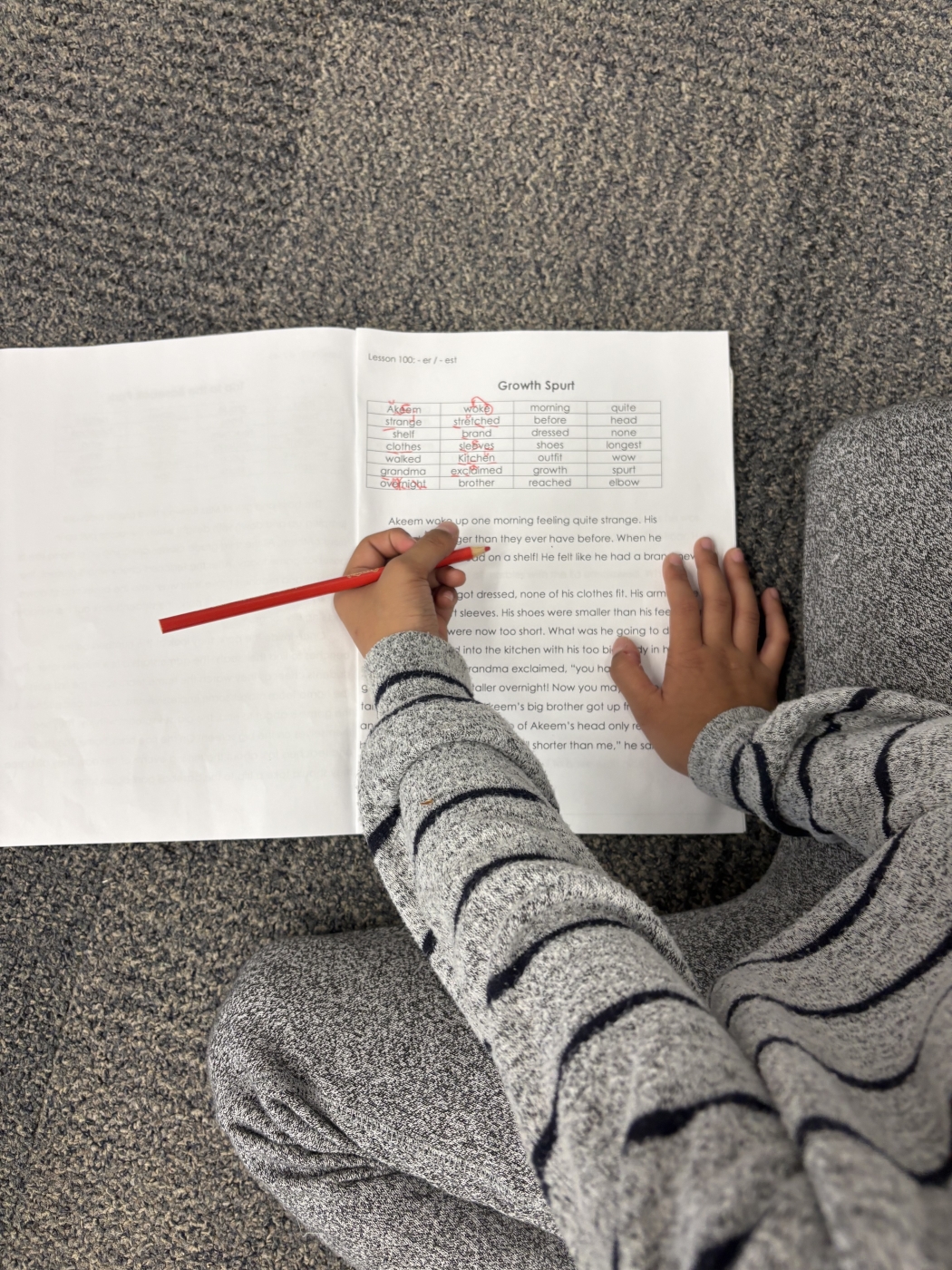
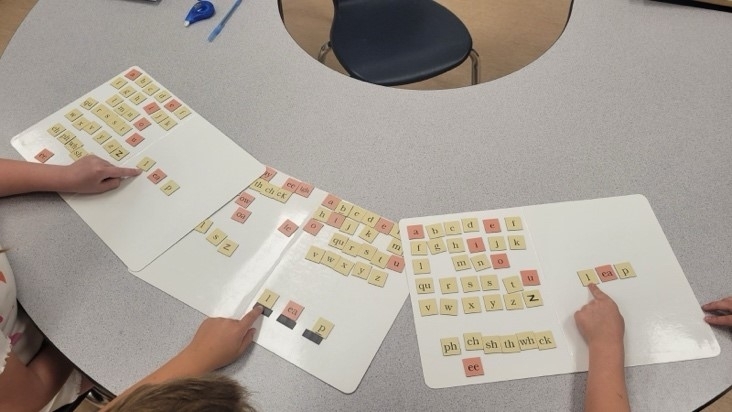
Student applying phonics rules and decoding strategies to read unfamiliar words, build vocabulary, and develop reading fluency through repeated practice.
Our learners are developing reading fluency
Reading fluency, specifically in early primary, is crucial as it serves as a bridge between decoding words and understanding text. Fluent readers can read text accurately, at an appropriate pace, and with expression. This skill is crucial because it enhances comprehension, aids vocabulary development, boosts motivation, and fosters independence, laying a strong foundation for future learning and overall academic success. Our learners who read fluently are better equipped to study on their own, conduct research, and engage with various types of written materials independently. Our students are increasing their ability to read accurately, automatically, and with expression, allowing them to focus on making meaning from text and strengthening comprehension.
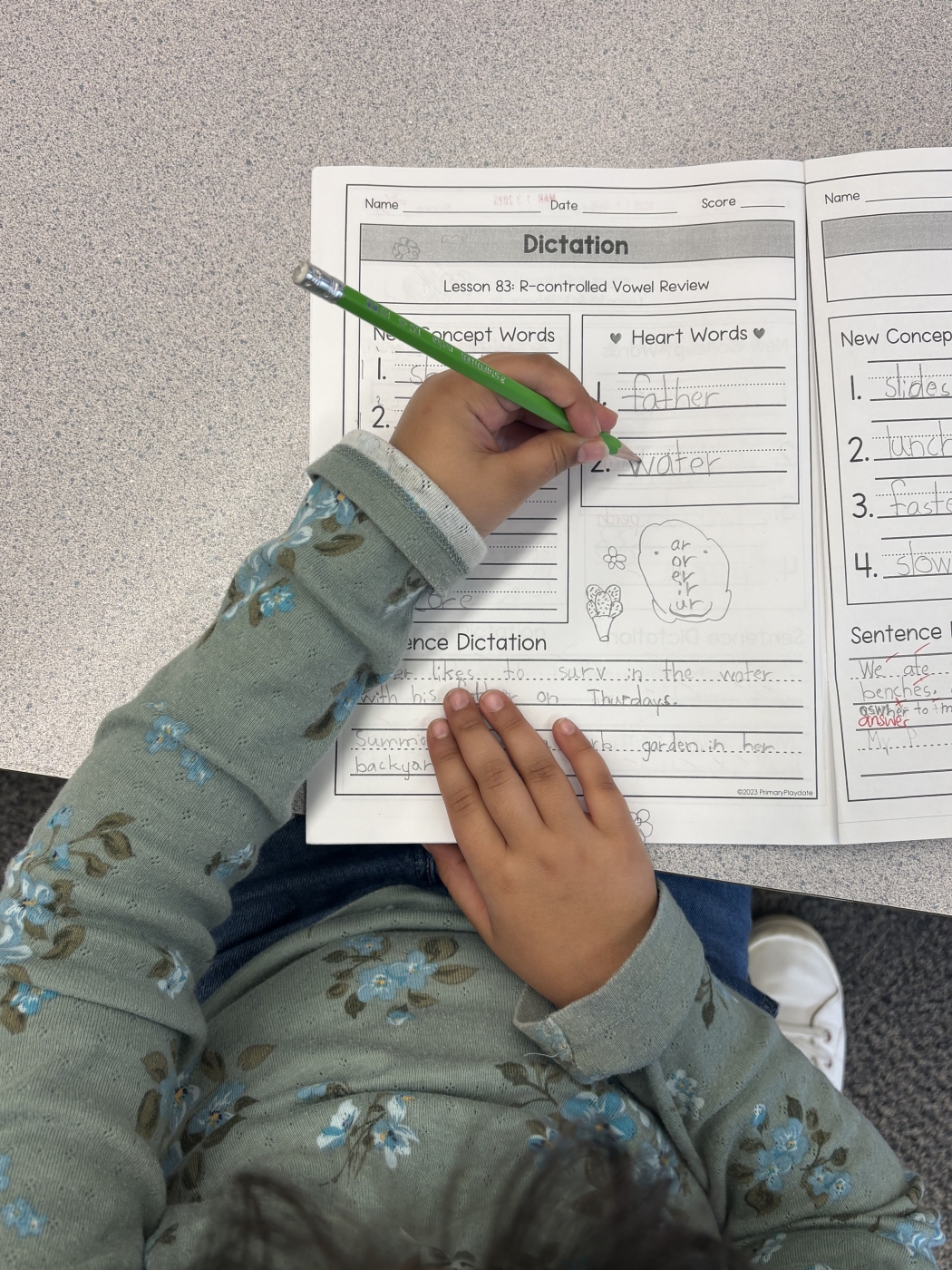
Student strengthening hisreading fluency by applying phonics knowledge, recognizing heart words, and using auditory skills to read, spell, and write complete sentences.
Our learners are finding joy in books and building confidence around reading
Our students are engaging with a variety of meaningful texts in order to develop positive reading identities, and see themselves as capable and successful readers.
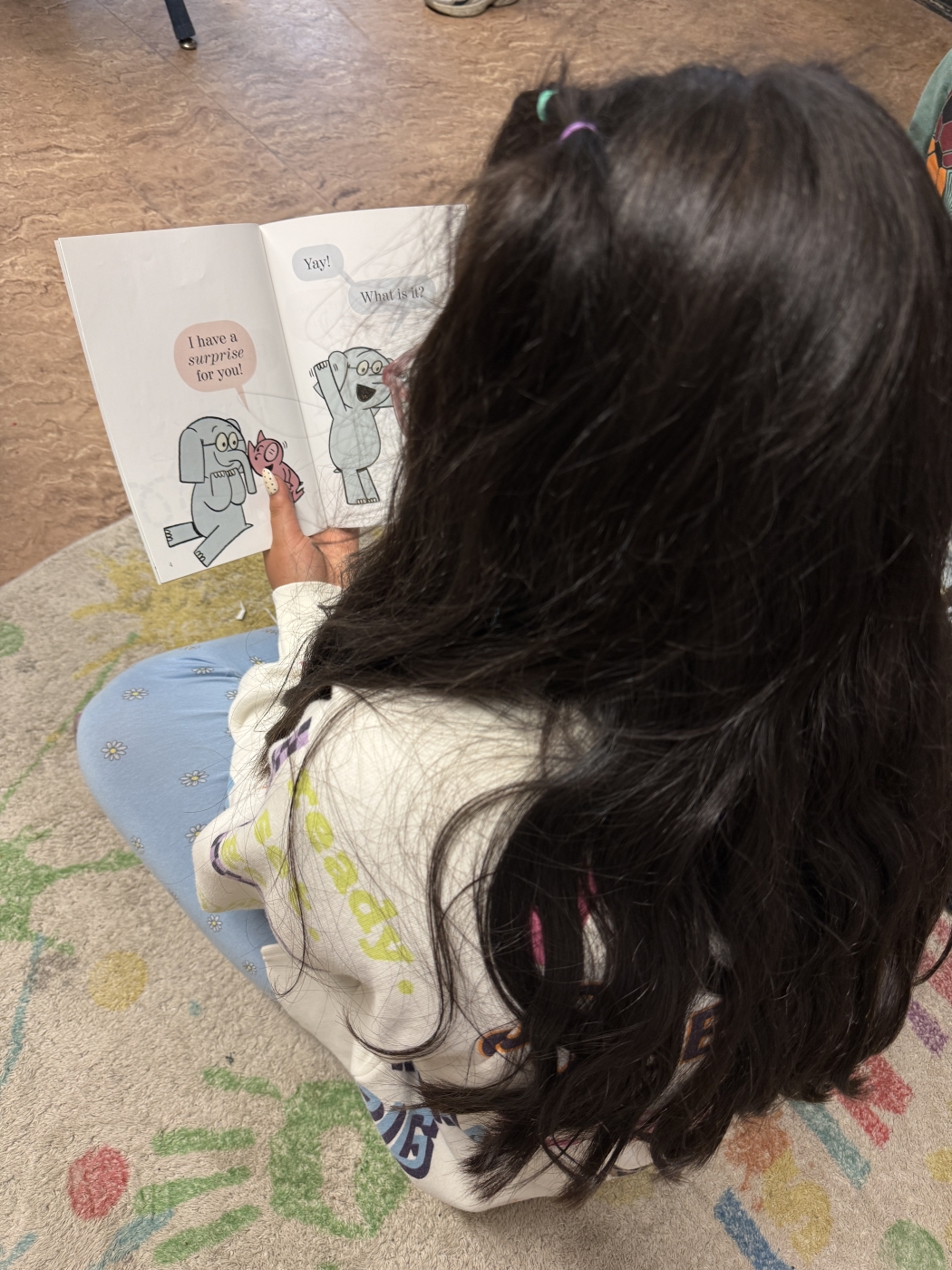
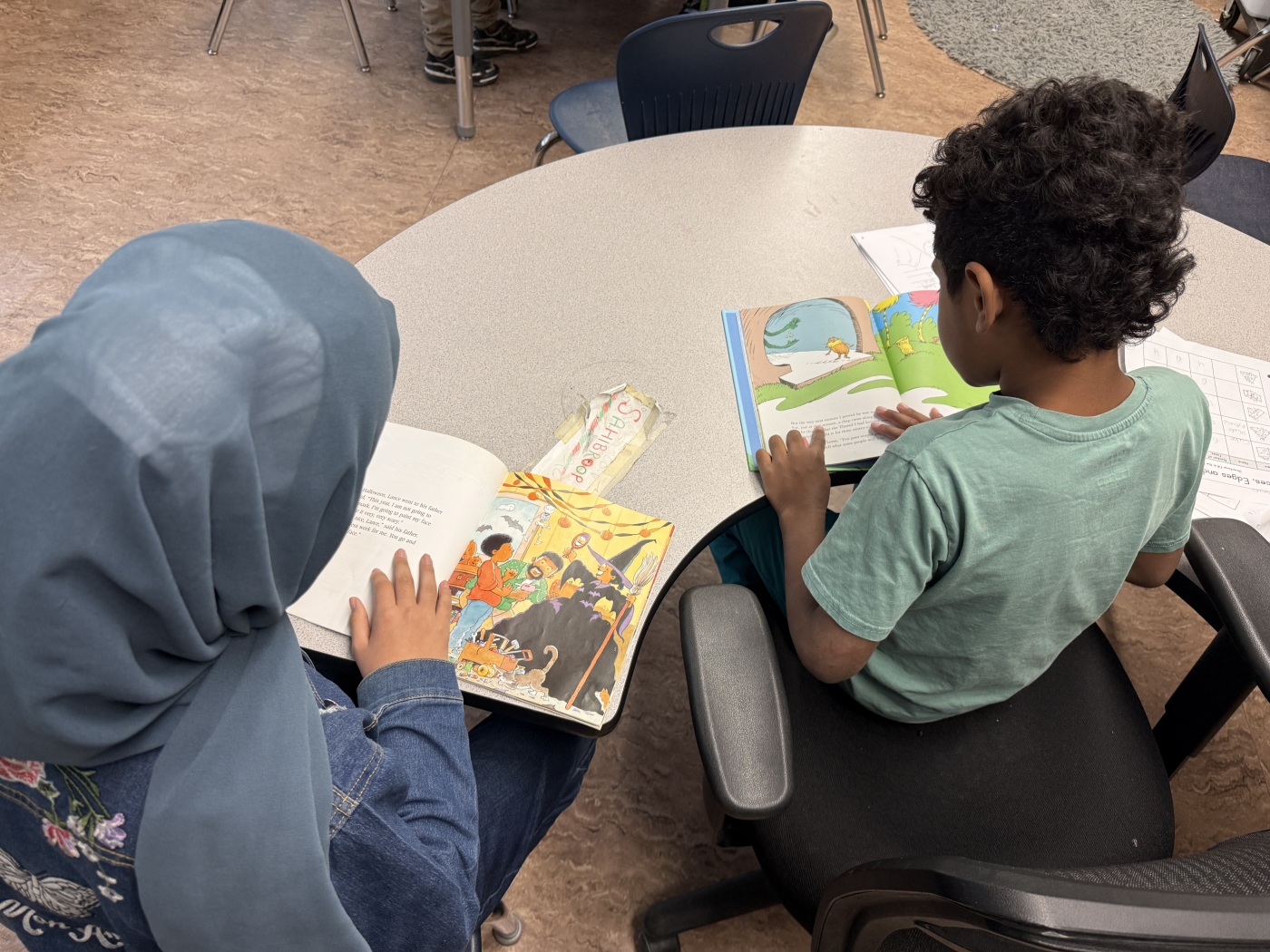
Students reading their favourite books for enjoyment.
OUR FOCUS
Our teachers have identified literacy, specifically, reading fluency and comprehension as an area of growth for our students. Teaching fluency lays the foundation for lifelong literacy skills. It enables young learners to read with accuracy, speed and expression, enhancing comprehension and enjoyment of texts. However, before learners can become fluent readers, they must be able to decode text. Once our learners can decode text independently and with proficiency, they can focus more on understanding the text, which improves overall fluency.
The Learning Standard we are Focusing on:
Reading Strategies and Processes for
using knowledge of language patterns and phonics to decode words
identifying familiar and “sight” words
During the 2025–2026 school year, our focus was on strengthening foundational literacy skills, with Grade 1 identified as our focus cohort. Through collaboration with classroom teachers, Learning Support Teachers, and district literacy supports, we implemented evidence-based instructional practices designed to improve phonological awareness, phonics, decoding, and reading fluency.
Grade 1 teachers utilized structured literacy approaches, including explicit phonics instruction and daily phonological awareness activities, to support students in developing the foundational skills necessary for reading success. Student progress was monitored through classroom assessments and literacy screening tools to identify areas of strength and need.
In addition, Learning Support Teachers provided targeted literacy interventions for students in Grades 1–7 who required additional support. Through ongoing assessment and progress monitoring, student growth was tracked and instructional practices were adjusted to meet individual learning needs. Collaboration between classroom teachers and Learning Support Teachers helped ensure a consistent and coordinated approach to literacy instruction across the school.
This work was further supported through professional learning, district literacy resources, and the implementation of instructional materials aligned with the Science of Reading and Surrey Schools' Early Literacy Framework. The focus on foundational literacy skills provided valuable insight into student needs and highlighted the importance of continued investment in early literacy, particularly for our growing population of English Language Learners.
OUR NEXT STEPS
It is demonstrated, through evidence gathered from our Grade 1 cohort of students and reflected in the larger group of students receiving Learning Support Team (LST) services, that our literacy focus is positively impacting learners.
Language from the provincial scales was used to identify success and remaining challenges. There was a noted improvement for students identified in both the Grade 1 cohort and LST intervention groups in relation to the reading goals. These goals included:
Reading Strategies and Processes for
using knowledge of language patterns and phonics to decode words
identifying familiar and “sight” words
To support our learners in developing foundational reading skills and reading fluency, a variety of pre- and post-assessments, instructional practices, and targeted programming were implemented. Early identification and intervention for struggling readers was, and continues to be, essential. Throughout the year, students participated in explicit and systematic phonics instruction within their classrooms. Students receiving Learning Support Team (LST) services also participated in targeted small-group literacy interventions based on identified areas of need.
Grade 1 Literacy Growth (2025/26)
Students in Grade 1 demonstrated significant growth between Term 1 and Term 3. The charts below highlight student progress in two foundational literacy areas: Letter-Sound Correspondences and CVC Word Decoding, comparing student achievement from the fall baseline assessment to the spring reassessment. 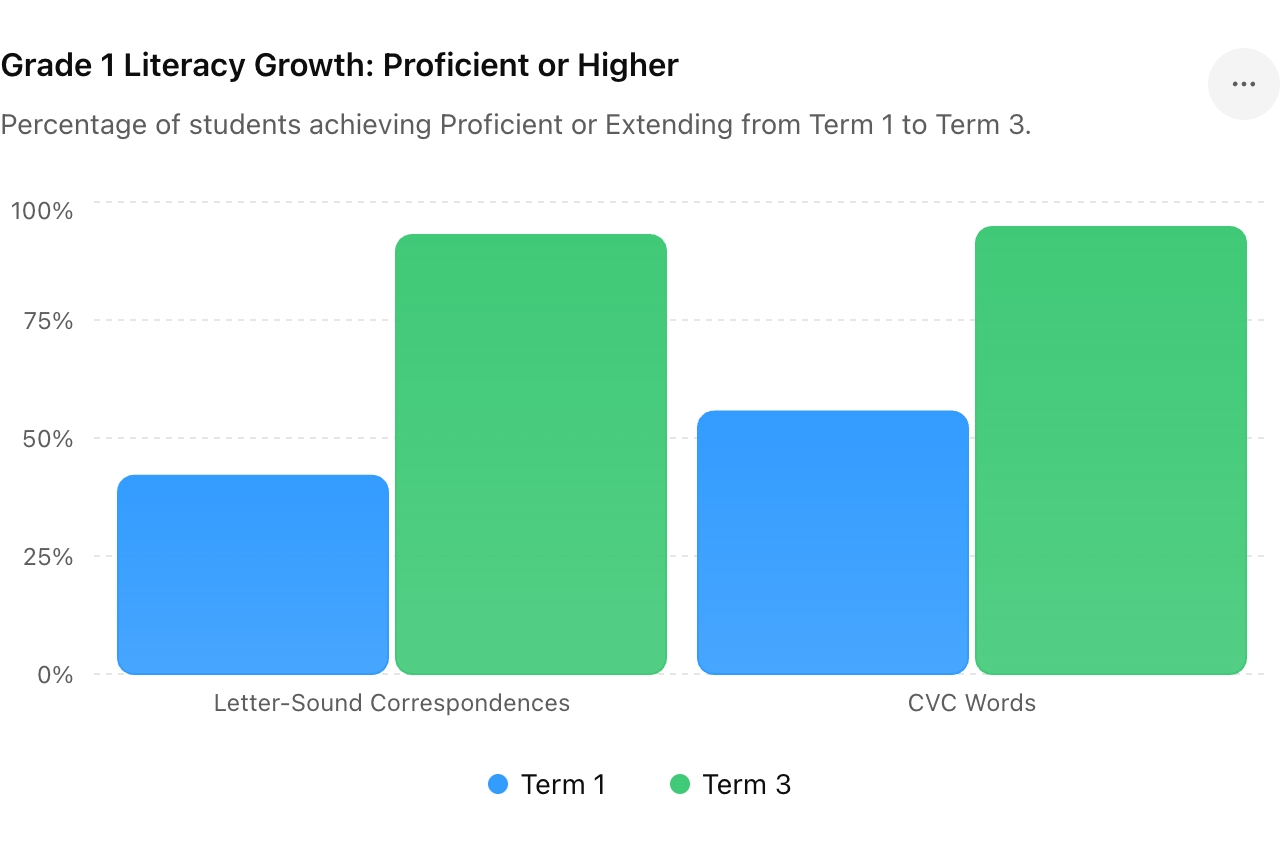
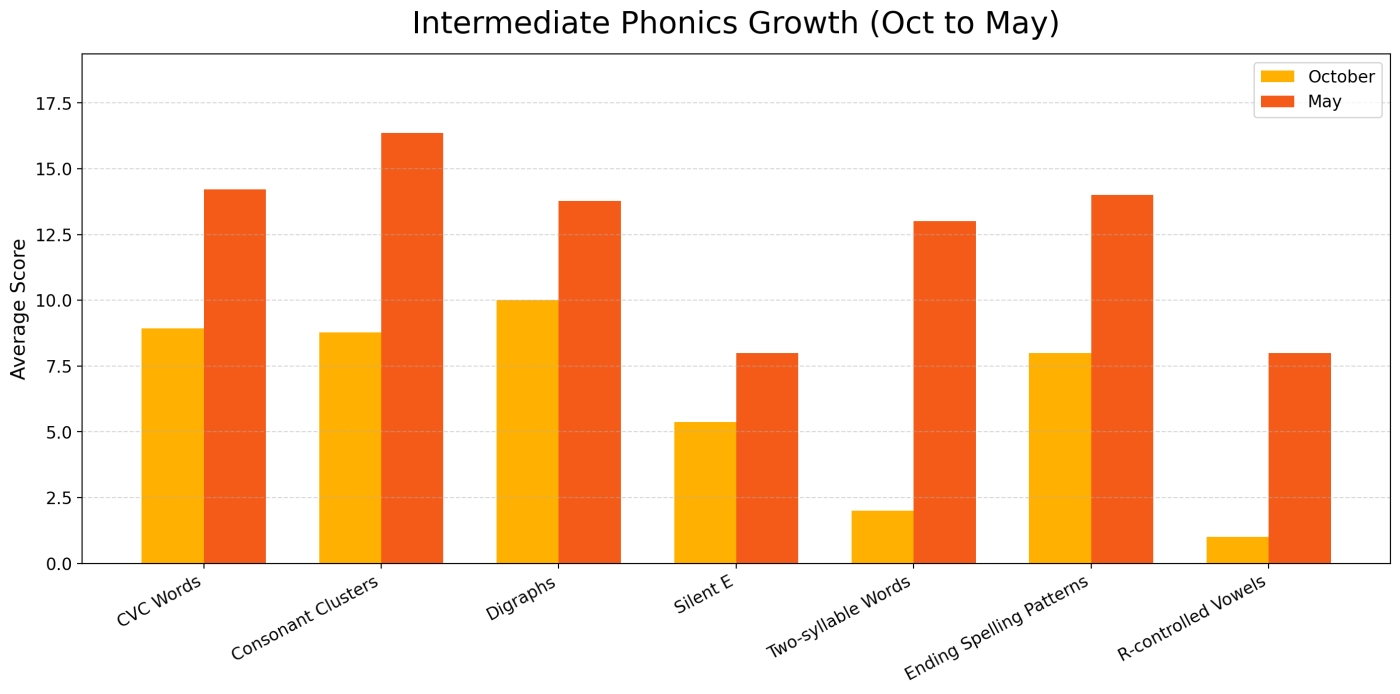
LST Literacy Intervention Growth (2025/26)
Students receiving targeted literacy intervention through Learning Support Services (LST) participated in structured, systematic phonics instruction designed to address identified areas of need. Students in Grades 4–7 were assessed in October and reassessed in May, with instruction tailored to individual student profiles and delivered in small groups. Intervention focused on foundational and advanced phonics skills, including CVC words, consonant clusters, digraphs, silent e patterns, two-syllable words, ending spelling patterns, and r-controlled vowels. Instruction was responsive to student needs and progress was monitored throughout the year.
Analysis
Assessment data collected from our Grade 1 cohort demonstrates strong growth in foundational literacy skills over the course of the school year. Two key early literacy indicators were tracked: Letter-Sound Correspondences and decoding of Consonant-Vowel-Consonant (CVC) words.
In Letter-Sound Correspondences, the percentage of students achieving proficiency increased from 42% in Term 1 to 93% in Term 3, representing a 51 percentage point increase. Similarly, in CVC word decoding, the percentage of students achieving proficiency increased from 56% in Term 1 to 95% in Term 3, representing a 39 percentage point increase. By the spring, nearly all students in the cohort were demonstrating proficiency in these foundational reading skills.
The data also shows a significant reduction in the number of students identified as Developing, Emerging, or Not Yet within both assessment areas. This shift indicates that students were not only acquiring foundational phonics knowledge but were successfully applying these skills to decode words with increasing accuracy and automaticity.
These results suggest that the direct, explicit, and systematic literacy instruction implemented throughout the year had a positive impact on student learning. Students demonstrated increased mastery of letter-sound relationships and were able to apply this knowledge to read simple words, providing a strong foundation for future growth in reading fluency and comprehension.
As students developed stronger decoding skills, they were able to access increasingly complex texts with greater confidence and independence. This growth is particularly significant because proficiency in foundational reading skills is strongly linked to future academic success, engagement, and self-esteem as learners.
In addition to the significant growth demonstrated by the Grade 1 cohort, students receiving LST intervention also showed meaningful progress in targeted phonics skills. Evidence collected from students in Grades 4–7 suggests that explicit, systematic phonics instruction can positively impact learners beyond the early primary years. Growth was evident across both foundational skills, such as CVC words and consonant clusters, and more complex phonics patterns, including multisyllabic words and r-controlled vowels. These findings reinforce the importance of early identification, targeted intervention, and ongoing progress monitoring to support literacy development for all learners.
Overall, the data indicates that students are becoming increasingly confident and capable readers. The significant gains observed in foundational literacy skills reinforce the importance of early intervention, consistent assessment practices, and explicit instruction in supporting reading achievement for all learners.
Insights and Reflections from our Students
Question: Please share a little bit about your learning journey in growing as a reader this year, and how you feel about yourself as a reader now.
Grade 1 Student A:
“So, in the Philippines I never went to kindergarten. Reading was difficult. I never knew stuff, but when I went to grade 1 it was epic. I learned all the things of reading, like consonants, vowels, bossy E, controlling R, blends, digraphs, two vowels, ghost letters, compound words, and punctuation. Now I know harder English. I did my best. That means I try. I practised sounding out words. I look for tool sounds in the words. That means I know what’s the clue to know how to read the word. I feel humble about my reading. I feel good.”
Grade 1 Student B:
“In Kindergarten I learned some words like “the, and, you, of, at, to, it …” and now in grade 1 I know so many words. Like hard words. I even know how to spell “there, their” and my friends names. To learn all these words I find vowels, blends and the sounds, and sound it out to read the words. I can read all the grade 1 books. I feel unbelievable, like I want to get ready for grade 2. I also like to read a lot. I have a chapter book, challenge myself.”
Grade 6 Student C:
"I think I improved as a reader because I can read faster than before. I checked out a lot of library books this year because of all the help I got from LST. I get excited about reading books now. I liked books before, but I like it better now since I can read them well."
Grade 5 Student D:
"When I was struggling in reading and I had no idea of new words; coming to LST has helped me to understand. Its easy for me to read, concentrate and summarize about books now. I am still working on some hard words though."
Continuing the Journey
Continue implementing explicit and systematic phonics instruction in primary classrooms to strengthen foundational reading skills for all learners.
Maintain universal literacy screening and common assessment practices to identify students requiring support as early as possible.
Strengthen consistency of literacy instruction, assessment, and progress monitoring across classrooms and grade levels.
Support students in transferring decoding skills to increasingly complex texts through a greater focus on reading fluency, vocabulary development, and comprehension.
Continue to build staff capacity through collaborative inquiry, professional learning, and sharing of effective literacy practices.
Monitor the long-term progress of students who have participated in structured phonics interventions to ensure skills are maintained and generalized across reading contexts.
Continue to collect and analyze cohort and intervention data to guide instructional decisions and evaluate the impact of literacy programming.
Strengthen family engagement by providing information and resources that support early reading development at home.
At AHP Matthew, we are dedicated to ensuring that all students acquire the literacy skills and proficiencies essential for success in school and beyond. As we continually monitor, reflect and refine our learning plan, we will also prioritize the equitable distribution of instruction, time and resources focusing on supporting and reaching all our learners.
Surrey Schools
Formed in 1906, the Surrey School District currently has the largest student enrolment in British Columbia and is one of the few growing districts in the province. It is governed by a publicly elected board of seven trustees.
The district serves the cities of Surrey and White Rock and the rural area of Barnston Island.