Strawberry Hill Elementary 23-24

OUR CONTEXT
OUR LEARNERS
Numeracy skills are fundamentally important to performing everyday tasks. Tasks such as thinking about if you have enough time to walk to school or figuring out which bike is the best value, require numeracy skills. At Strawberry Hill Elementary School our students are learning to think critically about the world around them, use reasoning skills to think logically about a situation, make sense of information, understand patterns, and make choices. These skills extend beyond the math classroom and can be used to solve problems and make decisions in a variety of situations, including real life scenarios.
Across all grades our learners develop, demonstrate, and apply mathematics understanding through play, inquiry, and problem solving.
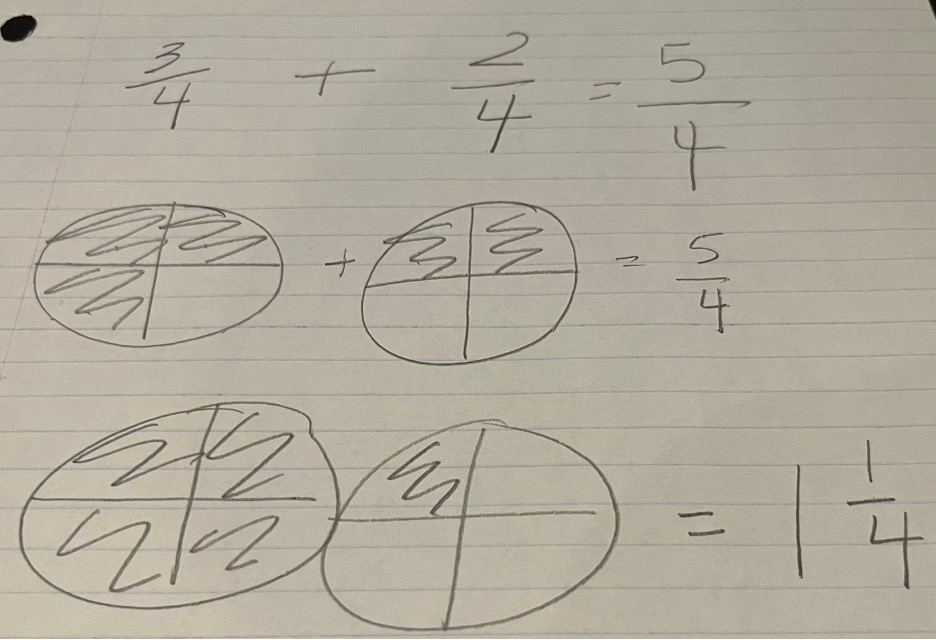
Our learners can reason and communicate their mathematical thinking concretely, pictorially, and symbolically.
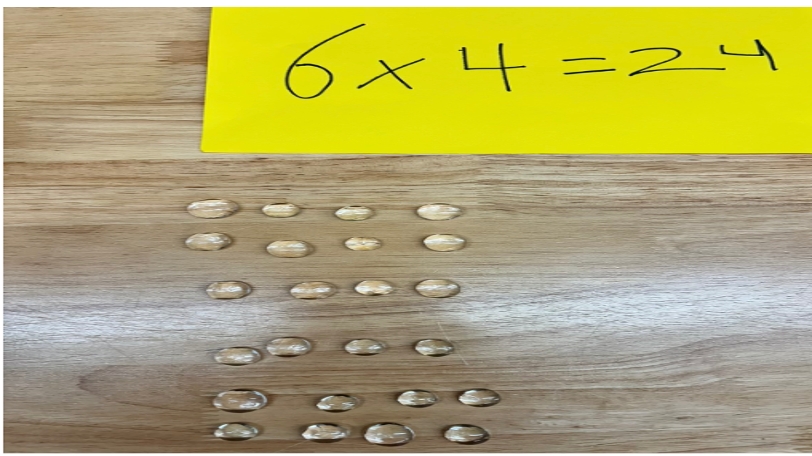
Students are using concrete materials to demonstrate their understanding of multiplication.
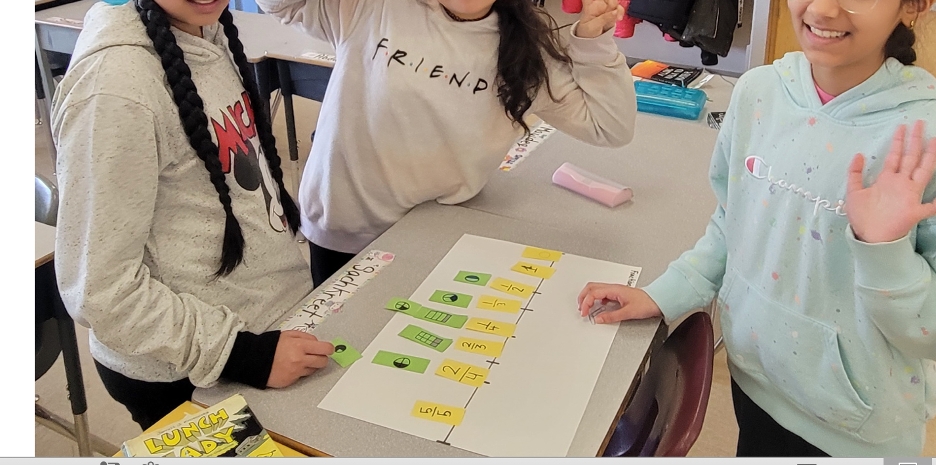
Students are using pictures, fractions and a number line to compare fractions.
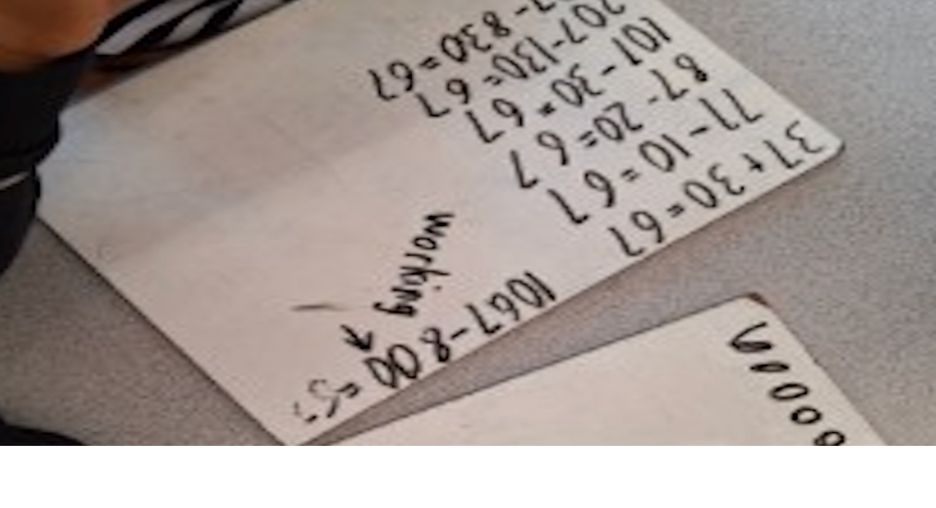
Our learners are developing fluent and flexible thinking about numbers.
Students were given the open-ended thinking task of creating a 2-digit equation where the answer is 67.
Our learners can model mathematics in contextualized experiences.
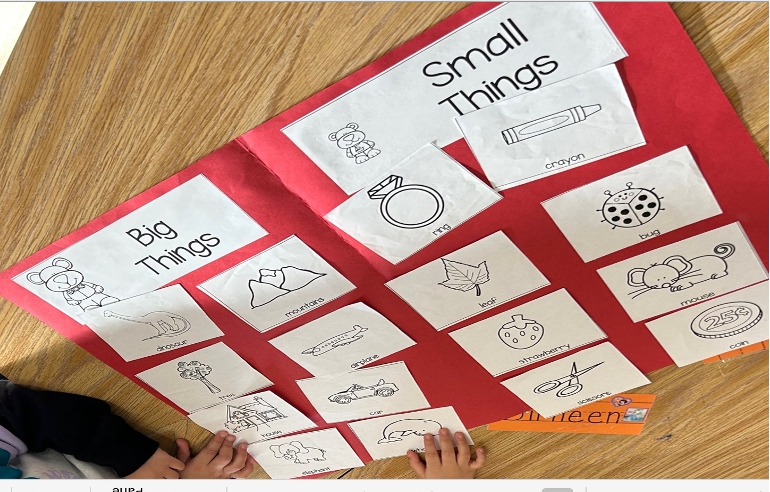
Students are working on understanding more than and less than. They use concrete materials to help problem solve real life mathematical scenarios. Using concrete materials brings learning into real world context which makes the mathematical learning more meaningful to students.
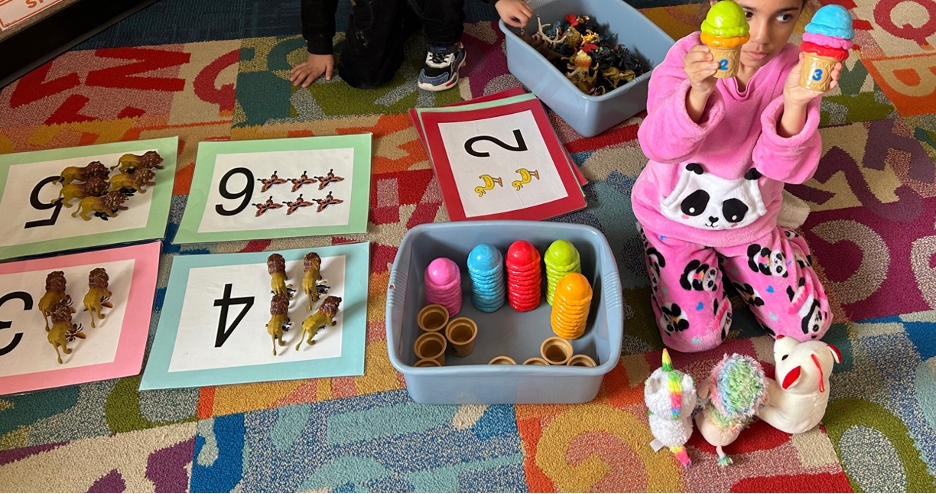
Our students can demonstrate and apply mathematical understanding through play, inquiry and, problem solving.
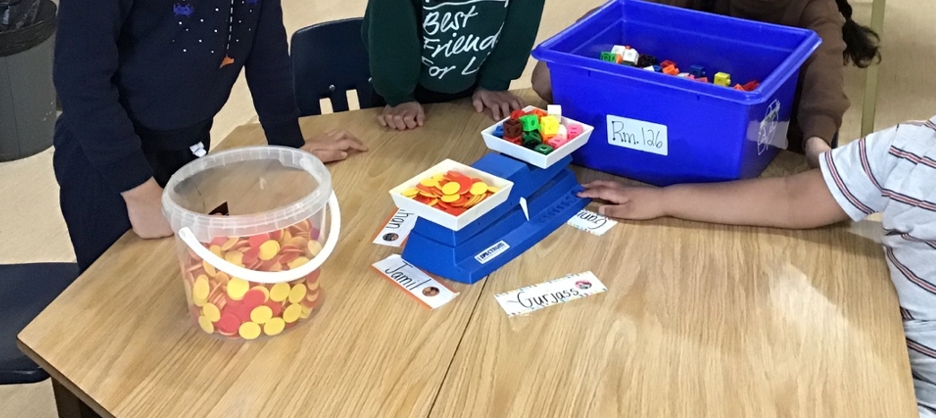
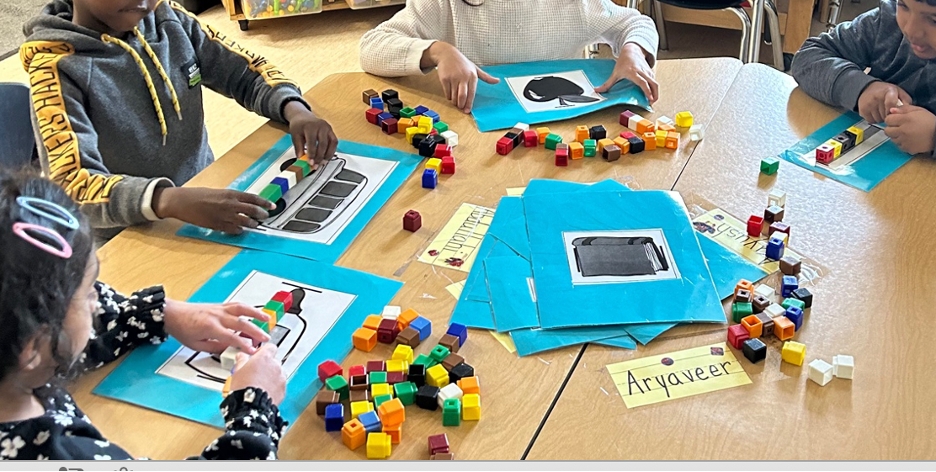
Students are learning objects can be measured and compared.
OUR FOCUS
Every day at Strawberry Hill our team of educators provide a variety of educational experiences that prepare our learners for a world in which they think creatively and critically and communicate skillfully. Our students are learning how to reason, use logic, analyze, and persevere with problem solving in our math classes. These skills are needed for mathematics and real world 21st century skills that learners need regardless of what they do in their lives.
This year we continued to focus on the learning goal of:
- using reasoning and logic to explore, analyze and apply mathematical ideas
All our teachers, across all grades provide students with learning opportunities aimed at increasing mathematical thinking. We monitored the progress of our cohort that has grown to include a mix of primary and intermediate classes to highlight and determine overall successes and gaps.
In our cohort, we continued to structure each math lesson into three parts. Through our research last year and this year, we know this method of instruction works best to improve and promote mathematical thinking, student engagement and perseverance. When math lessons are structured this way student learn to think and communicate their thinking more.
We continued to implement mathematical routines into lessons daily. These routines are quick, warmup activities that allow students to practice reasoning, demonstrate their prior knowledge, and engage in open-ended questions with many possible answers. This first part of the lesson was used to grab the students’ attention by presenting an engaging problem that helped the students get ready for the main problem. It is used to activate prior knowledge.
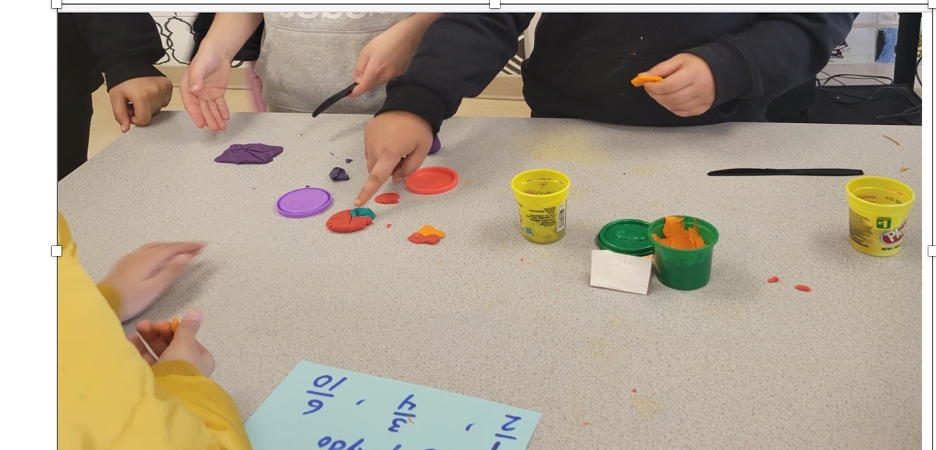
Below is an example of a mathematical routine on area. Students were asked to use playdoh to represent fractions to active their prior knowledge.
The next part of the lesson is where students are presented with a problem. They often work with other students to figure out a real-world problem related to curricular content. Below is an example of a real-world problem students were introduced to.

The last part of the lesson had students sharing their work and teachers using this time to ensure students understand the concept by asking prompting questions.
Students worked in groups to solve the real-world problem and shared their thinking with class. They used pictures to show their reasoning for their answer.
OUR NEXT STEPS
It is demonstrated, through evidence provided by our cohort of students and reflected in the larger group, that our focus on improving the use of mathematical thinking skills has positively impacting learners. Our teachers tracked the progress of their students’ math learning goal:
- use reasoning and logic to explore, analyze and apply mathematical idea
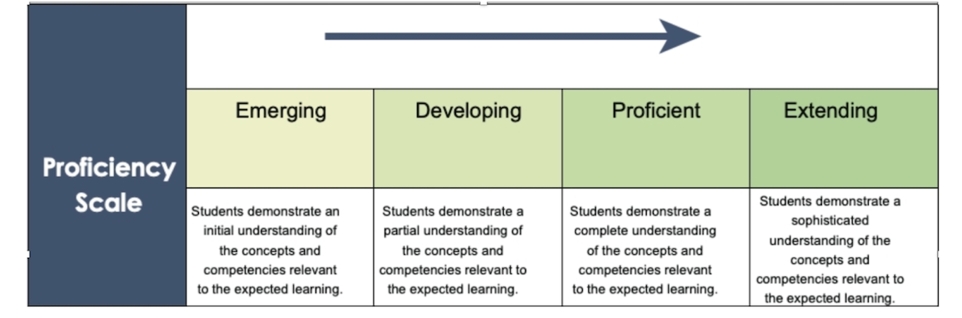
December | 33% | 47% | 20% | 0% |
June | 10% | 23% | 57% | 10% |
As noted in the graph, students progressed in using and sharing mathematical reasoning. Growth was demonstrated in our December to June results. For our numeracy goal, we saw a decrease in the percentage of students who are Emerging (-23%) and a decrease in those who are Developing (-24%). Similarly, we saw an increase in the percentage of students who are Proficient (+37%) and an increase in those who are Extending (+10%). More descriptive evidence of learning that is specific to our numeracy goal is highlighted below.
Sixty-seven percent of the students in the cohort are now proficient in their ability to use reasoning and logic to help them solve math problems in class – compared to 20% who demonstrated proficiency earlier in the year. Most of our learners are able to explain their thinking and demonstrate how they completed the problem assigned. They are using relevant information from the problem, provide concrete and pictorial examples and use strategies and persistence to solve problems with their peers. In our cohort, many students experienced some level of success. However, 33% of students still require support. This will remain an area of ongoing focus and priority.
An example of this success was a student who started the year having some confidence to attempt math problems on his own, but his engagement in collaborative problem solving and sharing ideas during discussions and small group activities was minimal. On his own his was usually able to identify a mathematical strategy to solve a problem, but he struggled to explain his approach. When his teacher introduced mathematical concepts using the three-part lesson structure, this student began to use more than one strategy to solve problems, an increased mathematical vocabulary to explain his understanding and was able to explain how and why he used his chosen strategy. He became more engaged during collaborative group work and discussions and showed an improvement in his confidence. He states that he is good at math. He has moved from developing to proficient. It is wonderful to see this student’s excitement for math and his overall growth in his mathematical thinking.
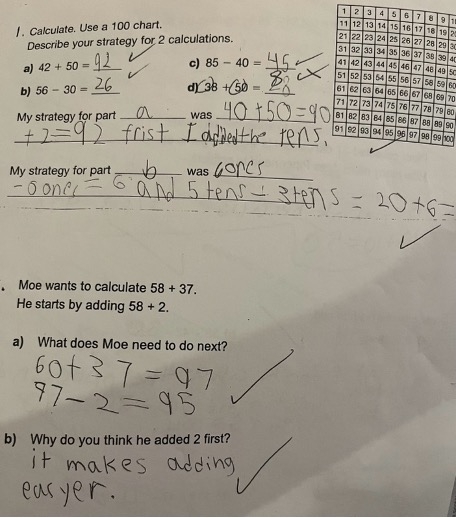
Student learning evidence is gathered in a variety of ways. Teachers use a combination of teacher observations, conferences and student work to determine student’s level of understanding. Examples below show how our students are using reasoning skills and logic to solve math problems.
In their work, Small and Big Sort 78% of the students were able to demonstrate their understanding that objects can be measured and compared. There remains 32% of the students who require further attention in this area.
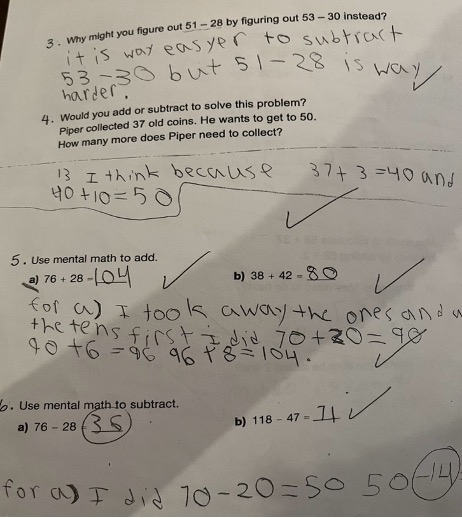
In their work on Adding and Subtracting 2-digit numbers 69% of students were able to demonstrate their use of reasoning skills and logic to solve the math problems presented. There remains 31% of the students who require further attention in this area.
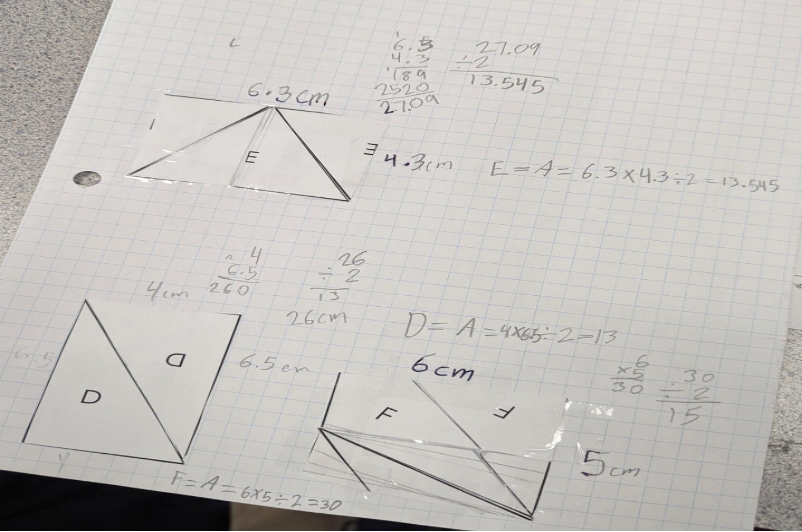
In their work on Area of a Triangle 66% of students were able to demonstrate their use of reasoning skills and logic to solve the math problems presented. There remains 34% of the students who require further attention in this area.
Moving Forward;
After seeing the growth our students have made with their mathematical thinking skills, we will continue to use three-part lessons to teach mathematical concepts. Learning is social and we have learned that allowing discussion with peers has promoted thinking and the sharing of math vocabulary in our classrooms. Our learners are attempting and persevering with math problems more on their own and waiting less for the teacher to support their thinking. Time is required for students to dive into solving problems with peers and on their own and we will continue to provide that time.
Moving forward, we are going to continue to expand this work beyond the cohort. This will require us to mirror the process and strategies implemented next year.
Surrey Schools
Formed in 1906, the Surrey School District currently has the largest student enrolment in British Columbia and is one of the few growing districts in the province. It is governed by a publicly elected board of seven trustees.
The district serves the cities of Surrey and White Rock and the rural area of Barnston Island.