École Salish Secondary 23-24

OUR CONTEXT

Salish Secondary: a school where we work together to build strength and fuel passion.
Keeping our unique community in mind, we design learning for all students through our understanding that all students learn differently. We emphasize inclusive education to ensure that students with diverse learning needs, including those with disabilities, receive appropriate accommodations and support.
Our INCLUSIVE philosophy means:

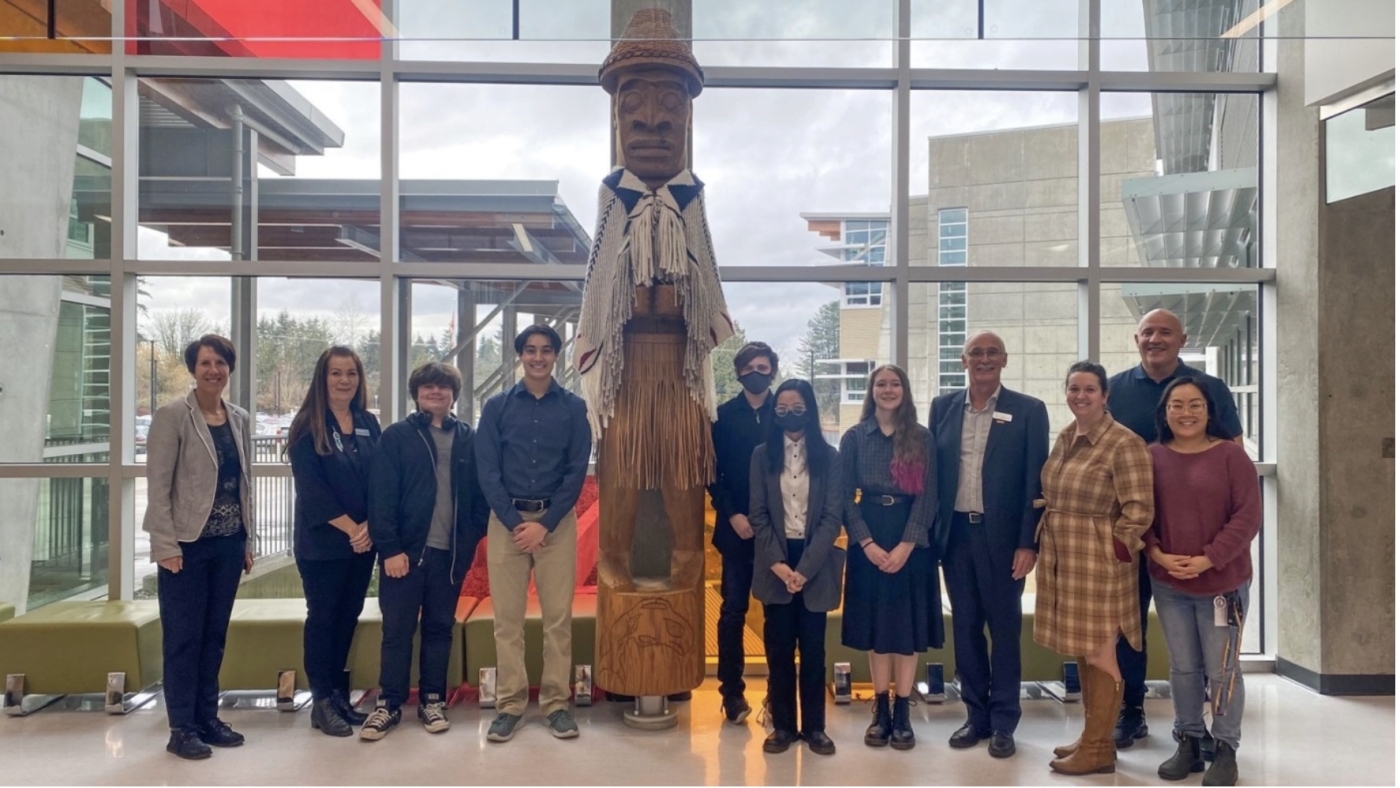
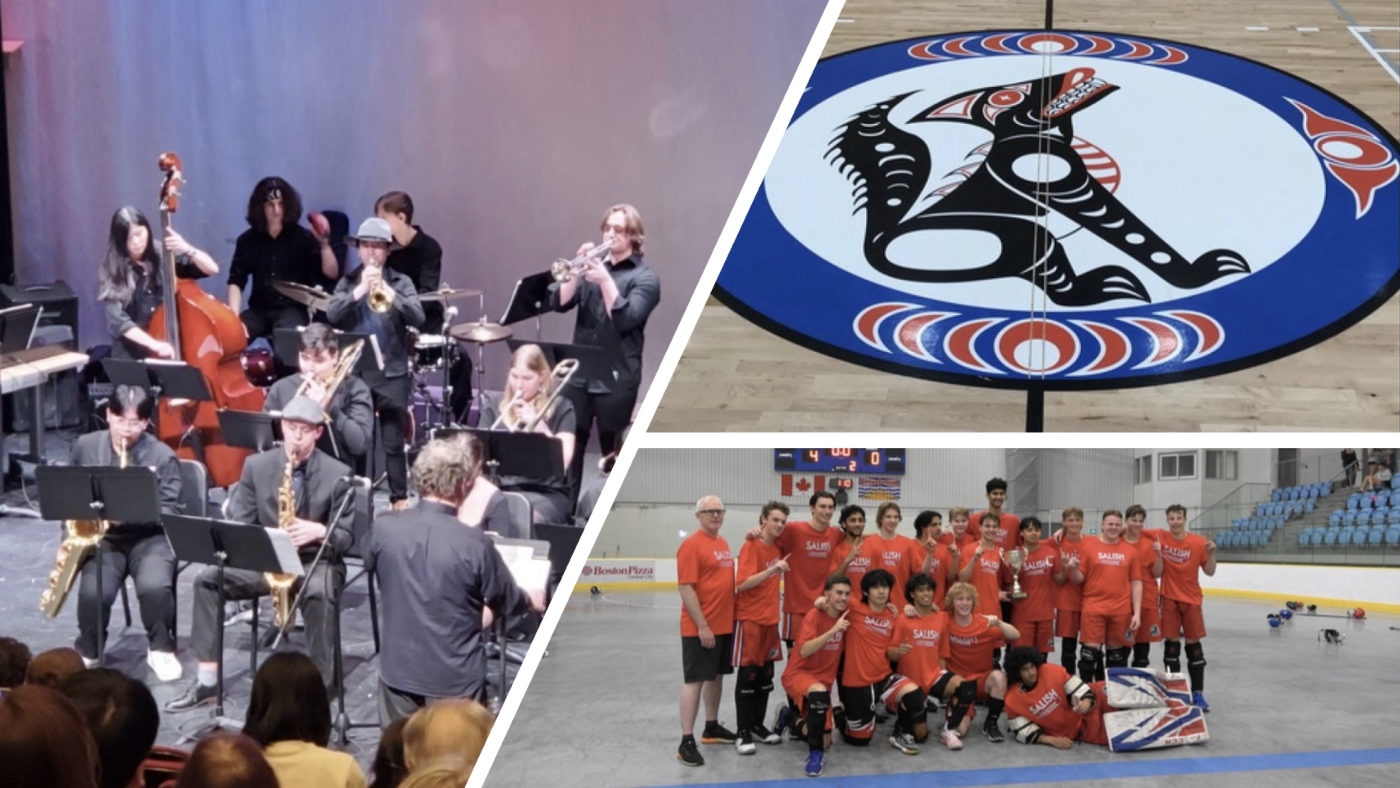
Students have the opportunity to witness our commitment to inclusivity and diversity every day.
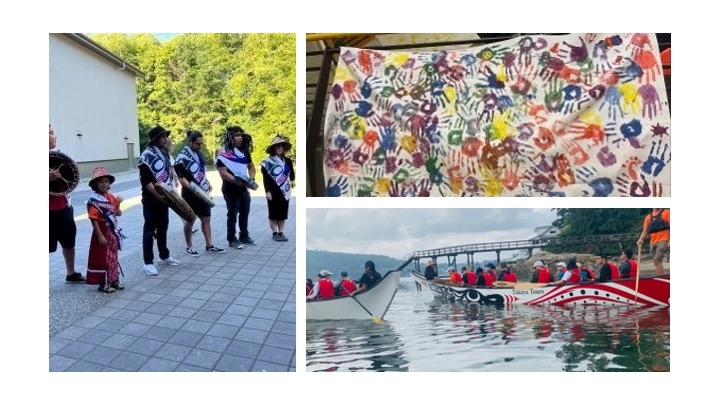
Students' learning experience is enhanced by a wide range of school clubs, extracurricular activities, field trips, leadership opportunities, and curricular programs.

The unique design of the building and classroom furniture support our vision.
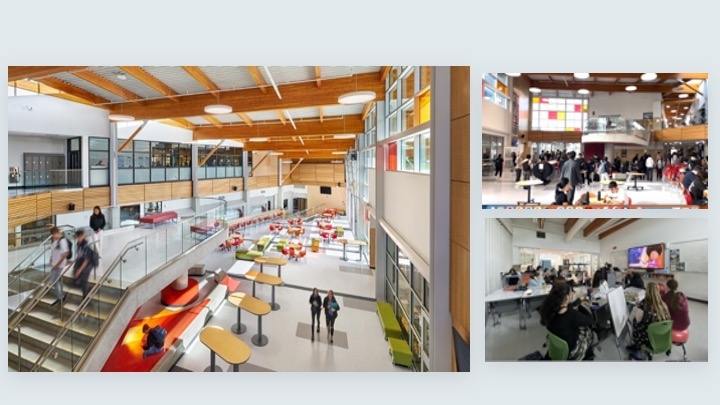
Not all classrooms have four walls. - Margaret McMillan
Salish is a school where every student finds their place.
OUR LEARNERS
Personal and Social Responsibility
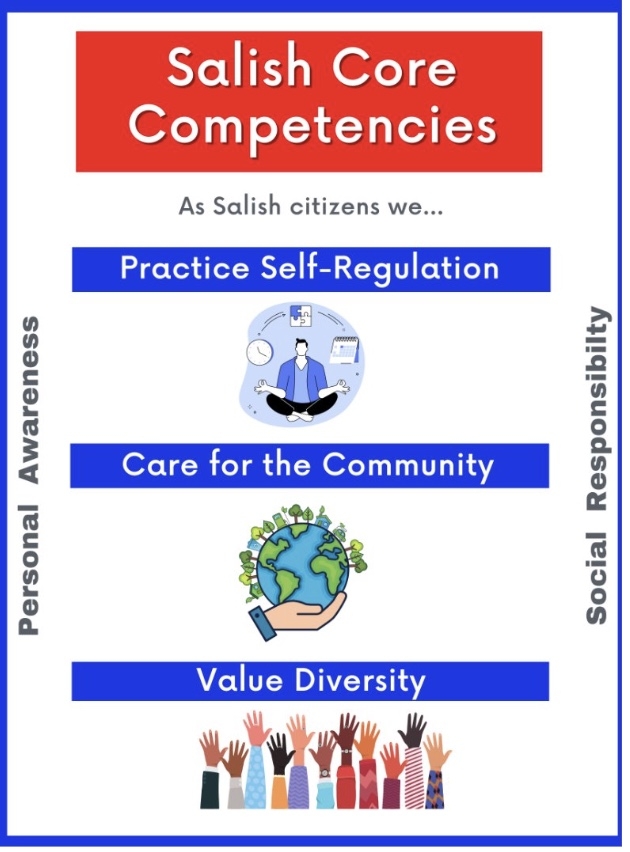
At the foundation of our vision is a belief that students should be engaging in learning in both core and curricular competency areas. We are committed to learning that promotes strong values and helps students develop the skills to be responsible citizens.
Understanding our Learners
We want all of our students to experience success, and recognize this will look different for individual students. Our Inclusive education teachers work alongside our classroom teachers to design lessons and assessments that are accessible for all students. By focussing on measuring growth we are able to identify if our strategies are supporting learning and having a positive impact on student performance.
We design learning for all students through our understanding that all students learn differently.
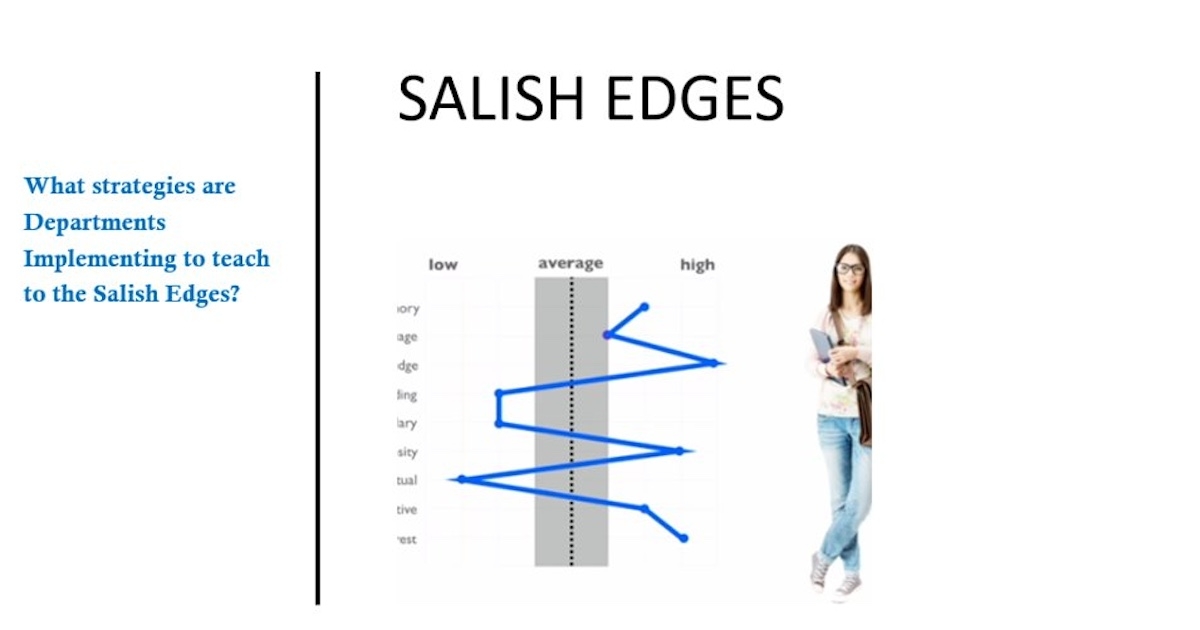
We support all our learners through our belief in Inclusive Education.

Tiers of support inform how Inclusive Education teachers support all learners.
Impacts on student performance
Our learners receive the necessary supports to make curriculum accessible. As students gain confidence they become more engaged. This results in higher levels of academic success - teachers meet students where they are at and work alongside students as they demonstrate increasing levels of proficiency.
OUR FOCUS
Impacting Student Learning
To understand our learners we asked how inclusive practices are impacting student performance. Specifically, we asked how designing assessments with adaptations, and implementing a teacher-student feedback loop impacted student performance on both oral and written evaluations.
What was being measured?
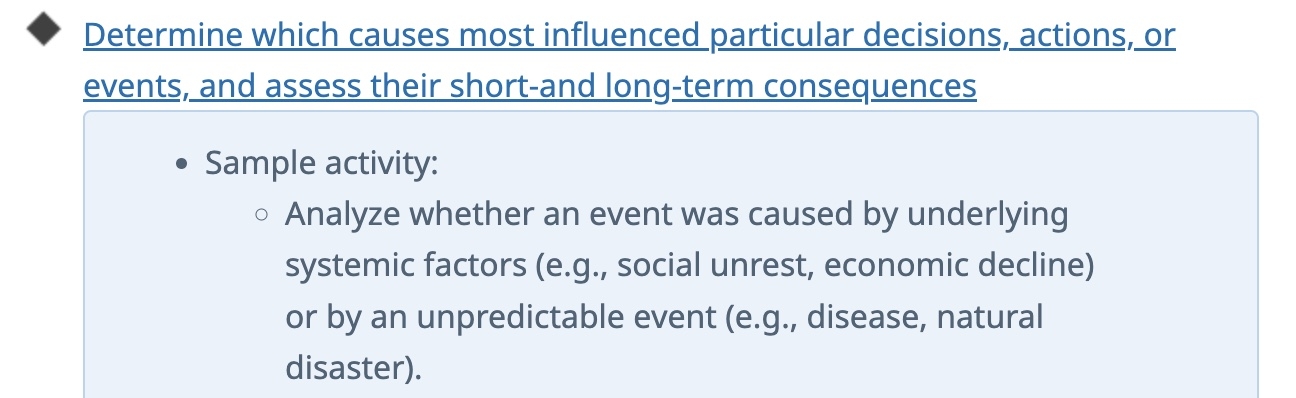
Students were engaging in critical thinking tasks demonstrating their understanding of the relationship between cause and consequence when analyzing historical events. Specifically students had to:
Adaptations
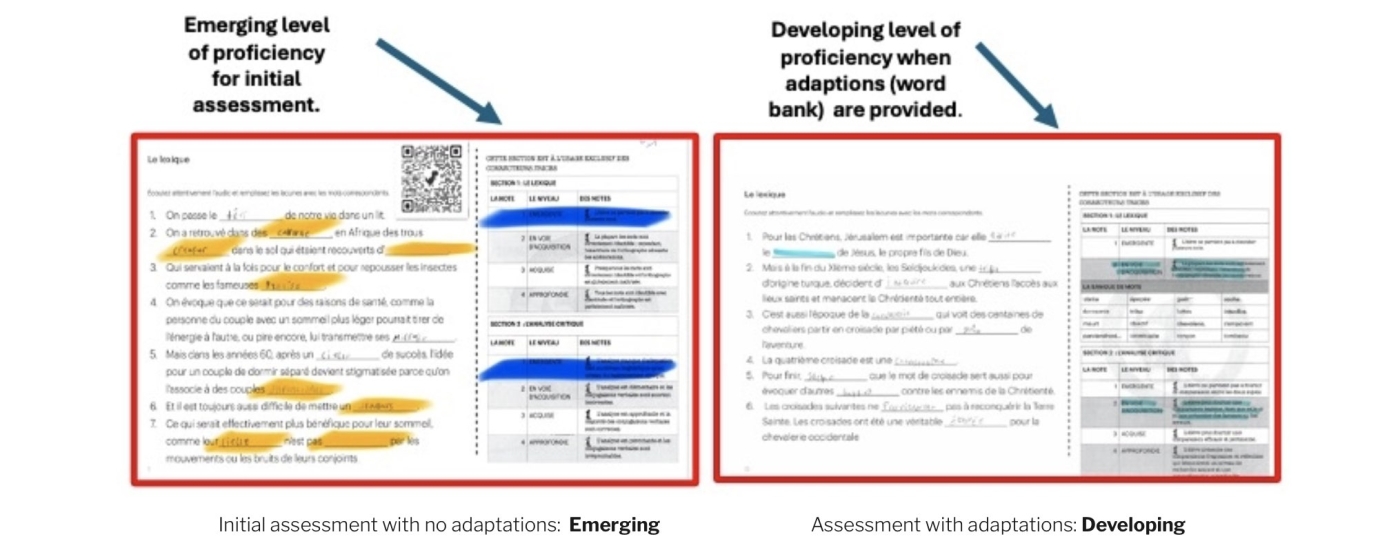
The main adaptations to assessments were providing a word bank for students to allow them to demonstrate their understanding of concepts without having to memorize vocabulary. The other main adaptation was providing an opportunity for students to demonstrate their understanding in oral and written formats.
Adaptations can make the curriculum more accessible by:
- Supporting Understanding: students can engage with the material at their own language level, ensuring they understand the vocabulary and concepts before moving forward.
- Providing Context: adaptations can allow students to access crucial vocabulary in both listening and written formats, which increases the chances of making connections with these words, thereby enhancing the opportunity for students to demonstrate their critical thinking skills
Teacher-Student Feedback Loop
To support all learners teachers communicate student learning clearly, and also engage in two-way feedback - giving students the opportunity to communicate how they are feeling about their learning.
Teacher's descriptive feedback:
- Emphasizes that learning is a progression and gives students clear strategies for demonstrating their understanding and/or skills.
- Is specific to individual student's level of proficiency.
Student feedback:
- Enables students to effectively communicate their understanding and areas where they need help.
- Help teachers identify students who need additional support and adapt their teaching strategies accordingly.
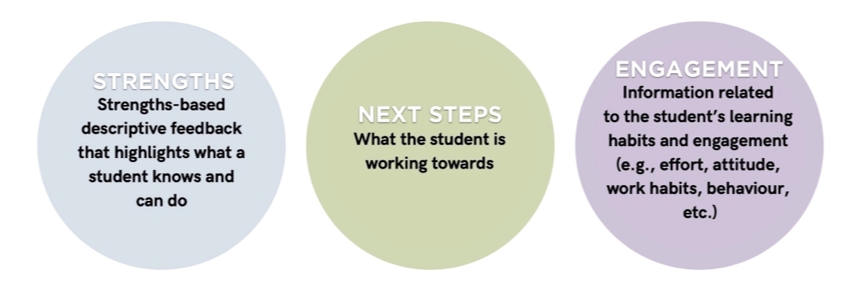
This feedback is critical to communicating clearly with parents and students in Learning Updates. Teachers provide authentic assessments and use evidence to detail students strengths, next steps, and level of engagement.
Communicating Student Learning
Proficiency Scales:
The Provincial Proficiency Scale guides all feedback and assessment.
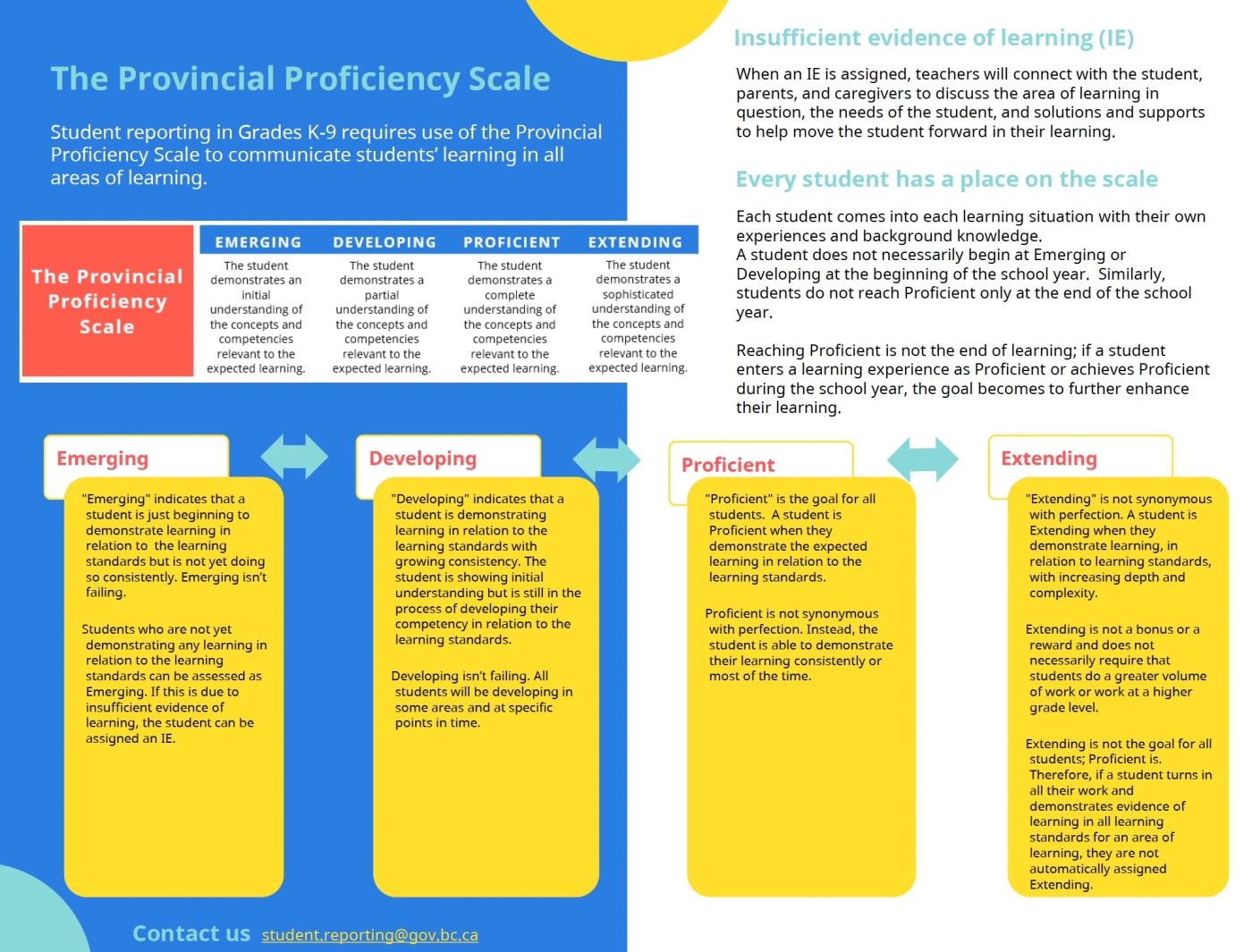 Students receive descriptive feedback indicating next steps to demonstrating next level of proficiency.
Oral and Written Assessments
In this cohort students were given the opportunity to demonstrate their knowledge, skills, and understanding in a variety of ways. One example was designing assessments with an option to communicate learning in oral or written formats. This benefitted students in a number of ways.
- Multiple Access Points: Students can demonstrate their understanding through different formats, catering to their strengths in either oral or written communication; this is especially needed in classroom with varying language levels.
- Enhanced Engagement: These assessments help unlock critical thinking skills that might be hindered by language barriers, allowing for a more comprehensive assessment of student understanding.
These strategies enabled students to thrive in communication, critical and creative thinking, and personal and social responsibility. The curriculum became more accessible, fostering an inclusive environment where all students were able to succeed and develop their critical thinking skills.
OUR NEXT STEPS
Measuring Success
Evidence of our students’ learning demonstrates that applying adaptations, and providing two-way feedback, is positively impacting learners.
Evidence of positive impact that is detailed below includes:
- Improved Academic Performance: Students show higher achievement levels and improved test scores.
- Increased Engagement: Students are more engaged and motivated, leading to better attendance and participation.
- Enhanced Confidence: Students gain confidence in their abilities, contributing to a positive learning environment.
- Greater Equity: Achievement gaps between different student groups are reduced by ensuring all students can access the curriculum.
Evidence of Learning
The video below provides an overview of the classroom assessments and evidence of student learning.
Video Highlights
- Breakdown of evidence.
- Understanding classroom assessment and how to make it accessible for all learners.
- Impact of including student voice in designing learning.
Classroom Assessment
The evidence is based on 5 summative assessments administered over the length of 1 semester. Initial assessments indicated 17/54 students were at an Emerging level of proficiency. The teacher began applying strategic adaptions for students after the second assessment. After applying adaptations and integrating two-way feedback over the course of the semester the number of students at an Emerging level of proficiency fell to 2/54 students.
 Assessment Results - Pink line (EMERGING level of proficiency) decreases with adaptations.
Targeted Supports
Applying adaptations to assessments is one way for classroom teachers and inclusive education specialists to provide strategic and intensive supports to meet the needs of all learners.
 Students with more complex needs receive intensive supports.
Increased Engagement
Throughout the semester the teacher provided descriptive feedback to students. This feedback is specific to each student's level of proficiency, and includes clear strategies for improving academic performance. Students were also encouraged to give the teacher feedback on their learning. The teacher used this feedback to design lessons and assessments. The teachers noticed that involving students in their learning led to increased engagement, and as proficiency increased the feedback became more positive.
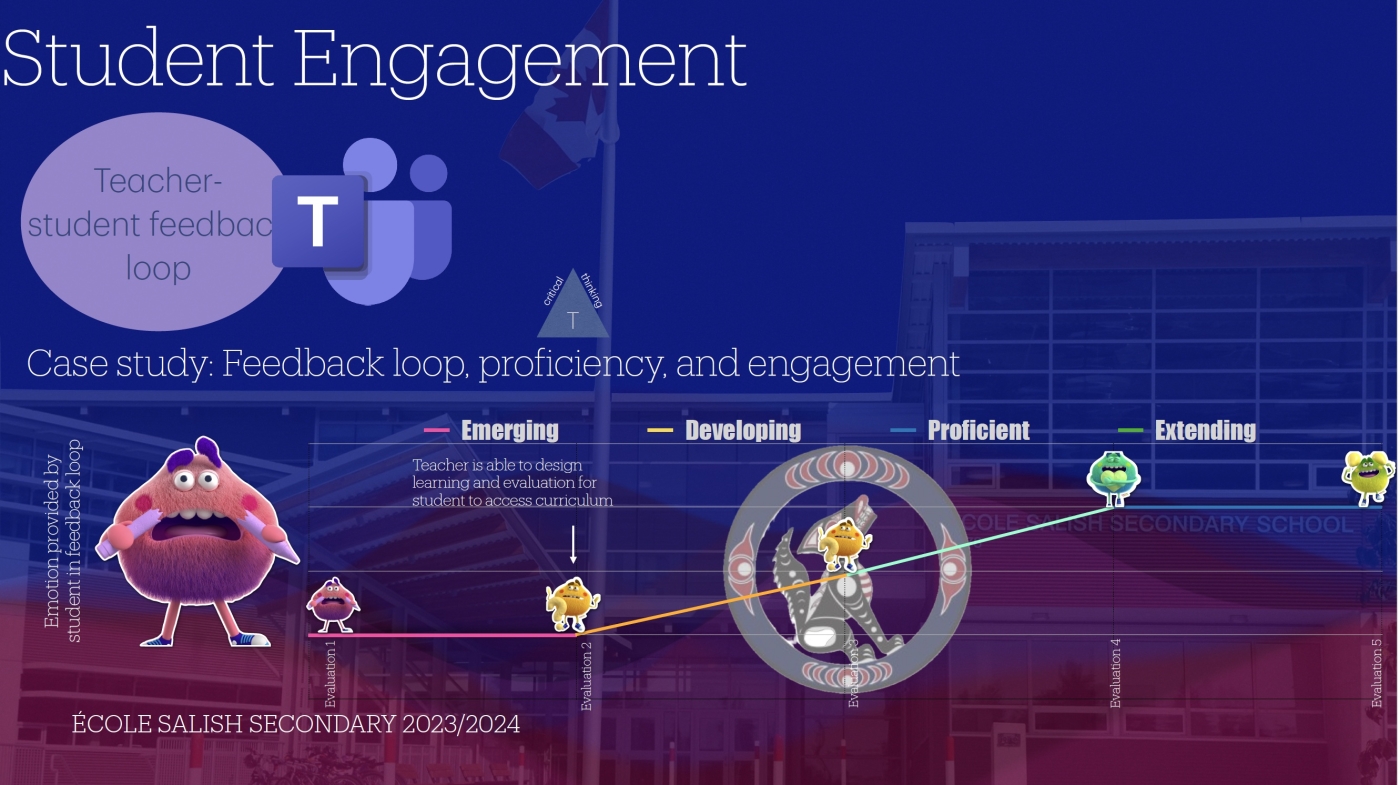 Students are able to select a gremlin face which reflects their level of confidence and satisfaction with the latest assessment. Teachers can use this feedback to determine where more intensive supports are needed.
Moving Forward
Based on evidence of students’ progress in relation to our learning goals, our next steps will include:
1. Continuing to ensure all students have access to the appropriate level of support.
2. Continuing to use student feedback to design assessments that are meaningful and accessible for all.
3. Continuing to make learning accessible for all students by designing learning tasks and assessments with adaptations to create an equitable educational experience.
Surrey Schools
Formed in 1906, the Surrey School District currently has the largest student enrolment in British Columbia and is one of the few growing districts in the province. It is governed by a publicly elected board of seven trustees.
The district serves the cities of Surrey and White Rock and the rural area of Barnston Island.